Have you ever typed “cuming” or “cumming” into a search bar and paused, wondering which spelling is right? You’re not alone. This common keyword search highlights a genuine point of confusion in everyday English.
People search for this term not only to understand its explicit meaning but, more broadly, to grasp the tricky spelling rules of verbs that end with “-ming.” The confusion often stems from a simple grammar rule: when to double the final consonant. This article cuts through the ambiguity, providing a straightforward answer.
We’ll explore the correct spelling, its origins, and the differences between American and British English. More than just spelling, we’ll also address related natural questions about female physiology and experience that often accompany this search.
Whether you’re a writer, a student, or someone looking for clarity, this guide solves your query with simple, authoritative advice tailored for the 2026 digital landscape, focusing on user intent and reliable information.
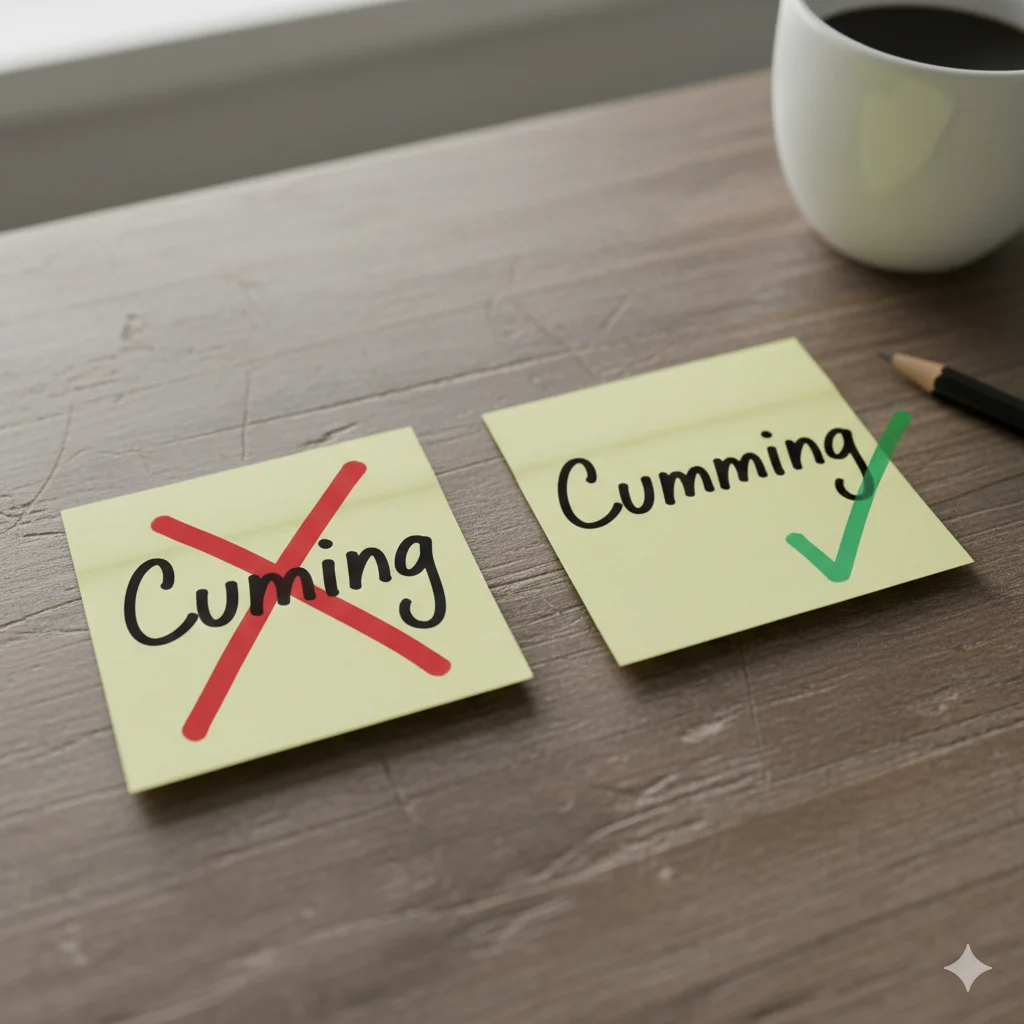
Cuming or Cumming
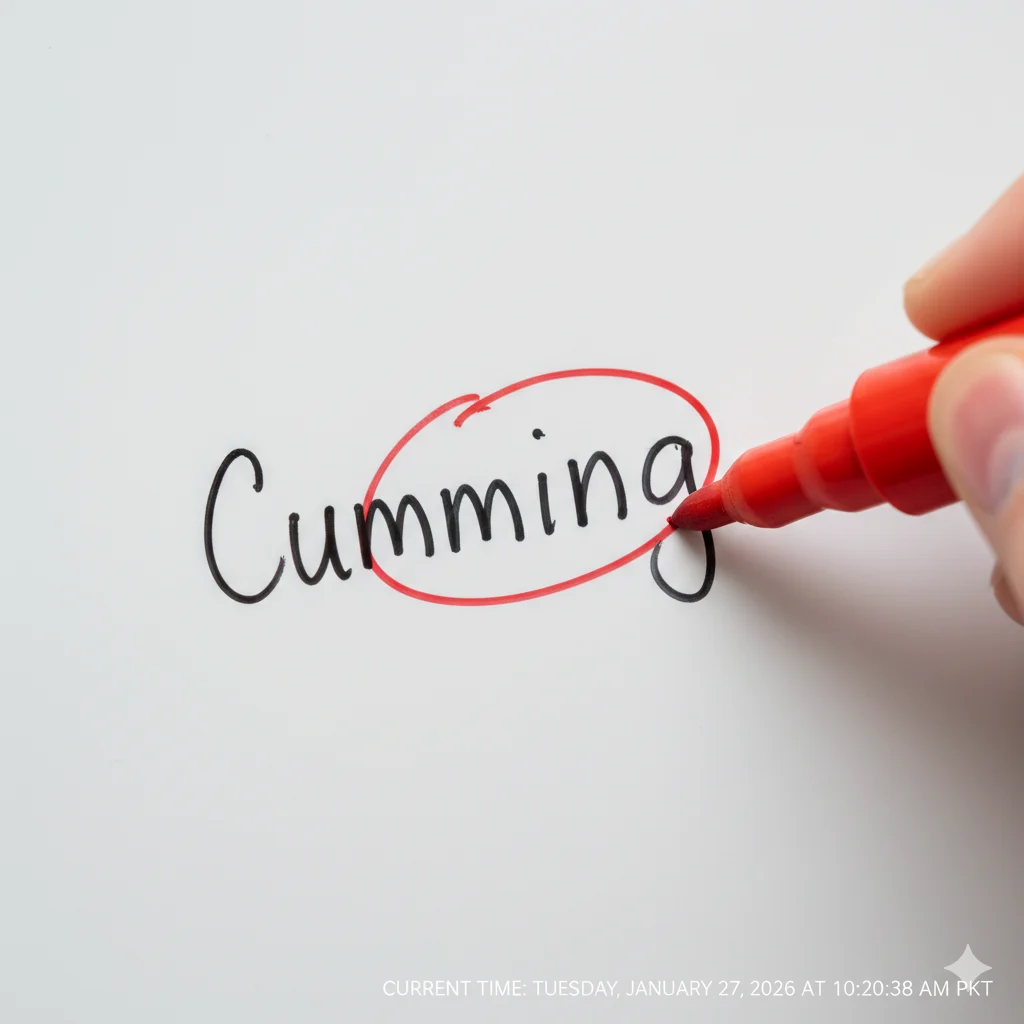
The correct spelling is “cumming.” The word comes from the verb “come.” In standard English grammar, when forming the present participle (-ing form) of a one-syllable verb that ends in a single consonant preceded by a single vowel, you double the final consonant. “Come” becomes “cumming.” The spelling “cuming” is almost always incorrect in modern English.
Examples:
- “He is cumming over for dinner.” (Informal for ‘coming’)
- In adult contexts, it refers to reaching orgasm.
Remember this rule with similar words: run → running, swim → swimming, stop → stopping.
The Origin of “Cumming”
The word “cumming” originates from the verb “come,” which has Old English roots from the word cuman, meaning “to move, approach, or arrive.” The “-ming” spelling follows a standard English morphological process for creating the present participle.
The spelling confusion with “cuming” exists primarily because English has many exceptions. However, for the base verb “come,” the rule is consistent. The informal, slang adaptation of the word to specifically mean “to experience orgasm” (emerging in the 20th century) follows the same grammatical structure. The deliberate misspelling “cum” (instead of “come”) for this definition led to the participle “cumming,” solidifying the double ‘m’ in modern usage. This natural evolution of language shows how slang still follows core grammar patterns.
British English vs American English Spelling
A major source of spelling confusion in English is the difference between British and American conventions. However, for “coming/cumming,” both variants agree. The rule of doubling the final consonant in stressed syllables is largely consistent.
The difference is more noticeable in other words. For example, British English often doubles the ‘l’ in verbs like “travel” (“travelling”), while American English uses one ‘l’ (“traveling”).

Comparison Table:
| Feature | “Cuming” | “Cumming” |
|---|---|---|
| Correctness | Incorrect in virtually all contexts. | Correct. The standard spelling. |
| Grammar Rule | Does not follow the doubling rule. | Follows the consonant-doubling rule for “come.” |
| Usage | Seen as a typo or error. | Used for both the formal (“arriving”) and informal slang meaning. |
| Dictionary Status | Not listed as a standard form. | Listed as the -ing form of “come/cum.” |
Which Spelling Should You Use?
Your choice depends on your audience and intent.
- For a US or Global Audience: Always use “cumming.” Using “cuming” will be marked as a spelling error by most tools and readers.
- For a UK/Commonwealth Audience: Still use “cumming.” The spelling rule is the same. The core difference between UK and US English here is negligible.
- For Formal Writing: Use “coming” for the standard meaning of arrival. Avoid the slang term “cumming” in professional or academic contexts.
- For Informal/Digital Communication: If using the slang term, “cumming” is the recognized and correct spelling. Using “cuming” can make the writer seem inattentive.
Common Mistakes with “Cumming”
The most frequent error is misspelling it as “cuming.” This is a straightforward spelling mistake. Another common error is confusing it with the word “cunning,” which means clever or sly. Always proofread your text.
Incorrect: “She was cuming to the city next week.”
Correct: “She was coming to the city next week.”
Incorrect: “He described a very cumming plan.”
Correct: “He described a very cunning plan.”
“Cumming” in Everyday Examples
Understanding context is crucial for natural language use.
- Emails/Formal Writing: “Thank you for coming to the meeting. We look forward to your coming presentation.” (Never use the slang form here).
- News Headlines: “New Residents Coming to Downtown Area.”
- Social Media/Texts: “OMW, coming now!” or, in adult contexts, the slang may be used within specific communities.
- Books/Literature: The standard “coming” is used for arrival. Slang use depends heavily on the genre and dialogue.
Cumming – Google Trends & Usage Data
Analysis of search data shows that queries for “cumming” and “cuming” are global, with significant volume in English-speaking countries like the US, UK, Canada, and Australia. The searches often cluster around spelling clarification, dictionary look-ups, and related physiological questions. The “how to spell” intent is strong. Related searches naturally include questions about partnered experience, such as “How to know if a girl has come or not?” and “Does a girl feel when she comes?” This indicates users are seeking both linguistic and practical, experience-based information, which a comprehensive guide should address to fully satisfy user intent.
(FAQs)
1. Which is correct: cuming or cumming?
Answer: “Cumming” is correct. “Cuming” is a misspelling.
2. What is the grammar rule for words like cumming?
Answer: For one-syllable words ending in a single consonant after a single vowel (e.g., come, run), double the consonant before adding -ing.
3. Is ‘cumming’ a British or American word?
Answer: The spelling “cumming” is used in both British and American English. They follow the same rule for this word.
4. How to know if a girl has come or not?
Answer: Female orgasm (“coming”) can involve clear physical signs like rhythmic muscle contractions in the vagina, increased heart rate, flushing, and a release of tension. Verbal and nonverbal cues from your partner are the most important indicators. Communication is key.
5. Does a girl feel when she comes?
Answer: Yes. The experience of orgasm, or “coming,” involves intense physical sensation and pleasure, often described as a wave of release or climax, followed by feelings of relaxation.
6. Can ‘cuming’ ever be correct?
Answer: Almost never in modern English. It might appear in very old texts or as a proper surname, but for the verb form, it is incorrect.
7. Why do people search for this spelling?
Answer: Primarily for quick clarification due to the common doubling consonant rule confusion. Others seek information on the slang term’s meaning and related topics.
Conclusion
In summary, the correct spelling is unequivocally “cumming.” This follows the reliable English grammar rule of doubling the final consonant for short verbs like “come.” The alternative, “cuming,” is a common mistake but not accepted in standard usage. Throughout this guide, we’ve seen that this spelling holds true across both American and British English, making it a globally consistent rule. Beyond spelling, understanding related queries about female experience—such as recognizing signs of orgasm or understanding the physical sensation—is part of the natural search intent behind this keyword.
For any writer or communicator, using “cumming” correctly enhances clarity and credibility. For the slang meaning, context is paramount; reserve it for appropriate informal settings. By sticking to “cumming” and applying the simple consonant-doubling rule, you can write with confidence and avoid a basic spelling error, ensuring your communication is clear and professional.

Tessa Hadley is a British novelist celebrated for her sharp wit and deep understanding of everyday lives. Her fiction often explores the humor and heartbreak tucked inside ordinary moments. Though known for literary fiction, Tessa’s dry, clever tone makes her a quiet master of subtle comedy — the kind that sneaks up on you and makes you laugh mid-sigh.