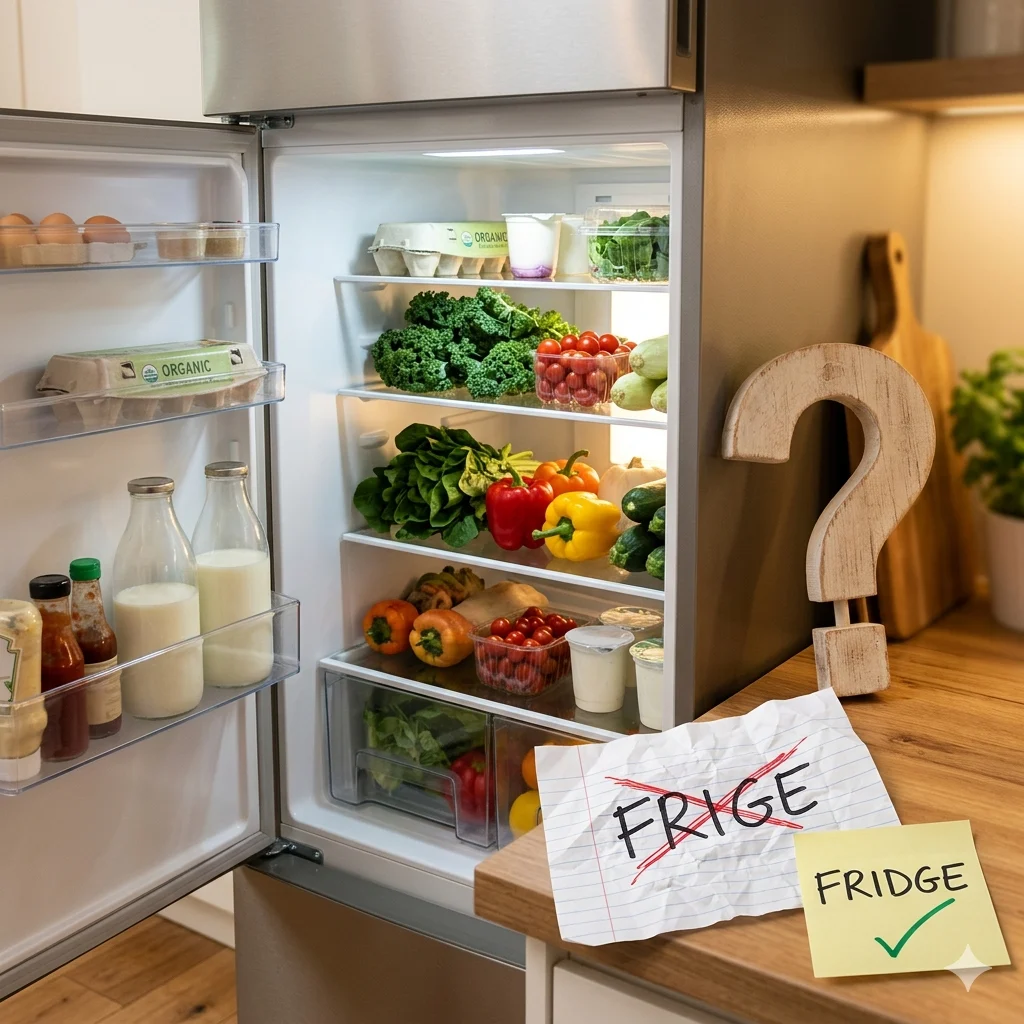
“‘Fridge’ is the correct spelling of the appliance that keeps food cold; ‘frige’ is incorrect and should be avoided.”
Is it ‘fridge’ or ‘frige’? The answer is simpler than you think! The correct spelling is “fridge”, referring to the household appliance that keeps food and drinks cold. The version “frige” is incorrect and should never be used in writing. The word comes from a shortened form of refrigerator, and the “d” preserves the soft “g” sound.
For example:
- “I put the milk in the fridge.” ✅
- “Don’t forget to clean the fridge before guests arrive.” ✅
- “She keeps her drinks in the fridge overnight.” ✅
Using the correct spelling ensures your writing looks professional and credible. Whether you’re writing for school, work, or casual texts, knowing the difference between fridge vs frige helps you avoid embarrassing mistakes. In this article, we’ll explain why fridge is correct, its origin, and common mistakes to avoid.
Fridge or Frige meanings
The quick answer is fridge. “Frige” is a common spelling mistake. The correct spelling has a letter “d” in the middle.
Examples:
- Correct: “Please clean the fridge.”
- Wrong: “The butter is in the frige.”
Think of the word “refrigerator.” You take the “frig” from the start and the “d” from the middle sound. Then you add an “e.” That gives you fridge. The word “frige” looks like it should rhyme with “brig” or “twig.” That is not the sound you want. You want the soft “g” sound. The “d” in fridge makes the “g” soft. So remember: fridge has a “d” to keep the sound smooth.
The Origin of Fridge
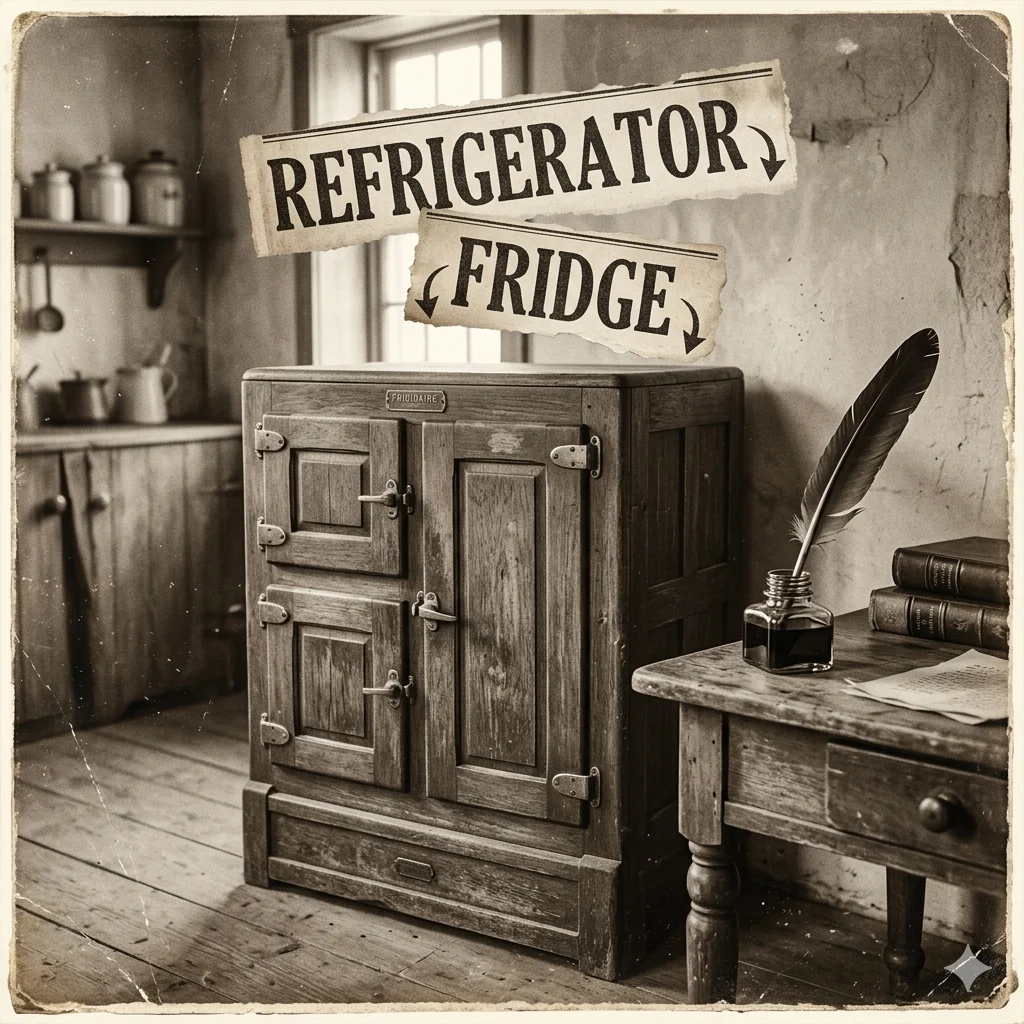
Where does this word come from? The story is simple. The long word is refrigerator. People wanted a short way to say it. So, they took the first part: “frig.” But here is the problem. If you write “frig,” it rhymes with “big.” That is not the right sound. The “g” in “frig” is hard.
People say “frij” with a soft “g.” To make a soft “g” in English, you often need a “d” before it (like in “judge” or “badge”). So, writers added a “d” to “frig.” This made “fridge.” The “d” changes the hard “g” to a soft “g” sound. This spelling first became popular in the early 1900s. Refrigerators became common in homes. People needed a short, easy word. “Fridge” won because it looked right and sounded right.
Why do spelling differences exist? English is a mix of many old languages. It does not have one simple rule for sounds. So, people guess. The guess of “frige” seemed logical to some. But history chose “fridge.”
British English vs American English Spelling
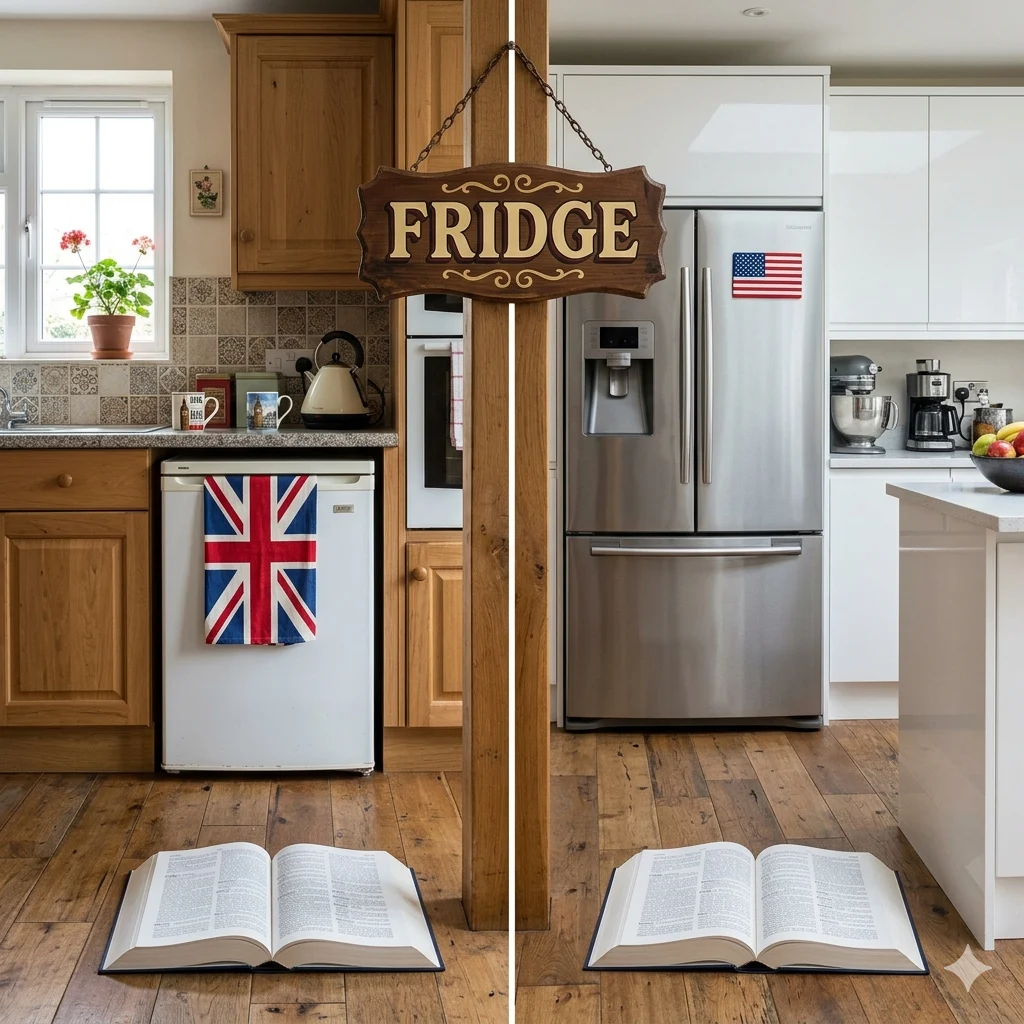
Good news! On this word, the UK and the USA agree. Both use fridge. There is no fight here. However, the long word is different. Let’s look at the table below.
| Short Form | Long Form (UK) | Long Form (US) |
|---|---|---|
| Fridge | Refrigerator | Refrigerator |
| Frige (Wrong) | Fridge (Wrong) | Fridge (Wrong) |
Wait, is there a difference? In the UK, people sometimes say “fridge-freezer.” In the US, people say “fridge” or “refrigerator.” But the spelling of fridge is the same. What is fridge in British? In British English, fridge is the standard word. It means the cold box in your kitchen. You will see it in British newspapers, books, and ads. You will never see “frige” in the UK or the USA.
Comparison Table: Fridge vs Frige
| Feature | Fridge | Frige |
|---|---|---|
| Spelling | F-R-I-D-G-E | F-R-I-G-E |
| Correct? | Yes | No |
| Sound | Soft “g” (like “frij”) | Hard “g” (like “frig”) |
| Found in dictionaries? | Yes | No |
| Used by native speakers? | Always | Never (except by mistake) |
Which Spelling Should You Use?
This is simple. Always use fridge. Here is your audience-based advice:
- If you write for the US: Use fridge. It is the only correct choice.
- If you write for the UK or Commonwealth (Canada, Australia, etc.): Use fridge. Again, it is the only choice.
- If you write for a global audience: Use fridge. Everyone understands it. If you write “frige,” people will think you made a typo.
- If you are a student or professional: Use fridge in essays, emails, and reports. Refrigerator is more formal. But fridge is fine for most writing.
Can I say “fridge”? Yes! You can say and write fridge. It is not slang. It is a standard word. Even the fridge or frige 2022 searches show that fridge is still the winner. People search for which is correct fridge or frige because they are unsure. Now you know the answer.
Pro tip: If you are writing a very formal document (like a scientific paper), use “refrigerator.” But for 99% of life, fridge is perfect.
Common Mistakes with Fridge
Let’s look at the frequent errors and how to fix them.
- Mistake: Writing “frige.”
- Correction: Add the “d.” Write “fridge.”
- Why the error? People forget the “d” because they say the word fast. The “d” is quiet.
- Mistake: Writing “frig” for short.
- Correction: Use “fridge.”
- Why? “Frig” is a different word. It has a bad meaning in slang. Do not use it.
- Mistake: Capitalizing “Fridge” in the middle of a sentence.
- Correction: Use lowercase unless it starts a sentence. “I have a new fridge.”
- Mistake: Spelling the long form as “refridgerator.”
- Correction: It is “re-fri-ge-ra-tor.” No “d” after the first “r.”
- Remember: The short form has a “d.” The long form does not.
Why is there a ‘d’ in fridge but not in refrigerator? This is a great question. You see this on TikTok and other places. The answer is sound. “Refrigerator” keeps the hard “g” sound because of the letters around it. But when you cut the word short, you need a “d” to make the soft “g” sound. So, fridge gets a “d” that the long word does not need.
Fridge in Everyday Examples
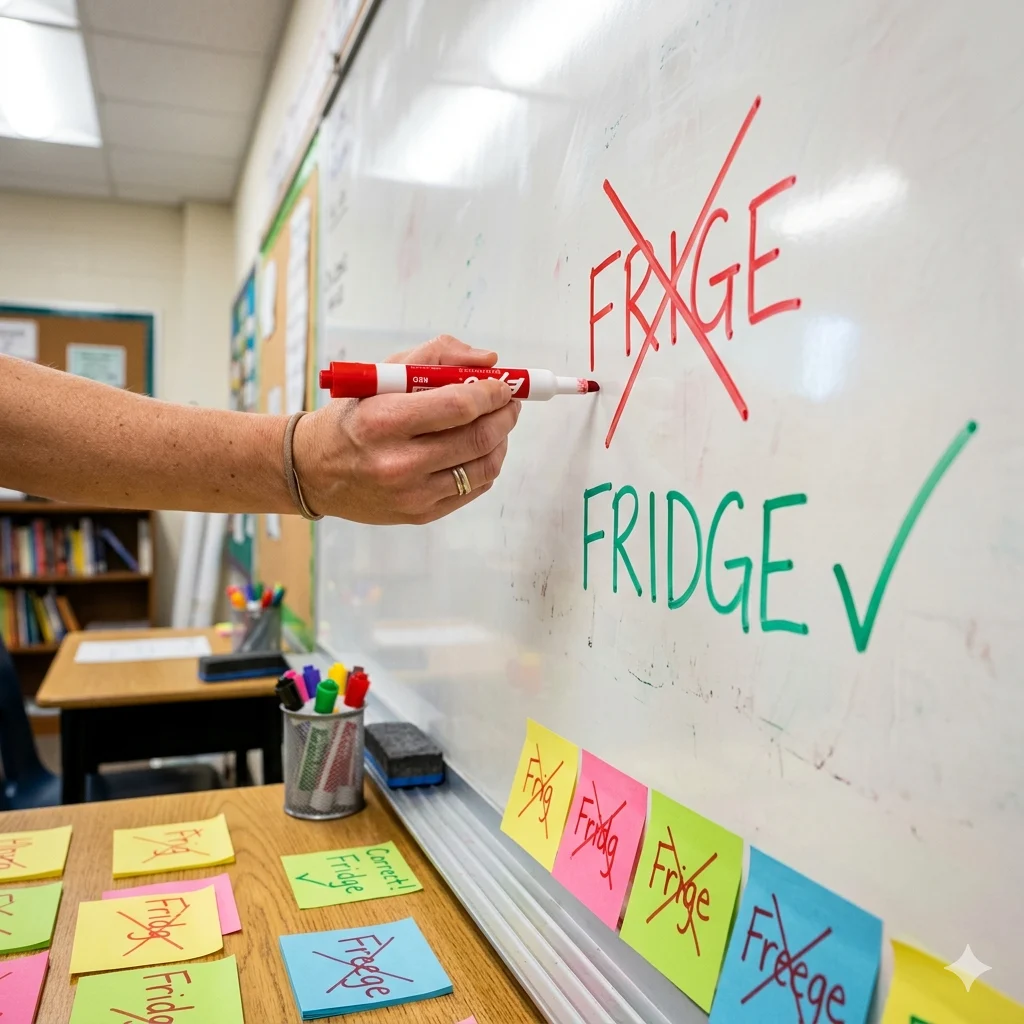
See how fridge looks in real writing.
In an Email (Casual):
“Hi Sarah, can you pick up milk? Our fridge is empty. Thanks!”
In the News:
“The new smart fridge can order food for you. It tells you when eggs are low.”
On Social Media (Twitter/X):
“Me looking in the fridge every 5 minutes. The food is still not there. 🤣”
In Formal Writing (Report):
“The office refrigerator (commonly called the fridge) must be cleaned every Friday.”
Text Message:
“Mom, the fridge is making a weird noise.”
Question from a user:
“Which is correct, fridge or frige? I see both online.”
Answer: Only fridge is correct.
Fridge vs refrigerator vs freezer: A fridge keeps food cold (around 3°C to 5°C). A freezer keeps food frozen (-18°C). A refrigerator is the long name for the fridge. Some fridges have a freezer on top or bottom. Remember the fridge and refrigerator temperature settings: Fridge is 37°F (3°C). Freezer is 0°F (-18°C).
Fridge – Google Trends & Usage Data
If you look at Google data, fridge is very popular. The search for fridge or frige shows that almost no one searches for “frige” alone. People search for is it fridge or frige because they want to check. They know something is wrong.
Popularity by country:
- USA: “Fridge” is searched 99% of the time.
- UK: “Fridge” is also the top search.
- India, Australia, Canada: Same story.
Context matters:
- People search fridge for buying guides, repairs, and recipes.
- People search refrigerator for large appliances, scientific data, and formal reviews.
- People search fridge or frige 2022 (or any year) because spelling confusion never ends.
The TikTok question: Why is there a ‘d’ in fridge but not in refrigerator? This video topic gets millions of views. It shows that many people are curious about this one letter. The answer is always the sound rule.
Key Spelling Variations Table
| Variation | Correct? | Where used? |
|---|---|---|
| Fridge | Yes | Everywhere (US, UK, global) |
| Frige | No | Nowhere (common mistake) |
| Refrigerator | Yes | Formal writing, full name |
| Frig | No | Means something else (slang) |
| Fridge-freezer | Yes | UK English (two-in-one appliance) |
| Fridg | No | Missing the final “e” |
FAQs: Fridge or Frige
1. Which is correct, fridge or frige?
Fridge is correct. Frige is a spelling error. Always use the “d.”
2. Why is there a ‘d’ in fridge but not in refrigerator?
The “d” makes the “g” soft. In “refrigerator,” the “g” stays hard. When you shorten the word, you add a “d” to keep the soft sound you hear in speech.
3. Can I say “fridge” in a formal email?
Yes, in most business emails. If you write a legal document or a science paper, use “refrigerator.” But for daily work, fridge is fine.
4. What is the spelling of fridge in other languages?
This question is about English. But for fun: Spanish is “nevera” or “refrigerador.” How to spell refrigerator in spanish? It is “refrigerador.” Not close to fridge at all.
5. Is it fridge or frige on TikTok?
On TikTok, most creators write fridge. But the question why is there ad in fridge” but not in refrigerator TikTok is a popular video topic. The answer is the sound rule we discussed.
6. What is fridge in British English?
Fridge means the same thing in British English. It is the kitchen appliance. In the UK, they also say “fridge-freezer” for a combined unit.
7. Who is fridge refrigerator Marshall?
This might refer to a brand or a person’s name (like Marshall brand refrigerators). But for spelling, Marshall is a name. Fridge is the appliance. Do not confuse them.
8. Why does my autocorrect change “frige” to “fridge”?
Because autocorrect knows that fridge is the real word. Frige is not in the dictionary. Your phone is helping you.
9. Is there a word “frige” in English?
No. It is not a real word. It is only a mistake. Always use fridge.
10. Which is correct fridge or frige for a kid’s homework?
Use fridge. Tell the teacher that the “d” makes the soft “g” sound. You will be correct.
Conclusion
You now have the full story on fridge or frige. Remember the main rule: fridge has a “d.” Frige is never correct. This small letter makes a big difference. It changes the sound and the meaning. The history of English spelling created this small trap. But you will not fall into it. Use fridge for texts, emails, social media, and schoolwork. Use refrigerator for very formal writing. Do not worry about US or UK differences. Both sides agree on fridge.
When you type the word, say “frij” in your head. That soft sound needs the “d.” Keep this guide bookmarked. Share it with a friend who still writes “frige.” You are now a master of this tricky word. Go and write with confidence. Your fridge (not frige) is waiting for you to open the door.

Tessa Hadley is a British novelist celebrated for her sharp wit and deep understanding of everyday lives. Her fiction often explores the humor and heartbreak tucked inside ordinary moments. Though known for literary fiction, Tessa’s dry, clever tone makes her a quiet master of subtle comedy — the kind that sneaks up on you and makes you laugh mid-sigh.