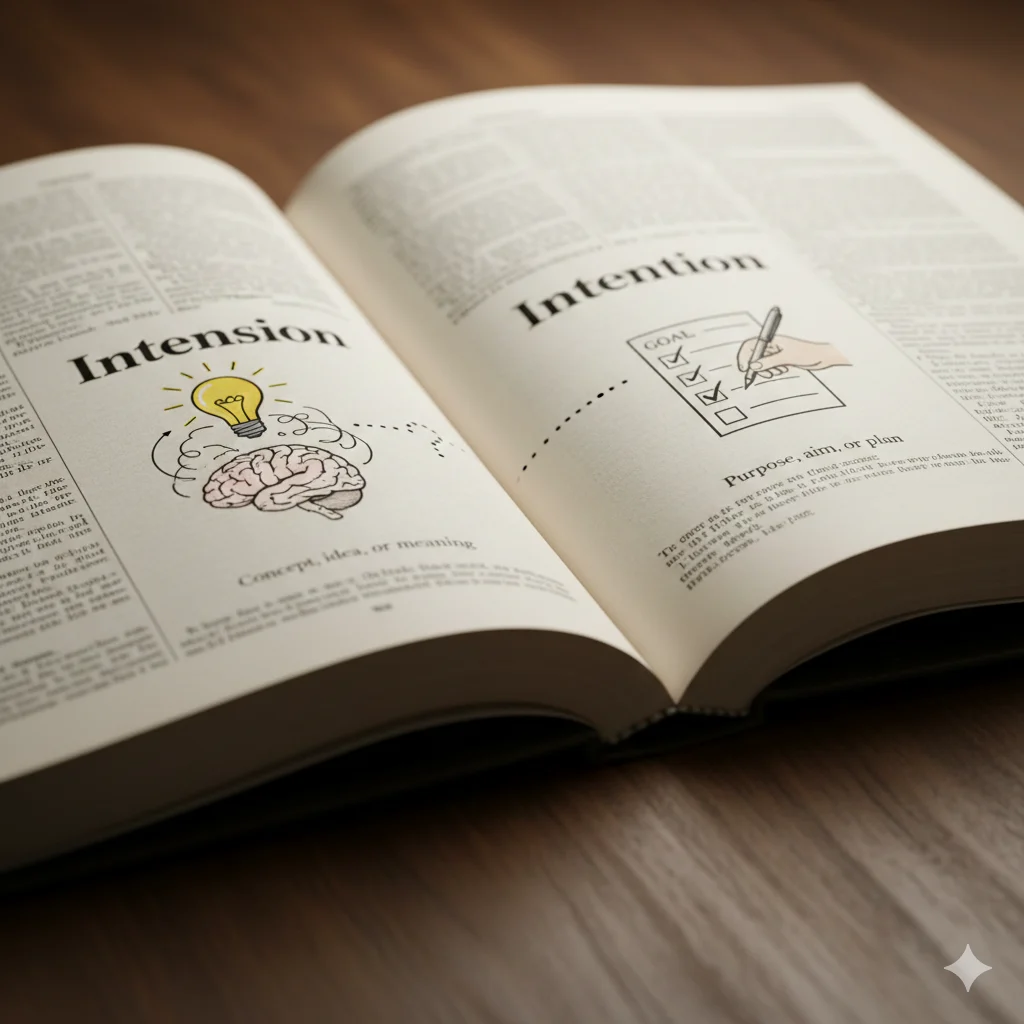
“Intention is your purpose or plan; intension is the meaning or concept of a term.”
Many learners confuse intention and intension, but these words have different meanings and are used in distinct contexts. Intention is the more common word, meaning the purpose, plan, or aim behind an action.
Example: “Her intention is to help others.”
On the other hand, intension is a specialized academic term, mostly used in logic, linguistics, or philosophy, referring to the concept, inherent meaning, or properties of a term.
Example: “The intension of ‘bachelor’ is an unmarried adult male.”
Using the wrong word can confuse readers or make writing appear careless, especially in essays, emails, exams, blogs, or professional writing. This article explains the difference, usage, and common mistakes, so you can write clear, confident, and polished English every time.
Intention or Intension
“Intention” is almost always the correct word you need. It means a person’s aim or plan. “Intension” is a rare, specialized term used mainly in logic and philosophy.
Intention (common): Refers to purpose or goal.
- Example: “My intention is to finish the report by Friday.”
- Example: “She apologized, saying it wasn’t her intention to cause offense.”
Intension (rare): Refers to the internal content or definition of a concept.
- Example: In philosophy, the intension of the word “planet” includes concepts like “orbits a star” and “is spherical.”
The Quick Rule: If you’re talking about what someone means to do, use intention. For everyday writing, emails, goals, and apologies, “intention” is the spelling you want. “Intension” is for specific academic discussions.

The Origin of Intention or Intension
Both words travel back to the same Latin root: intendere, which means “to stretch toward,” “to aim at,” or “to direct one’s attention to.” This core idea of “directing toward” a goal or meaning branched into different paths in English.
“Intention” entered English in the late 14th century through Old French, carrying the sense of “purpose” or “design.” It stuck closely to the idea of aiming one’s mind or actions at a specific outcome.
“Intension” took a more scholarly route. It emerged in logic to describe what is intended or understood within the concept itself—the collection of essential qualities that define it. This is contrasted with “extension,” which is the set of all real-world things the concept applies to (e.g., the intension of “dog” is its definition; the extension is all actual dogs).
The spelling difference isn’t random. It reflects a deliberate effort to distinguish the popular, everyday word (“intention”) from the precise, technical term (“intension”). This is a key example of how language evolves to create clarity, especially where homophones (words that sound alike) could cause confusion in expert fields. The ‘t’ versus ‘s’ spelling visually signals a different meaning, a natural development in specialized vocabulary.
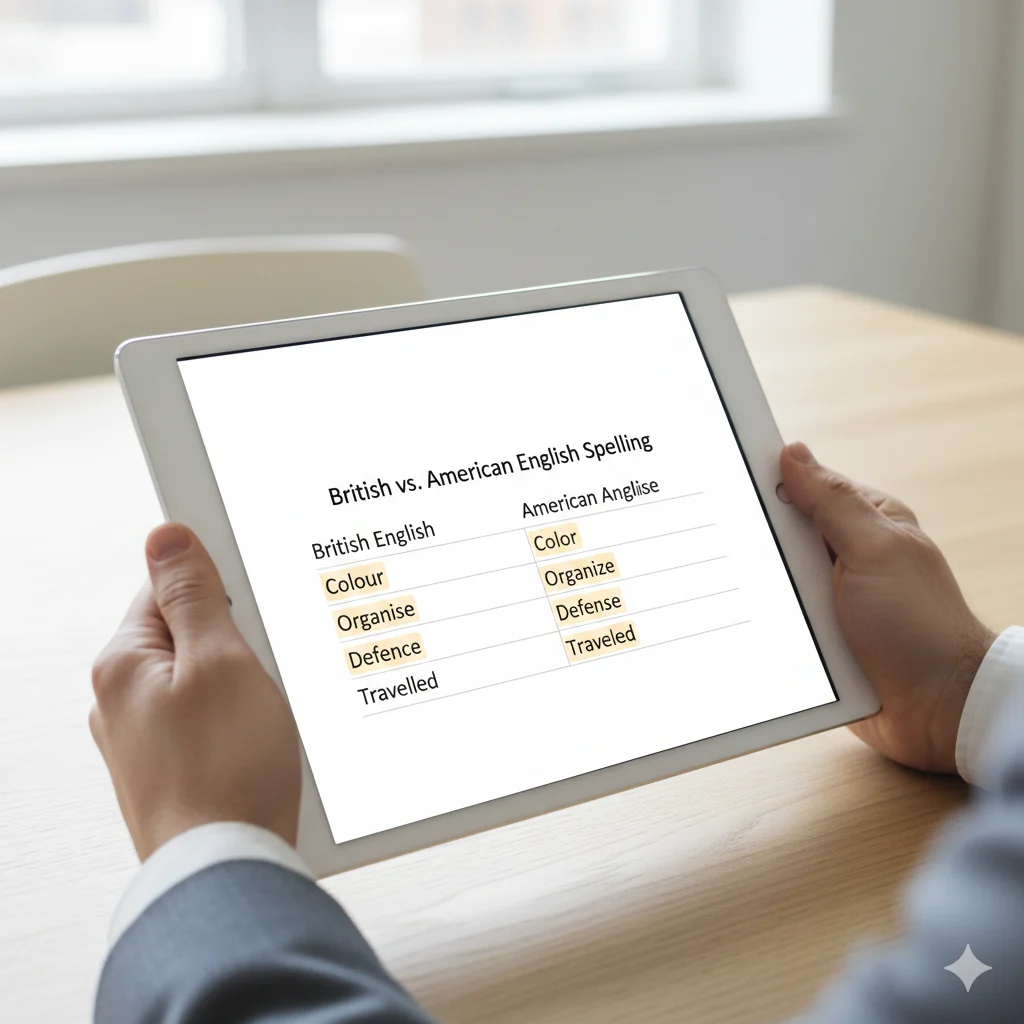
British English vs. American English Spelling
Here’s a crucial point: “Intention” is spelled the same in both British and American English. The confusion does not stem from a transatlantic spelling difference like “color/colour.”
The true variation is between the common word “intention” and the rare, technical word “intension.” This is a difference of meaning, not dialect.
However, both dialects follow their own rules for related words:
- Intentional (Adj.): Spelled the same in US and UK English. “That was an intentional mistake.”
- Intentionally (Adv.): Spelled the same in US and UK English. “He left the document intentionally.”
The main spelling patterns to remember are consistent across English variants for this word family.
Spelling Comparison Table
| Term | Spelling (US & UK) | Primary Meaning | Context of Use |
|---|---|---|---|
| Intention | Always with ‘t’ | A person’s aim or plan. | Everyday language, business, law, general writing. |
| Intension | Always with ‘s’ | The internal definition of a concept. | Philosophy, logic, semantics, linguistics. |
| Intentional | Always with ‘t’ | Done on purpose. | Everyday language, law, sports, psychology. |
Which Spelling Should You Use?
Your audience and purpose are your best guides.
- For a US, UK, or Global General Audience: Always use intention. Whether you’re in New York, London, or Sydney, writing a blog post, a company memo, or a personal email, “intention” is the universally correct choice for expressing purpose.
- For Academic or Technical Writing (Philosophy, Logic, Computer Science): Use intension only when you are specifically discussing the philosophical concept of meaning versus reference. If your paper is about semantics, the logic of definitions, or related fields, use “intension” precisely. In all other academic contexts (history, biology, business studies), use “intention.”
- Simple Rule of Thumb: If you’re not writing a philosophy paper, you almost certainly need intention. When in doubt, choose “intention.” Using “intension” in everyday contexts is a noticeable error, while “intention” is understood everywhere, even in technical discussions where it might be slightly less precise than “intension.”
Common Mistakes with Intention or Intension
- Using “Intension” to Sound Formal or Fancy: This is the most frequent error. Writers sometimes use “intension” in business or legal documents thinking it’s a sophisticated version of “intention.” It isn’t. It’s incorrect and can confuse readers.
- Incorrect: “Our company’s primary intension is customer satisfaction.”
- Correct: “Our company’s primary intention is customer satisfaction.”
- Misspelling “Intentional”: Because the root is “intention,” the adjective is intentional, not “intensional.”
- Incorrect: “The damage was intensional.”
- Correct: “The damage was intentional.”
- Confusing “Intension” with “Intensity” or “Intensive”: Though they sound similar, these words are unrelated. “Intension” is about meaning; “intensity” is about strength.
- Overcorrecting in Philosophy Discussions: Students new to the topic might start using “intension” for every instance of “intention,” even when talking about a philosopher’s purpose. Remember: A philosopher’s intention was to write a book; the book discusses the intension of words.

Intention or Intension in Everyday Examples
Email & Business:
- “Thank you for your email. My intention is to address your concerns in our meeting tomorrow.”
- “We have no intention of discontinuing the service.”
News & Media:
- “The senator announced her intention to run for re-election.”
- “The report questioned the company’s intentions behind the sudden policy change.”
Social Media:
- “My intention for this year is to read more books. #NewYearGoals”
- “No harmful intention behind the joke, but I apologize if it offended anyone.”
Formal & Academic Writing (Non-Philosophical):
- “The intention of this study is to examine the effects of sleep on memory.”
- “The author’s stated intention was to challenge the prevailing historical narrative.”
Formal & Academic Writing (Philosophical):
- “Frege distinguished between sense and reference, a precursor to the modern distinction between intension and extension.”
- “The intension of the term ‘bachelor’ is ‘an unmarried man,’ while its extension includes all unmarried men in the world.”
Intention or Intension – Google Trends & Usage Data
Analysis of search data and text corpora shows a stark contrast in usage. The word “intention” is overwhelmingly more common, with steady, high search volume globally related to goals, psychology (“law of intention”), and everyday use. Searches for “intension” are negligible by comparison, with tiny, sporadic peaks almost exclusively linked to academic searches like “intension vs extension” or “intension philosophy.”
Geographically, “intention” is searched for evenly across English-speaking countries (US, UK, Canada, Australia). There is no regional spike for “intension,” confirming it is not a variant but a niche term. The data clearly reflects user intent: people search for “intention” to understand purpose and goals, while the few searches for “intension” seek a specific technical definition. This aligns perfectly with Google’s algorithm focus on matching content to clear user intent, where providing the quick, correct answer for “intention” is paramount for most users.
FAQs: Intention or Intension
1. What is the plural of intention?
The plural is intentions. Example: “His intentions were good, but the plan failed.”
2. Intension vs. intention in philosophy?
In philosophy, intention refers to a mental state of planning to act. Intension is a property of words/concepts—their definition or sense. They are different terms.
3. Can you give an example of ‘intension’?
Yes. The intension of the word “triangle” is “a three-sided polygon.” This definition is its intension. All actual triangles (drawn on paper, etc.) make up its extension.
4. Is ‘intension’ ever correct in everyday writing?
Almost never. In 99.9% of daily use, from texts to formal reports, the correct word is intention. Using “intension” will likely be seen as a spelling error.
5. What is a synonym for ‘intention’?
Common synonyms include: aim, plan, purpose, goal, objective, design, and intent.
6. What is the difference between intension and extension?
This is a key philosophical pair. Intension is the conceptual meaning or definition of a term. Extension is the set of all actual objects in the world that the term refers to. For “car,” its intension is its definition; its extension is all physical cars.
7. How do you use ‘intentional’ correctly?
“Intentional” means deliberate. Use it when something is done on purpose. Example: “Leaving your phone at home was an intentional choice to disconnect.”
Conclusion
Understanding the difference between intention and intension is a perfect example of mastering language precision. The key takeaway is straightforward: for all general purposes—whether you’re in the US, the UK, or anywhere else—the word you need is intention. It conveys aim, purpose, and plan. Reserve the spelling intension exclusively for discussions within the specialized fields of logic, philosophy, or semantics, where it carries the specific meaning of a concept’s internal definition.
This distinction, while simple, protects your writing from a subtle but significant error. It ensures clarity for your readers and builds your credibility as a careful communicator. Modern search algorithms and users alike reward this clarity. So, let your intention be clear communication: choose “intention” for your goals and plans, and you will naturally write with greater confidence and accuracy. Remember this rule, and you’ll never have to second-guess this spelling dilemma again.

Nina Snicker was born to make people laugh — and she takes that mission very seriously. Known for her quick wit and clever takes on everyday life, Nina turns even the dullest moments into hilarious masterpieces. She believes humor is the ultimate life skill — and her jokes prove it. When she’s not writing, you’ll find her laughing at her own punchlines (because someone has to start the applause).