
We’ve all been there. You’re typing an important email or report, and you pause: is it judgemental or judgmental? That missing “e” can cause real doubt. This common spelling query taps into a deeper need for clarity in professional and personal communication.
People search for this keyword not just for a spelling check, but to understand the rule behind it, ensuring their writing appears polished and geographically appropriate. This confusion stems directly from the differences between British and American English.
This article will solve that puzzle, giving you a quick answer, a detailed breakdown, and practical advice so you can use the word with confidence, whether you’re writing for a US boss or a UK client. Let’s clear up the judgment… or is it judgement?
Judgemental or Judgmental
Both judgmental and judgemental are correct. The spelling depends on where you are writing.
- Use judgmental (without the “e”) for American English.
- Use judgemental (with the “e”) for British English and other Commonwealth varieties like Australian or Canadian English.
Meaning: The word describes a person who is overly critical or quick to form opinions, often in a negative way.
Examples:
- “It’s not helpful to be judgmental when someone is sharing a personal problem.” (US)
- “She felt the comment was unfairly judgemental.” (UK)

The Origin of Judgemental
The word comes from the root noun judge, which entered English from Old French around the 13th century. The core noun form, judgment or judgement, is where the spelling split began. Historically, the spelling with the “e” (judgement) was standard. However, in the early 19th century, American dictionary makers like Noah Webster began a push to simplify and standardize spellings, often removing what they saw as unnecessary letters. This is why color lost its “u” and judgment lost its “e” in American English. The adjective form (judgmental/judgemental) naturally followed the same pattern as its root noun. So, the difference isn’t about right or wrong, but about historical language evolution on different sides of the Atlantic.
British English vs American English Spelling
This spelling difference follows a common pattern in American English, which often drops certain letters found in British spellings. Here’s how it works:
American English Rule: The standard spelling is judgment and judgmental. The “e” is omitted after the “g”.
British English Rule: The standard spelling retains the “e” in the noun judgement, and by extension, in the adjective judgemental. This keeps the “g” soft (sounding like a “j”).
Comparison Table:
| Word Form | American English Spelling | British English Spelling |
|---|---|---|
| Noun | judgment | judgement |
| Adjective | judgmental | judgemental |
| Adverb | judgmentally | judgementally |
Other similar examples include acknowledgment/acknowledgement and abridgment/abridgement.
Which Spelling Should You Use?
Your audience decides the correct spelling for you.
- For a US Audience: Always use judgmental. This is the undisputed standard in American publishing, academia, and business. Using “judgemental” may be marked as an error by American readers or editors.
- For a UK/Commonwealth Audience: Use judgemental. This is the expected form in the United Kingdom, Australia, New Zealand, and South Africa. In Canada, both spellings are often accepted, but the British form is still very common.
- For a Global or Informal Audience: Consistency is key. Pick one variant and stick with it throughout your document. If unsure, the American spelling (judgmental) is more prevalent globally due to the influence of US media and tech platforms. However, always check your client’s or publisher’s style guide.
Common Mistakes with Judgemental
- Mixing Spellings in One Document: “His judgmental attitude was a judgement.” (Incorrect for a single dialect). Be consistent.
- Adding an Extra “e” in American English: Spelling it as “judgemental” in a resume for a US company is a common typo to watch for.
- Confusing it with “Judging”: While related, “judging” is the present participle of the verb “to judge.” “Judgmental” is an adjective describing a character trait. Example: “Stop judging me” vs. “Don’t be so judgmental.”
- Misspelling the Adverb: The rule extends to judgmentally/judgementally. Don’t spell it “judgementaly” or “judgmentalley.”
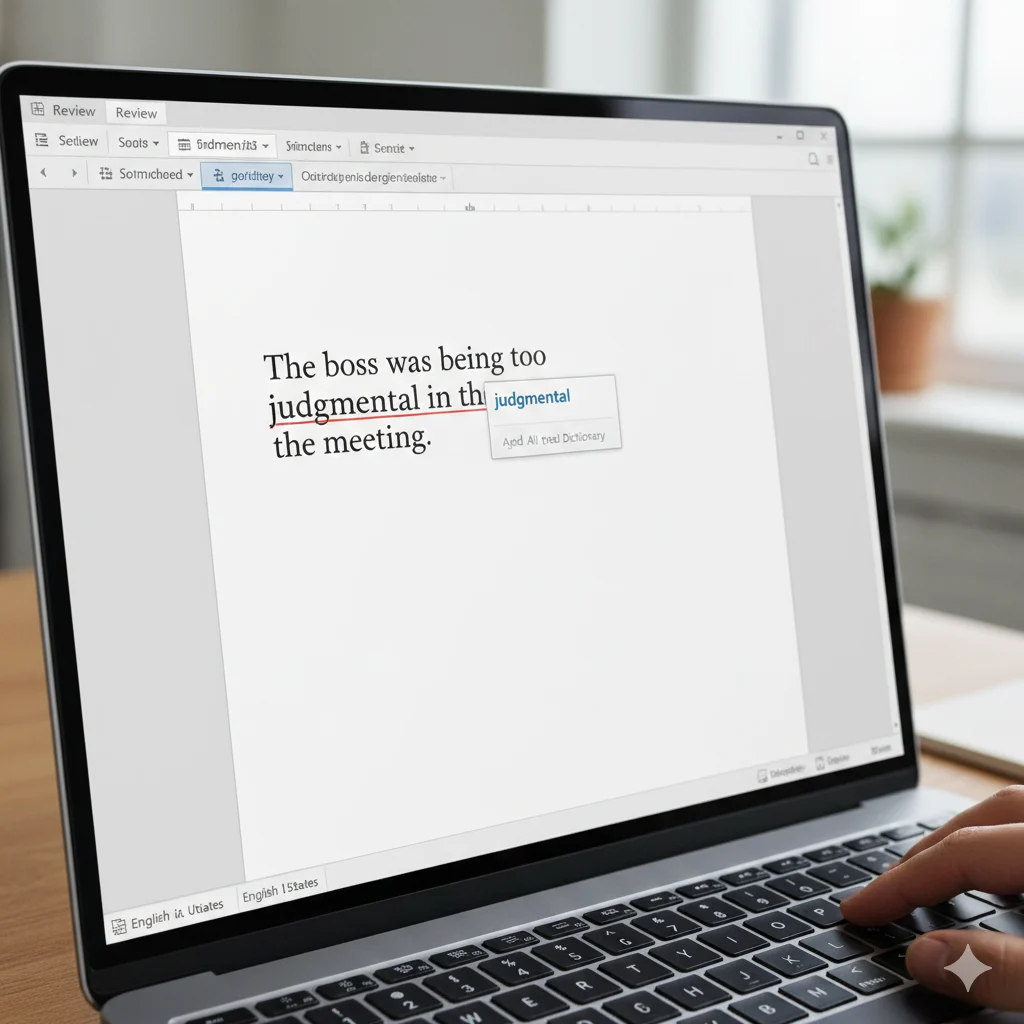
Judgemental in Everyday Examples
- Email (Work): “To foster an open culture, we should avoid judgmental language in team feedback.” (US)
- News Headline: “MP Criticises ‘Judgemental‘ Tone of Benefits Debate.” (UK)
- Social Media Post: “Trying to be less judgmental and more curious about perspectives different from my own. #PersonalGrowth”
- Formal Writing (Report): “The survey responses indicated a perceived judgemental attitude among some staff, affecting psychological safety.” (UK)
Using the correct form naturally builds your credibility and shows attention to detail.
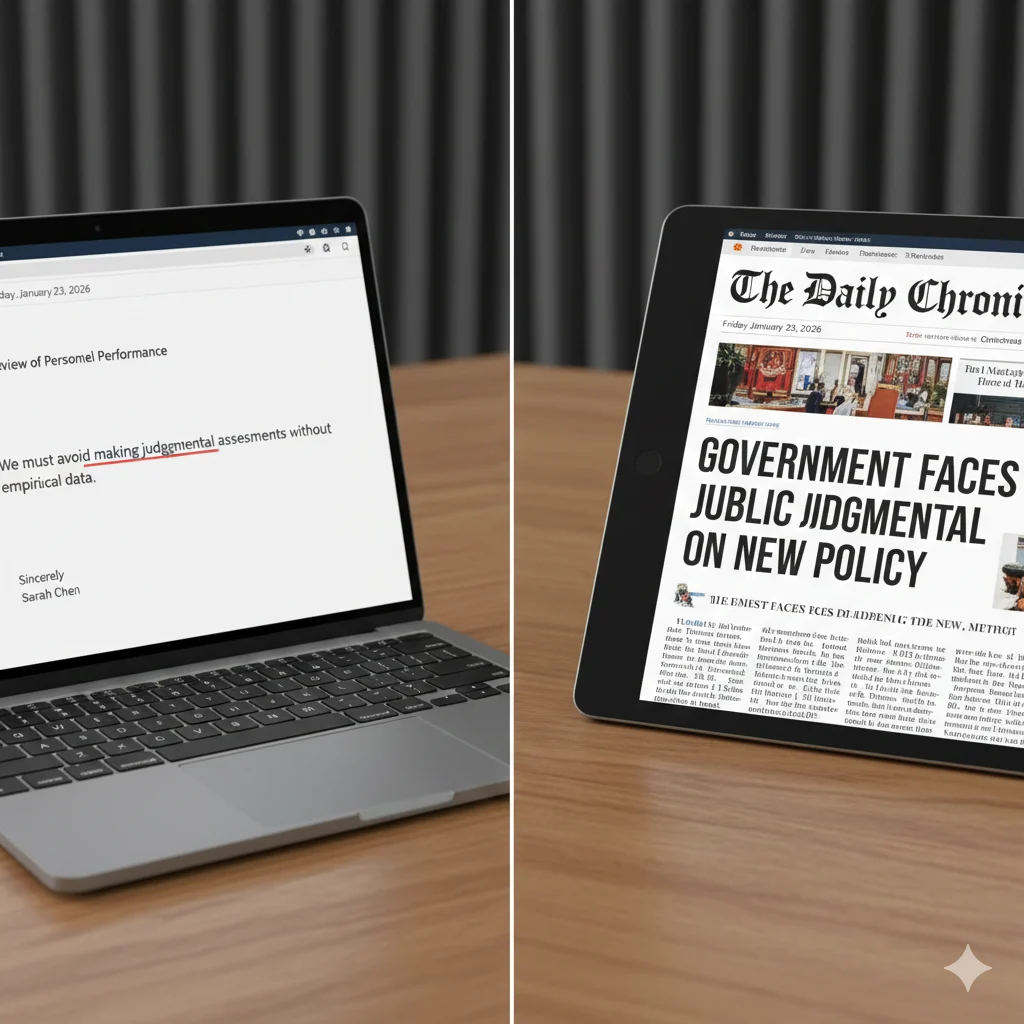
Judgemental – Google Trends & Usage Data
Analysis of search data shows clear geographic patterns. Searches for “judgemental” (with “e”) spike primarily in the United Kingdom, Australia, and India. Searches for “judgmental” (without “e”) dominate in the United States, Canada, and the Philippines. Globally, the American spelling “judgmental” has a slightly higher overall search volume, reflecting the broad reach of US English online. Interestingly, searches often peak when the word is used in popular culture, psychology articles, or discussions about social behavior, indicating people seek understanding of the concept itself, not just the spelling.
(FAQs)
1. Which is correct, judgemental or judgmental?
Both are correct. Use judgmental for American English and judgemental for British English.
2. Is it Judgemental or judging?
“Judgemental” is an adjective describing a critical person. “Judging” is a verb form (the action of making a judgment). Example: She is judging the contest vs. He has a judgemental outlook.
3. How do you spell judgmentally?
Follow the same rule: judgmentally (US) and judgementally (UK).
4. How to use judgemental in a sentence?
Use it to describe someone who forms critical opinions too quickly. “I tried to offer advice without sounding judgemental.”
5. What are synonyms for judgmental?
Critical, censorious, condemnatory, disapproving, hypercritical. A less formal synonym is “preachy.”
6. What does “judgmental person” mean?
It refers to an individual who tends to criticize others harshly or express strong (and often negative) opinions about people’s choices, lifestyles, or actions.
7. Is judgemental a negative word?
Yes, it almost always carries a negative connotation, implying unfair or overly harsh criticism.
Conclusion
In the judgemental vs. judgmental debate, the winner is context. Remember, the core meaning—being overly critical—remains the same; only the spelling changes with your audience. The simple key is to match your spelling to your reader: drop the “e” for American audiences and keep it for British and Commonwealth readers.
This attention to detail matters. It demonstrates professionalism, respects linguistic conventions, and ensures your message is received without distraction. Whether you’re drafting an international report, a social media post, or a personal essay, using the correct variant strengthens your writing. So next time you type the word, make a quick, confident judgment call based on who will be reading it, and you’ll never second-guess that elusive “e” again.

Max Laughwell is the kind of guy who can find comedy in traffic jams and awkward small talk. He believes that if you’re not laughing at life, you’re doing it wrong. His style is smooth, bold, and unexpectedly relatable — like a good joke told at just the right moment. When Max isn’t cracking up his readers, he’s probably out there turning real-life chaos into future punchlines.