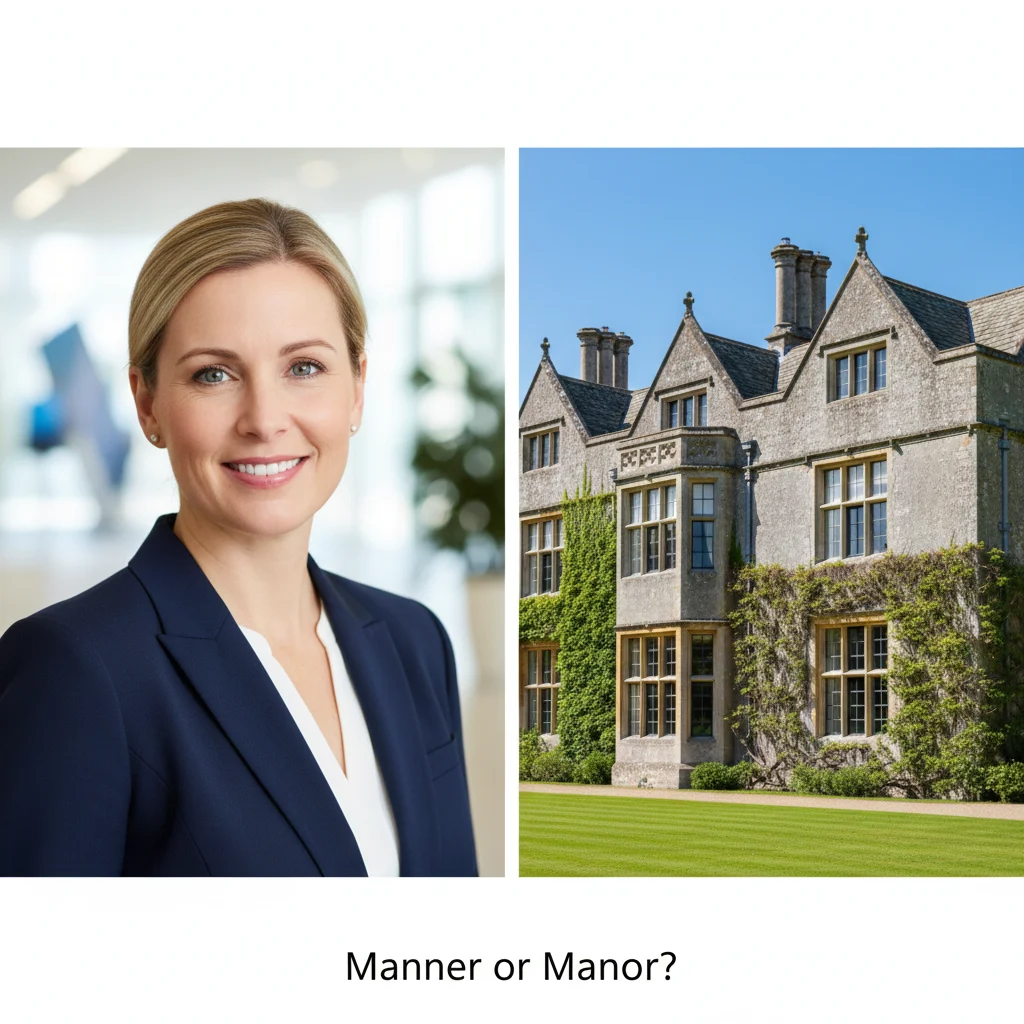
“Manner” means the way something is done or someone behaves, while “manor” refers to a large country house or estate.”
Do you lose marks in exams because of small spelling mistakes like manner or manor? You’re not alone. These two words sound exactly the same, which makes them easy to confuse — but using the wrong one can completely change your sentence’s meaning.
For example:
❌ He spoke in a polite manor.
✅ He spoke in a polite manner.
One tiny letter can make your writing look careless, unprofessional, or grammatically weak — especially in essays, competitive exams, business emails, and formal communication.
In this guide, you’ll clearly understand the difference between manner and manor, learn simple memory tricks, see practical examples, and finally stop confusing these commonly mixed-up English words for good.
Manner or Manor meanings
Manner (noun) means the way something is done or how someone behaves.
Manor (noun) means a large house or a piece of land with historical roots.
examples:
- Manner: She spoke in a calm manner during the meeting.
- Manor: The family has lived in that manor for over 200 years.
Think of it this way: Manner is about actions. Manor is about mansion.
If you are describing a timely manner or manor, the correct word is always manner. You cannot do something in a timely manor unless you are cleaning a house quickly.
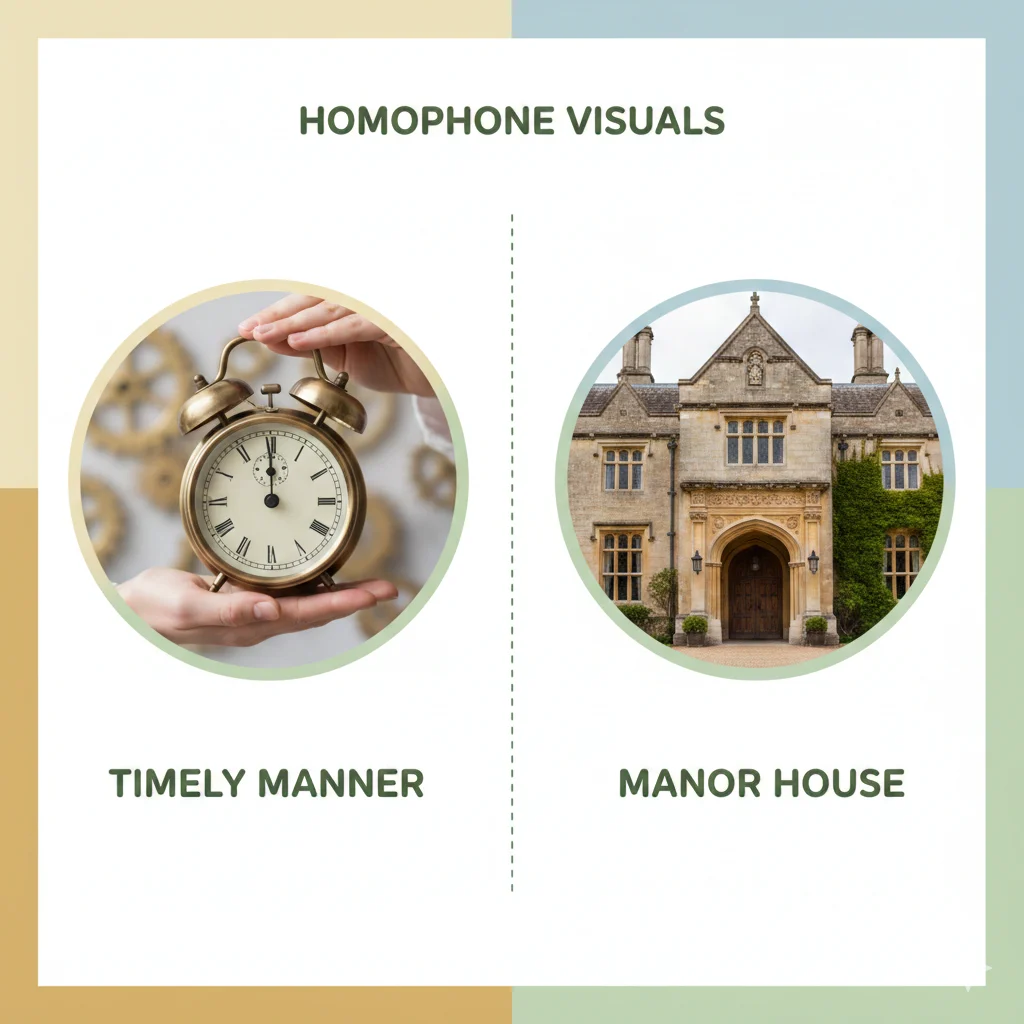
The Origin of Manner and Manor
Why do these two words sound so similar? The answer lies in history.
Manner comes from the Old French word maniere, meaning “way of doing” or “method.” It entered English around the 12th century. Over time, it came to describe personal conduct and style.
Manor comes from the Old French word manoir, meaning “dwelling” or “residence.” It also entered English in the medieval period. A manor was the main house of an estate, often with land and villages attached.
The spellings stayed different because their roots were different. But centuries of spoken English slowly made them sound alike. Today, even native speakers mix up manor vs manner pronunciation. Both are pronounced roughly the same: MAN-er.
However, careful speakers often give manor a slightly stronger “r” sound at the end. But in fast conversation, they are nearly identical.

British English vs American English Spelling
Here is good news: Manner and manor are spelled the same way in both British and American English.
There is no regional spelling difference. The confusion is purely about meaning, not country.
However, usage frequency differs slightly. British English uses manor more often in everyday conversation. This is because the UK has more historic manor houses. Many towns have local landmarks called “The Manor.” Americans might say “estate” or “mansion” instead.
Examples in both dialects:
| Word | British English Example | American English Example |
|---|---|---|
| Manner | His manner was polite and professional. | Her friendly manner put everyone at ease. |
| Manor | The manor has been converted into a hotel. | They bought an old manor in Connecticut. |
The table shows no spelling change. The difference is only in how often each word appears.
Which Spelling Should You Use?
Your audience matters when choosing between manner or manor. Not because the spelling changes, but because the context changes.
For US audiences:
- Manner is extremely common in workplace writing, emails, and feedback.
- Manor appears mostly in real estate, history, or tourism contexts.
- Americans rarely say “manor” in casual conversation unless discussing a specific property.
For UK and Commonwealth audiences:
- Manner is equally common in professional and casual writing.
- Manor appears more frequently in local news, property listings, and historical discussions.
- Some British pubs and hotels use “Manor” in their names.
For global audiences:
- Assume your reader knows both words but may not be a native speaker.
- Use manner for behavior and process.
- Use manor only when you genuinely mean a house or estate.
- Avoid idioms that rely on either word unless you are certain of your reader.
If you are unsure, ask yourself: Am I describing a person or a property? That single question solves everything.
Common Mistakes with Manner or Manor
Even professional writers slip up. Here are the most frequent errors and how to fix them.
1. The “timely manner or manor” error
❌ Please submit your report in a timely manor.
✅ Please submit your report in a timely manner.
A house cannot be timely. A process can be.
2. The “professional manner or manor” error
❌ He handled the complaint in a professional manor.
✅ He handled the complaint in a professional manner.
Unless he handled it while standing inside a manor house, this is wrong.
3. The “in this manner or manor” error
❌ If we proceed in this manor, we will miss the deadline.
✅ If we proceed in this manner, we will miss the deadline.
Again, manner means method. Manor means building.
4. The “manner or manor in a sentence” confusion
Sometimes writers use the wrong word entirely:
❌ The old manner was surrounded by gardens.
✅ The old manor was surrounded by gardens.
Unless the house had excellent etiquette, this needs correction.
5. Pronunciation confusion in speech
Since manor vs manner pronunciation is nearly identical, speakers sometimes write what they hear. They know the word for “house” sounds like “manner,” so they spell it that way.
Fix: Visualize the word. See the “o” in manor. Think of the “o” as the round window of a large house. See the “a” in manner. Think of the “a” as the first letter of “action.”
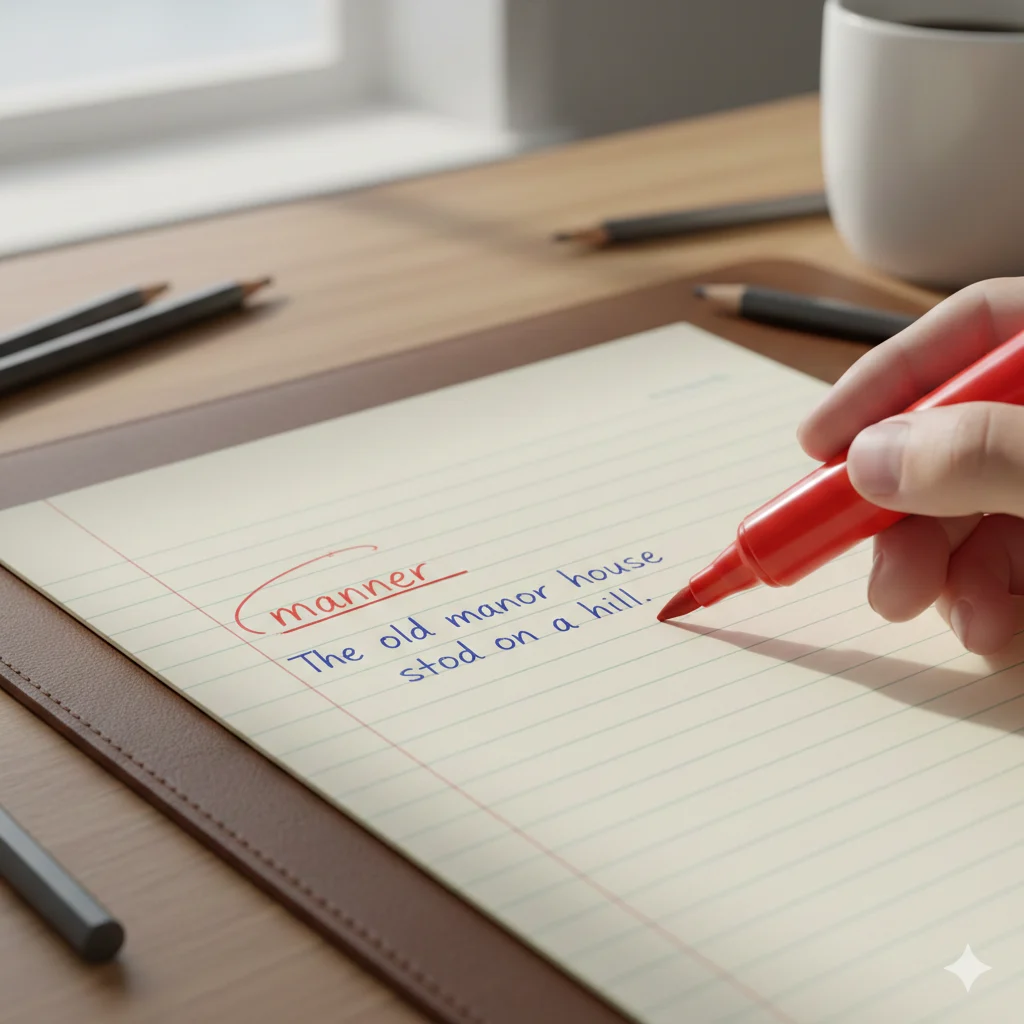
Manner or Manor in Everyday Examples
Let us look at how these words appear in real situations. This will help you recognize correct usage instantly.
In emails:
“Thank you for your patience. We will address this issue in a timely manner.”
“The wedding will be held at the Old Manor on Saturday.”
In news headlines:
“Local Manor to Open as Museum After Restoration”
“Coach Praises Team’s Professional Manner Despite Loss”
On social media:
“I love her whole manner and vibe. She is so genuine.”
“Drove past an abandoned manor today. Who wants to explore?”
In formal writing:
“The defendant’s manner during testimony appeared calm and collected.”
“The manor dates from the 16th century and is Grade II listed.”
In conversation:
“I don’t like his manner. He seems rude.”
“They bought a manor in the countryside and are renovating it.”
Notice the pattern. Manner always connects to people, behavior, or method. Manor always connects to property, history, or real estate.
Manner or Manor – Google Trends & Usage Data
What does search data tell us about manner or manor?
Google Trends shows that manner is searched far more frequently than manor worldwide. This makes sense. Manner is a common word used daily in work and life. Manor is a niche term.
However, the search phrase “manner or manor” spikes periodically. This indicates ongoing confusion. People are actively checking which word to use.
Country breakdown:
- United States: Searches for “manner” dominate. “Manor” appears mostly in real estate searches.
- United Kingdom: “Manor” has higher relative search volume than in the US, due to historical properties.
- Canada, Australia, New Zealand: Similar patterns to the UK, though with lower overall volume.
- Non-native English countries: “Manner” is searched more frequently, often by learners checking usage.
The data confirms what we already suspect. This is a genuine confusion point for writers at all levels. It is not just a spelling question. It is a meaning question.
Comparison Table: Manner vs Manor
| Feature | Manner | Manor |
|---|---|---|
| Part of speech | Noun | Noun |
| Meaning | Way of doing something; behavior | Large house or estate |
| Pronunciation | MAN-er | MAN-er (slight ‘r’ emphasis) |
| Origin | Old French maniere | Old French manoir |
| Common contexts | Behavior, method, style, etiquette | Real estate, history, tourism |
| Example phrase | “In a timely manner“ | “The manor house” |
| Mistake pattern | Using manor when meaning behavior | Using manner when meaning house |
| Memory trick | Manner = Action | Manor = Mansion |
| UK vs US spelling | Same | Same |
| Formal usage | Professional communication | Historical description |
Frequently Asked Questions
1. What is the difference between manner and manor?
Manner means a way of doing something or personal behavior. Manor means a large house or historical estate. They sound the same but have completely different meanings.
2. Is it “timely manner” or “timely manor”?
It is timely manner. This phrase means “done quickly or within a reasonable time.” A manor is a house, so “timely manor” makes no sense.
3. What does “manner or manor in a sentence” look like correctly?
Correct: She answered every question in a professional manner.
Correct: The duke lived in a grand manor overlooking the valley.
4. Are manor and manner pronounced the same?
Yes, manor vs manner pronunciation is nearly identical in everyday speech. Both are said as “MAN-er.” Some speakers pronounce the “r” more clearly in manor, but most do not.
5. What is a manor synonym?
Common manor synonym words include: estate, mansion, hall, country house, chateau, villa, and stately home. Each has slightly different historical or regional meanings.
6. What does “manner meaning” refer to?
Manner meaning refers to:
- The way something happens (method)
- A person’s outward behavior (demeanor)
- Style or fashion (manner of dress)
- Types or kinds (all manner of things)
7. Can I use “manner or manor” in the same sentence?
Yes, if the sentence discusses both behavior and property. Example: “His manner was formal, fitting for the grand manor they were visiting.”
8. Why do people confuse manner or manor?
They are homophones. They sound identical in casual speech. Many people write what they hear without visualizing the spelling. Also, both words come from French and entered English around the same time, so historical overlap adds to the confusion.
9. What is the correct spelling for “in the same manner or manor”?
The correct spelling is in the same manner. This means “in the same way” or “similarly.” Example: “He greeted each guest in the same manner.”
10. How can I remember the difference?
Manner has an “a” like action. Manor has an “o” like old house. Or: A manor has a door. You behave with manner. Pick one trick and use it every time.
Conclusion
The difference between manner or manor is simple once you know what to look for.
Manner is about people. It describes how we act, speak, and conduct ourselves. It appears in workplace emails, performance reviews, and everyday conversation. When you write about behavior, method, or timeliness, the word is manner.
Manor is about property. It describes a large house, usually with historical significance. It appears in real estate listings, historical articles, and travel writing. When you write about a building or estate, the word is manor.
The confusion is understandable. These words are identical in sound. But in writing, they are worlds apart. Using the wrong one can confuse your reader or make you seem careless.
Now you have the tools to get it right every time.
summary:
- Person = Manner
- Property = Manor
- Timely = Manner
- Mansion = Manor
Bookmark this article. Share it with someone who struggles with this pair. And the next time you pause mid-sentence wondering about manner or manor, you will know the answer instantly.

Max Laughwell is the kind of guy who can find comedy in traffic jams and awkward small talk. He believes that if you’re not laughing at life, you’re doing it wrong. His style is smooth, bold, and unexpectedly relatable — like a good joke told at just the right moment. When Max isn’t cracking up his readers, he’s probably out there turning real-life chaos into future punchlines.