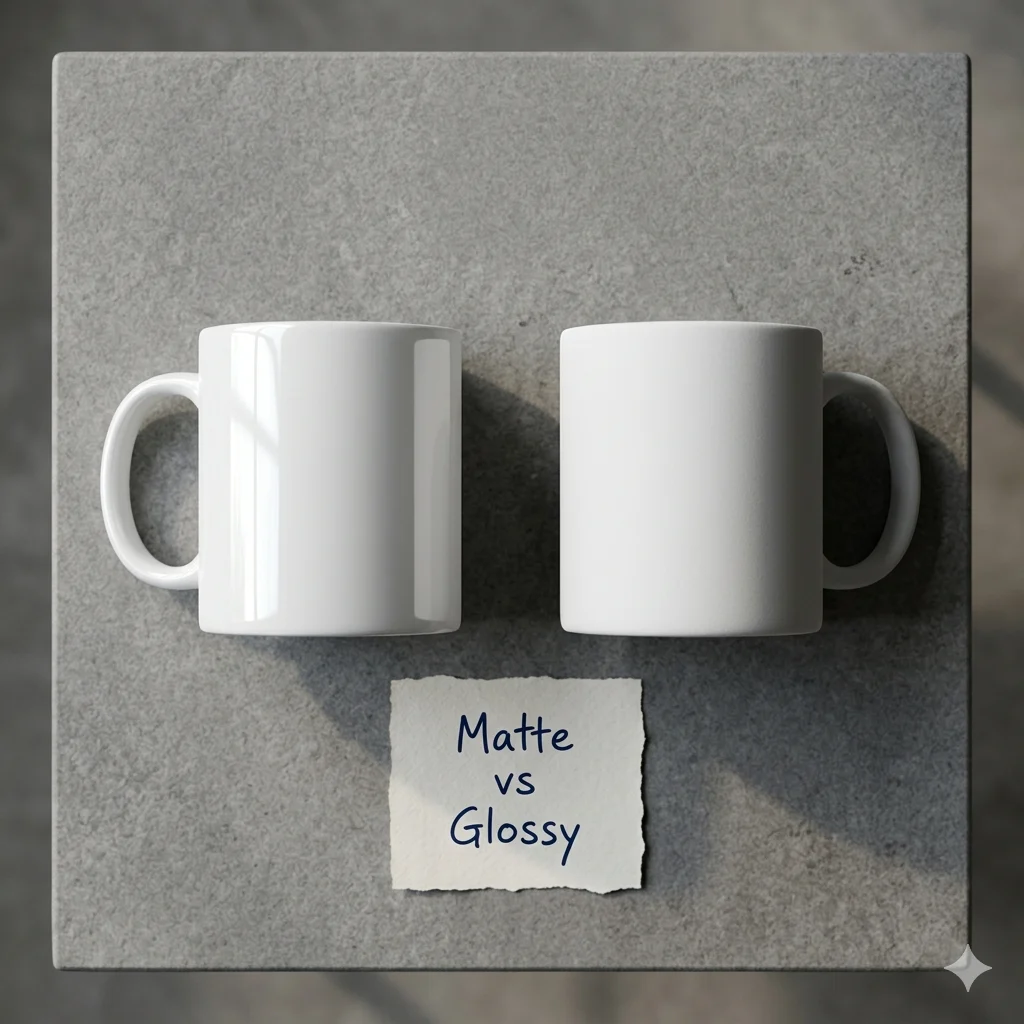
“Matte refers to a non-shiny surface or finish, while Matt is a name; they are not interchangeable.”
Ever wondered why “matte lipstick” sounds correct but “matt lipstick” feels wrong? You’re not alone—many people get confused between matt vs matte and use them interchangeably, but they actually have very different meanings.
Matte is the correct spelling when referring to a dull, non-shiny surface, commonly used in phrases like “matte lipstick,” “matte finish paint,” “matte screen,” or “matte photo.” On the other hand, Matt is usually a personal name (short for Matthew) and is not used to describe textures or finishes.
This common mistake can make your writing look unprofessional if used incorrectly. Understanding the difference between matt vs matte helps you avoid errors and use the right word with confidence in everyday writing, design, or communication.
Matt or Matte meanings
Use matte for almost everything today. Matte means a surface with no shine or gloss. For example, “I bought a matte laptop.” Or “She wore matte lipstick.” Use matt only if you are following old British style guides. Even then, matte is becoming normal in the UK too. The short answer: matte is safe for the whole world. Matt is the older version. Both mean the same thing. Pick matte and move on.
The Origin of Matt or Matte
The word comes from the French language. In French, the word mat means dull, dead, or flat. French artists used this word for painting. A painting with a mat finish did not reflect light. It looked soft and natural.
English borrowed this word in the 1700s. At first, English writers kept the French spelling. They wrote mat for a dull surface. But soon, a problem appeared. The word mat already existed in English. A mat was a small rug for the floor. Or a mat was a wrestling surface. Two different meanings for the same spelling caused confusion.
So English speakers added letters. Some added one more T. They changed mat to matt. This showed the word was different from a floor mat. Others added an E at the end. They changed mat to matte. This also showed the word was different. Both changes happened at the same time in the 1800s. Printers chose different spellings. That is why we have two versions today. The matte etymology is simple: French gave us the word, and English made two spellings by accident.

British English vs American English Spelling
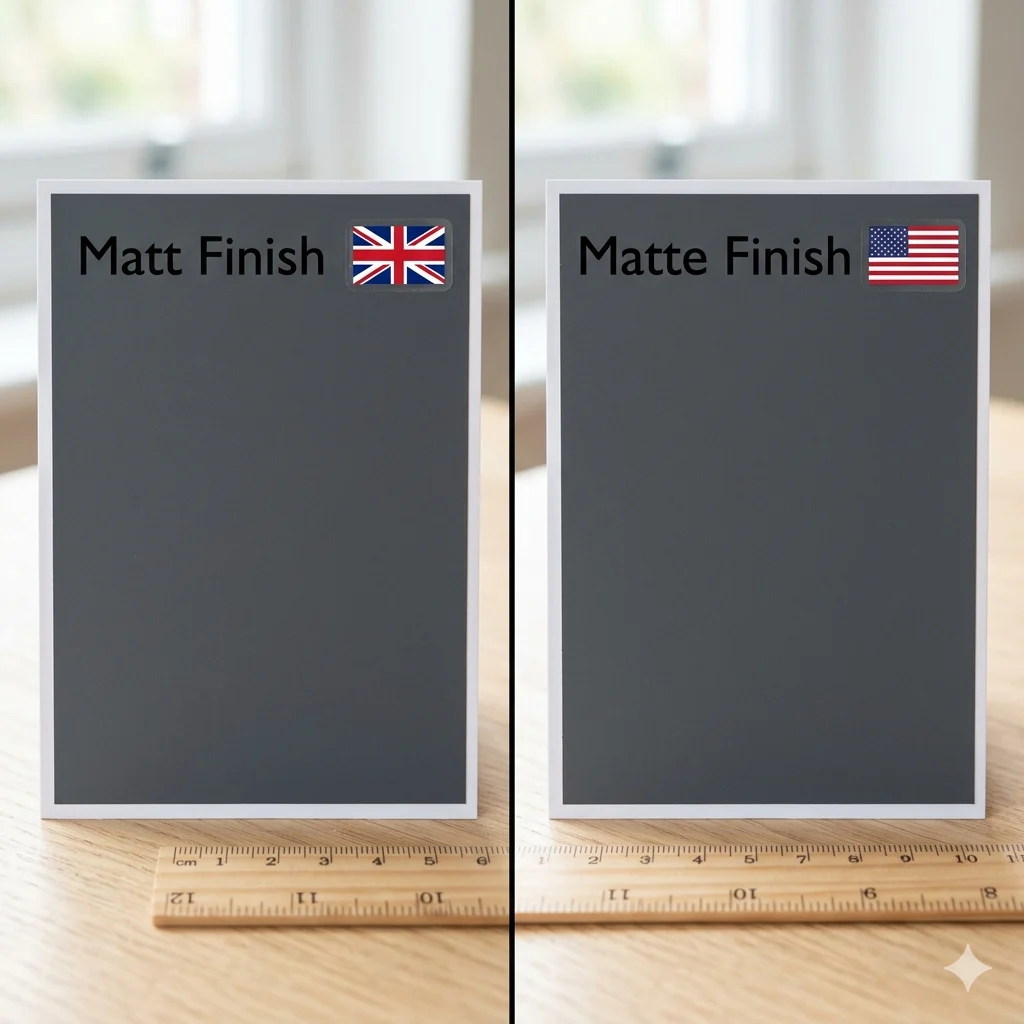
This is the main reason for the confusion. British English and American English chose different spellings. British English kept matt. American English changed to matte. But today, the lines are blurring. Many British companies now use matte because it looks more modern. Many Americans still write matt because that is how they learned it.
Here is a comparison table to make it clear.
| Context | British English (UK) | American English (US) | Global English |
|---|---|---|---|
| Paint on a wall | Matt paint | Matte paint | Matte paint |
| Photo for a frame | Matt paper | Matte paper | Matte paper |
| Lipstick color | Matt lipstick | Matte lipstick | Matte lipstick |
| Phone screen protector | Matt screen | Matte screen | Matte screen |
| Car wrapping film | Matt black | Matte black | Matte black |
| Nail polish top coat | Matt finish | Matte finish | Matte finish |
| Business card stock | Matt card | Matte card | Matte card |
So is it matt or matte in British English? The old answer is matt. The new answer is both. But matte is winning. Is it matt or matte for a global audience? Always matte.
Which Spelling Should You Use?
This depends on who will read your writing. Let me give you clear advice for each audience.
For American readers: Always use matte. American readers expect the letter E at the end. If you write matt, they might think you are talking about a person named Matt. Matt or matte paint in the US is always matte paint.
For British and Commonwealth readers: You have a choice. Matt is the traditional spelling. Many British newspapers still use matt. For example, The Guardian uses matt. But matte is also accepted. Most young British writers use matte. If you are writing for an older British audience, use matt. For everyone else, matte is fine.
For global readers (Asia, Europe, South America, Africa): Use matte. This is the spelling taught in international English courses. China, India, Germany, Brazil, and Nigeria all use matte in English business writing.
For a person’s name: If you are naming a person, Matt (two Ts) is the common short form of Matthew. Mat (one T) is a floor covering. Matte is not a name. So matt or mat for name? The answer is Matt with two Ts.
For a yoga mat: The item you stand on is a yoga mat (one T). The finish of that mat could be matt or matte. Two different words. Do not confuse them. Yoga mat or matt? The item is mat. The finish is matt or matte.
For a floor mat: A floor mat (one T) is the thing by your door. The floor mat can have a matt or matte surface. Again, two different words.
Common Mistakes with Matt or Matte
People make the same errors again and again. Here are the five most common mistakes and how to fix them.
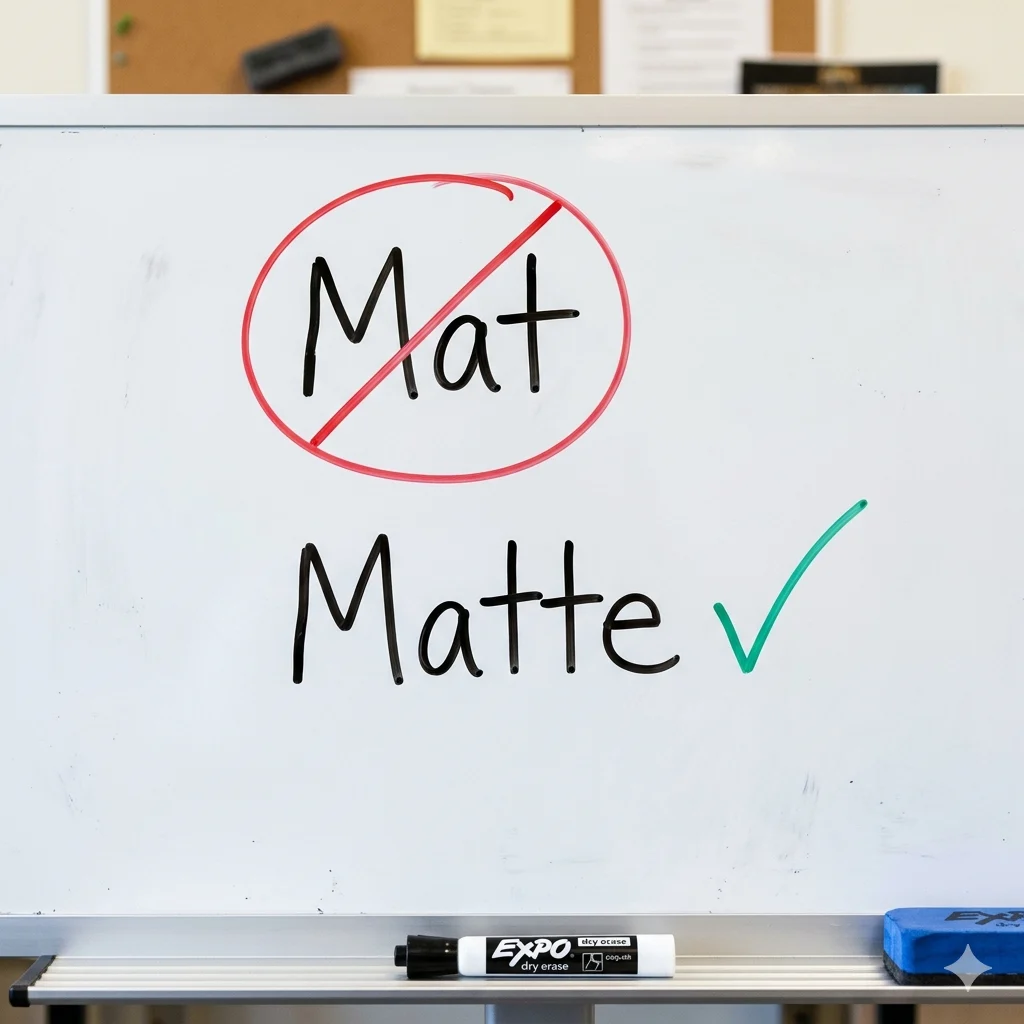
Mistake 1: Using mat when you mean a non-shiny surface.
- Wrong example: “I want a mat finish on my table.”
- Right example: “I want a matt finish” or “I want a matte finish.”
- Why this is wrong: Mat is a small rug. It is a different word with a different meaning. Never use mat for a finish.
Mistake 2: Using matt for a floor covering.
- Wrong example: “Please wipe your shoes on the door matt.”
- Right example: “Please wipe your shoes on the door mat.”
- Why this is wrong: Mat (one T) is the floor item. Matt (two Ts) is the finish or a person’s name.
Mistake 3: Mixing both spellings in the same document.
- Wrong example: “The car has a matt finish and a matte steering wheel.”
- Right example: “The car has a matte finish and a matte steering wheel.”
- Why this is wrong: It looks unprofessional. Pick one spelling and stick with it.
Mistake 4: Forgetting the E in matte for American English.
- Wrong example: “This is a matt black laptop” (writing for a US customer).
- Right example: “This is a matte black laptop.”
- Why this is wrong: Americans expect the E. Without it, your writing looks like a typo.
Mistake 5: Thinking matt and matte are different finishes.
- They are exactly the same thing. Is it matt black or matte black? It is both. One spelling is British. One spelling is American. The color and finish are identical.
Matt or Matte in Everyday Examples
Seeing the word in real sentences helps you remember. Here are examples from different types of writing.
Email at work
“Hello James, please order the matte paper for the annual report. The glossy paper is too hard to read under office lights.”
News headline
“Company releases new matte black smartphone. Early reviews praise the non-slip surface.”
Social media (Instagram)
“Finally found the perfect matte lipstick. No shine. No sticky feeling. Just color. #matte”
Formal writing (product manual)
“The device has a matt or matte finish that reduces fingerprints. Clean with a soft, dry cloth.”
Text message between friends
“Should I get the matte black phone or the silver one? The matte one hides scratches better.”
Art review in a magazine
“The painter used a matte varnish. This choice kept the colors soft and natural.”
Flooring store website
“This floor mat is made of recycled rubber. The top surface has a matte texture. It hides dirt well.”
Hair product label
“For matt or matte hair, apply this clay to dry hair. It removes shine and gives a natural look.”
Rug shopping conversation
“Do you prefer a mat or matt rug? A mat rug (one T) is thin and cheap. A matt rug (two Ts) has a dull, expensive-looking finish.”
Printer instructions
“Use matt or matte paper for photos of people. Glossy paper is better for product photos.”
Matt or Matte – Google Trends & Usage Data
Search data tells us a clear story. Matte is more popular in every English-speaking country. Google Trends shows matte has four times more searches than matt worldwide.
In the United States, matte is used 96% of the time. In Canada, matte is used 92% of the time. In Australia, matte is used 88% of the time. In India, matte is used 94% of the time. In the United Kingdom, matt is used 58% of the time. But that number drops by 5% every year.
Matt or matte paint is the most searched term in this family. People want to know which spelling to use when buying paint online. Matt or matte finish is searched most often for cars, laptops, and phones. Matt or matte paper is searched by photographers and printers.
The data proves one thing. Matte is the future. Matt is slowly disappearing. If you want your writing to be found on Google, use matte.
Comparison Table: All Variations Side by Side
| Spelling | Primary Meaning | Correct? | When to Use This Spelling |
|---|---|---|---|
| Matte | Non-shiny finish | Yes | American English, global English, modern British English |
| Matt | Non-shiny finish | Yes | Traditional British English, some UK style guides |
| Mat | Floor covering (rug) | Yes (different word) | Door mats, yoga mats, wrestling mats |
| Mat | Short for mathematics | Yes (different word, informal) | “I have mat class at 9 AM” |
| Matt | Short for Matthew | Yes (different word) | “Matt is coming to the party” |
| Matte | A person’s name | No | This is not a name |
| Mat | Non-shiny finish | No | This is a common mistake. Never do this. |
(FAQs)
1. Is it matte or matt in British English?
The traditional British spelling is matt. However, modern British English is changing. Many British brands now use matte. Both are accepted. Matte is becoming more common each year.
2. Is it mat or matt or matte?
Mat (one T) is a floor rug or wrestling surface. Matt (two Ts) is the British spelling of a dull finish. Matte (with an E) is the American and global spelling of a dull finish. Know your audience before you write.
3. Is it matt black or matte black?
Both are correct. Matt black is British English. Matte black is American English and global English. The color is exactly the same. Only the spelling changes.
4. What is a matt?
A matt is a non-shiny finish on a surface. It can also be a short form of the name Matthew. The context of the sentence tells you which meaning is being used.
5. What is the difference between matt or matte paint?
There is no difference in the paint itself. The difference is only in spelling. Matt paint is the UK spelling. Matte paint is the US spelling. You buy the same product from the same can.
6. What about matt or matte hair?
Hair products use both spellings. Matte hair has no shine. It looks natural and dry. Most global brands now use matte for hair products. For example, “matte hair wax” or “matte texture powder.”
7. Is it yoga mat or matt?
It is yoga mat (one T). The item you stand on is a mat. The finish of that mat could be matt or matte. These are two different words. Do not confuse them.
8. What is the difference between a mat or matt rug?
A mat rug (one T) is a small, thin floor covering. A matt rug (two Ts) is a rug with a dull, non-shiny surface. Most rug stores mean the finish when they write matt rug.
9. Why does the spelling keep changing?
The word comes from French mat. English speakers added letters to make it look like an English word. Some added one T. Some added an E. No single authority decided the rule. That is why both exist today.
10. Which spelling will Google understand best?
Google understands both matt and matte as the same thing. But for search rankings, matte has more search volume. If you want more people to find your content, always use matte.
11. Is matte or matt used in professional printing?
Professional printers in the US use matte. Professional printers in the UK use matt or matte. When in doubt, ask your printer for their style guide.
12. Can I use matte for all situations?
Yes. Matte is understood in every English-speaking country. It is the safe choice. You will never be wrong with matte.
Conclusion
You now have the complete answer to the matt or matte question. Let me summarize the key takeaways. First, matte is the best choice for most writing today. It works in American English, global English, and even modern British English. Second, matt is the older British spelling. You can still use it for traditional British audiences, but it is slowly fading. Third, never use mat for a finish. Mat is a floor rug. That is a common mistake that looks unprofessional. Fourth, be consistent.
Pick one spelling and use it through your whole document. Fifth, for names, use Matt (two Ts) for a person. For yoga, use yoga mat (one T) for the item. For the finish on that mat, use matte. The simple rule is this: when in doubt, write matte. It is the clear, modern, global standard. Now you can write with confidence. No more deleting and retyping. No more checking Google. You know the answer.

Chuck Winkman is a master of wordplay and timing — the kind of writer who can make even grammar funny. His humor dances between clever and ridiculous, and his jokes always hit with a mix of intellect and silliness. Chuck’s goal? To make the world laugh one pun at a time. If sarcasm had a superhero, it would definitely wear a cape named Chuck Winkman.