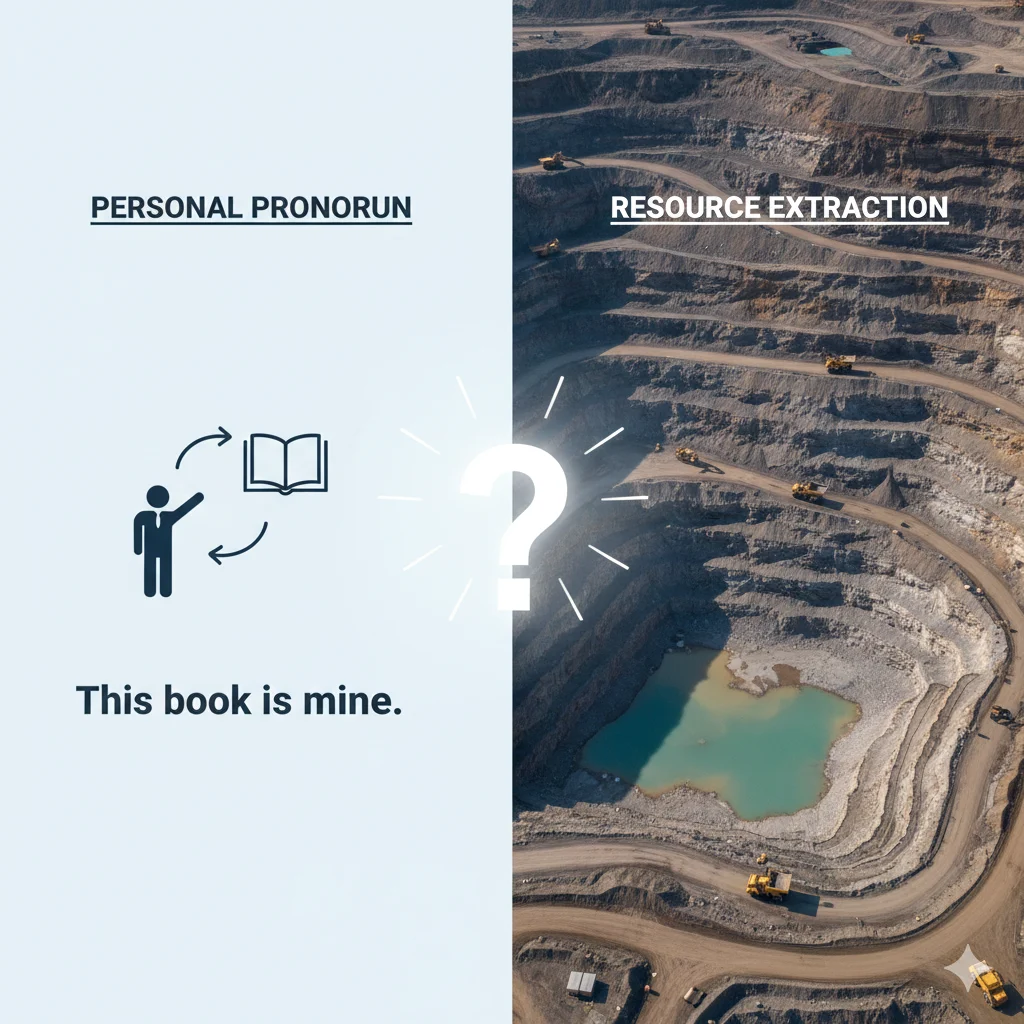
Have you ever paused mid-sentence, unsure whether to type “mine” or “mines”? You’re not alone. This tiny word pair causes massive confusion for English learners and even native speakers. The search for “mine mines” spikes daily as people try to untangle a grammatical knot that sits at the crossroads of personal ownership and industrial extraction.
Is “mines” just the plural of “mine”? Can you say, “That house is mines”? This confusion stems from one word wearing two completely different hats in the English language. Understanding the difference isn’t just about grammar rules—it’s about clarity in communication, whether you’re writing a heartfelt email, a professional report, or a social media post.
This article will cut through the confusion, giving you the quick answers, deep explanations, and practical advice you need to use “mine” and “mines” with absolute confidence. We’ll explore why this mix-up happens, how geography affects usage, and provide clear examples to embed the correct usage in your mind for good.
Mine or Mines
The quick answer is that “mine” and “mines” are different words with different jobs. “Mine” is a possessive pronoun. “Mines” is usually a plural noun or a present-tense verb. They are not interchangeable.
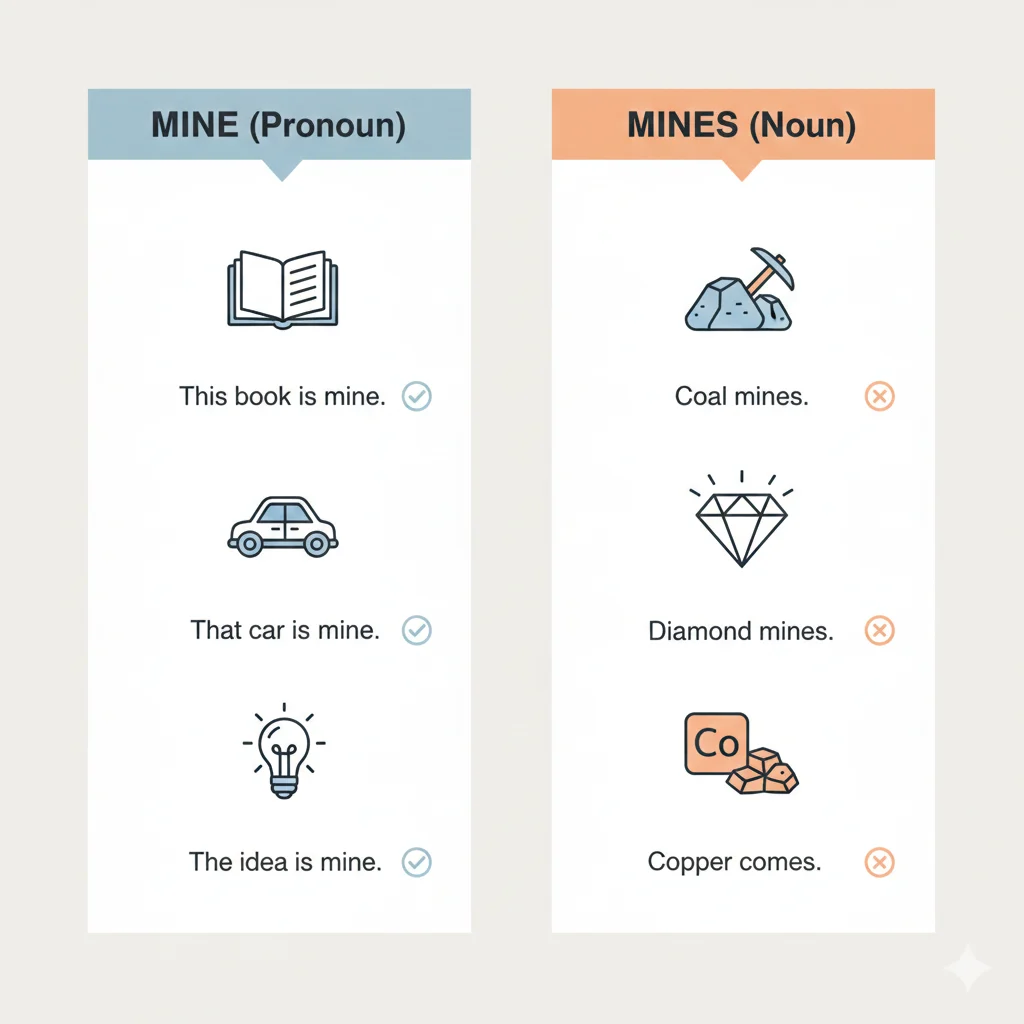
- “Mine” (Possessive Pronoun): Used to show ownership, replacing a noun phrase. It means “belonging to me.”
- Correct: “Is this your book? No, that one is mine.” (Replaces “my book”)
- Incorrect: “That one is mines.”
- “Mines” (Plural Noun): Refers to more than one excavation site for extracting minerals like coal, diamonds, or copper.
- Correct: “The coal mines in the region have been closed.”
- Correct (Verb): “He mines cryptocurrency on his powerful computer.”
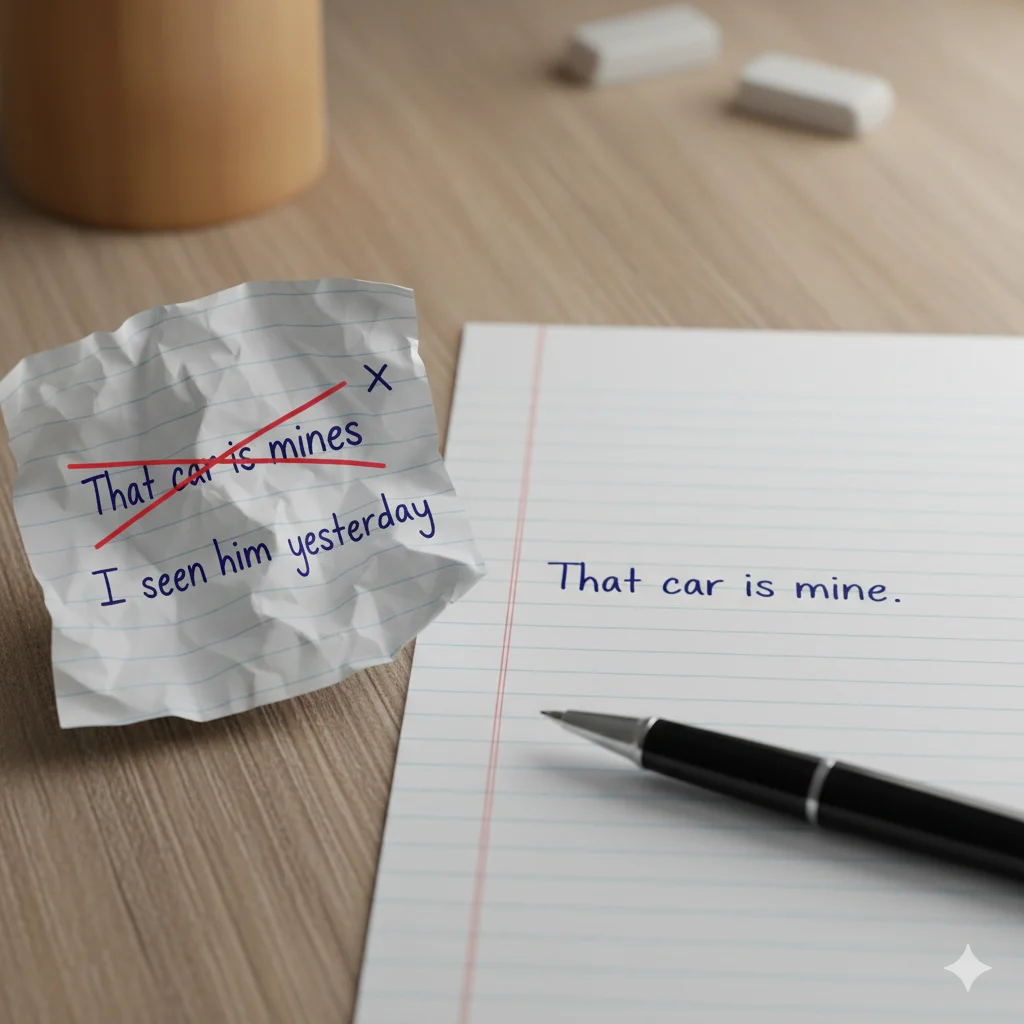
The core confusion happens when people try to use “mines” as a possessive pronoun, which is always grammatically incorrect. “That car is mines” is wrong. “That car is mine” is right.
The Origin of “Mine” and “Mines”
The words “mine” and “mines” come from different roots, explaining their distinct meanings. The possessive “mine” comes from the Old English word “mīn,” which was the genitive (possessive) form of the first-person pronoun “I.” It has always functioned as a possessive, directly indicating “that which belongs to me.”
The noun “mines” (referring to excavation sites) comes from the Old French “mine,” which likely has Celtic origins related to ore or metal. The verb “to mine” developed from this noun. This separate etymological path is why the possessive “mine” has no true plural form as a pronoun. You cannot have multiple “belongings to me” in a pluralized word; you simply use “mine” for all items.
The spelling difference exists because English often adds an “s” to make a count noun plural (one mine, two mines) or to conjugate a verb for third-person singular (he mines). The possessive pronoun “mine” is an exception to this pattern, a relic from its Old English origin that has remained unchanged.
British English vs American English Spelling
Fortunately, the “mine vs mines” confusion is one area where British and American English are in complete agreement. The rules are standardized:
- Both dialects use “mine” as the possessive pronoun.
- Both dialects use “mines” as the plural noun for excavation sites or the verb form.
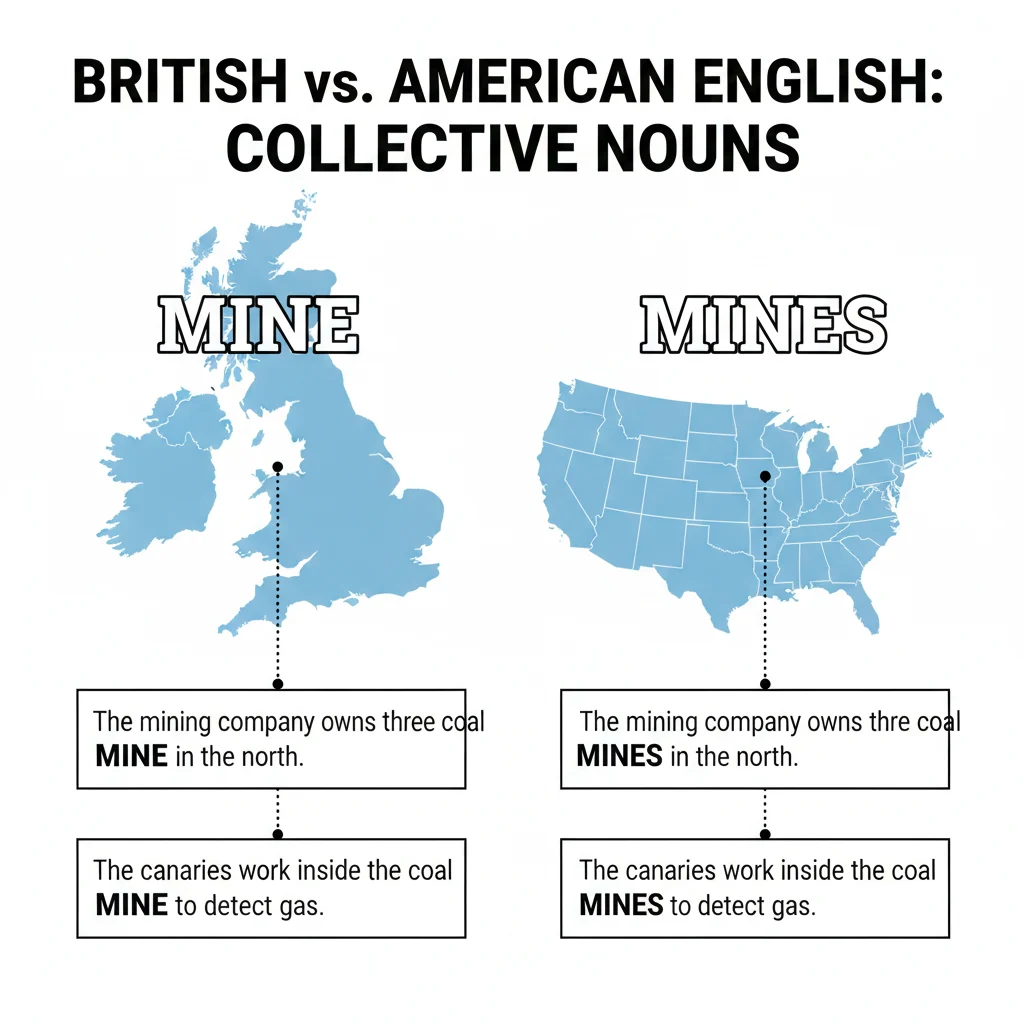
There is no variation like “colour/color” or “realise/realize” here. The potential for error is purely grammatical, not dialectal.
| Usage | Correct Form (Both UK & US) | Example |
|---|---|---|
| Possessive Pronoun | mine | The responsibility is mine. |
| Plural Noun | mines | Gold mines can be dangerous. |
| Verb (3rd Person) | mines | She mines data for insights. |
Which Spelling Should You Use?
Your choice depends entirely on what you want to say, not on your location.
- For All Audiences (US, UK, Global): Use “mine” when indicating possession. This is universal. If you mean “belonging to me,” it is always “mine.”
- For All Audiences: Use “mines” only when talking about multiple excavation sites (e.g., “diamond mines,” “landmines”) or the action of extracting resources (“he mines bitcoin”).
- Formal vs. Informal Writing: The rule is strict in formal writing (reports, academic papers, business emails). Using “mines” as a possessive is a clear error. In informal texting or social media, you might see the incorrect “mines” used colloquially, but it should not be copied as it is non-standard.
Common Mistakes with “Mine” and “Mines”
The most frequent error is using “mines” as a possessive pronoun. Let’s correct it:
- Mistake: “I think that pen is mines.”
- Correction: “I think that pen is mine.”
- Why: “Mines” is not a possessive pronoun. “Mine” already implies ownership.
- Mistake: “Her opinion and mines are different.”
- Correction: “Her opinion and mine are different.”
- Why: Even when joined with another element, the possessive pronoun remains “mine.”
- Confusion: Mixing up the noun and verb. Remember: A company mines (verb) for ore in its mines (noun).
“Mine” and “Mines” in Everyday Examples
Seeing words in context cements understanding.
- Email (Professional): “The attached findings are based on my research, so any errors are mine alone to correct.”
- News Headline: “Government Announces Mines and Minerals Department Auction for Copper Leases.”
- Social Media (Casual): “Just found my old diary! The cringe is all mine 😂 #Throwback”
- Formal Report: “The Mines and Minerals Department Punjab oversees the safe and regulated extraction of resources.”
“Mine” and “Mines” – Google Trends & Usage Data
Google Trends data reveals a fascinating split. Searches for “mine” are consistently high and global, driven by its use as a common pronoun (“my minecraft world,” “of mine”). Searches for “mines” show very different, context-specific peaks. These spikes are often tied to news about the Mines and Minerals Department, job auctions (like “Mines and Minerals Department Jobs”), industrial accidents, or commodity trading (e.g., “coal mines”).
Geographically, searches for “mines” are higher in regions with mining industries—like parts of the USA, Australia, Canada, and Pakistan (related to the Ministry of Mines and minerals Pakistan). This data perfectly illustrates the two worlds of this keyword: one is personal and grammatical, the other is industrial and economic.
(FAQs)
1. What is the difference between “mine” and “mines”?
“Mine” is a possessive pronoun meaning “belonging to me.” “Mines” is the plural form of the noun “mine” (an excavation site) or the present tense verb for the act of extraction.
2. Is “mine” plural?
No, the possessive pronoun “mine” is not plural. It is used for both singular and plural possessions: “That car is mine” (singular) and “Those cars are mine” (plural).
3. What are the 4 types of mines?
The four main types are: 1) Surface Mines (open-pit, strip), 2) Underground Mines, 3) Placer Mines (for minerals in sediments), and 4) In-Situ Mines (leaching minerals in place). Some lists detail 10 types of mining, including mountaintop removal, dredging, and room-and-pillar.
4. Can “mines” ever be correct in a sentence like “It is mines”?
No. “It is mines” is always grammatically incorrect if you mean possession. The correct form is “It is mine.”
5. What does “Mines and Minerals Department auction” refer to?
This typically refers to a government department (like the Mines and Minerals Department Punjab) holding a public e-auction for leases or licenses to extract minerals from specific lands.
6. What is the verb form?
The verb is “to mine.” Conjugated: I mine, you mine, he/she/it mines, we mine, they mine. Example: “The company mines for gold.”
7. Are “landmines” related?
Yes, a landmine is a type of explosive mine (noun) planted in the ground. The term uses the “excavation/placement” meaning metaphorically.
Conclusion
Mastering “mine” and “mines” is about recognizing a simple but crucial boundary in English. The possessive pronoun “mine” stands alone, a complete and unchangeable word showing ownership. The noun “mines,” along with its related terms like Mines and Minerals Department jobs or mining auctions, belongs to the world of industry, resources, and action.
Whether you’re drafting an email, reading about a Mines and Minerals Department Punjab auction, or clarifying ownership, remember this rule: if it belongs to you, it is “mine.” If you’re talking about digging it up, it involves “mines.” By applying this clear distinction, you eliminate a common error and communicate with precision and confidence, no matter the audience or platform.

Tessa Hadley is a British novelist celebrated for her sharp wit and deep understanding of everyday lives. Her fiction often explores the humor and heartbreak tucked inside ordinary moments. Though known for literary fiction, Tessa’s dry, clever tone makes her a quiet master of subtle comedy — the kind that sneaks up on you and makes you laugh mid-sigh.