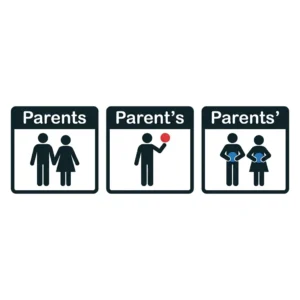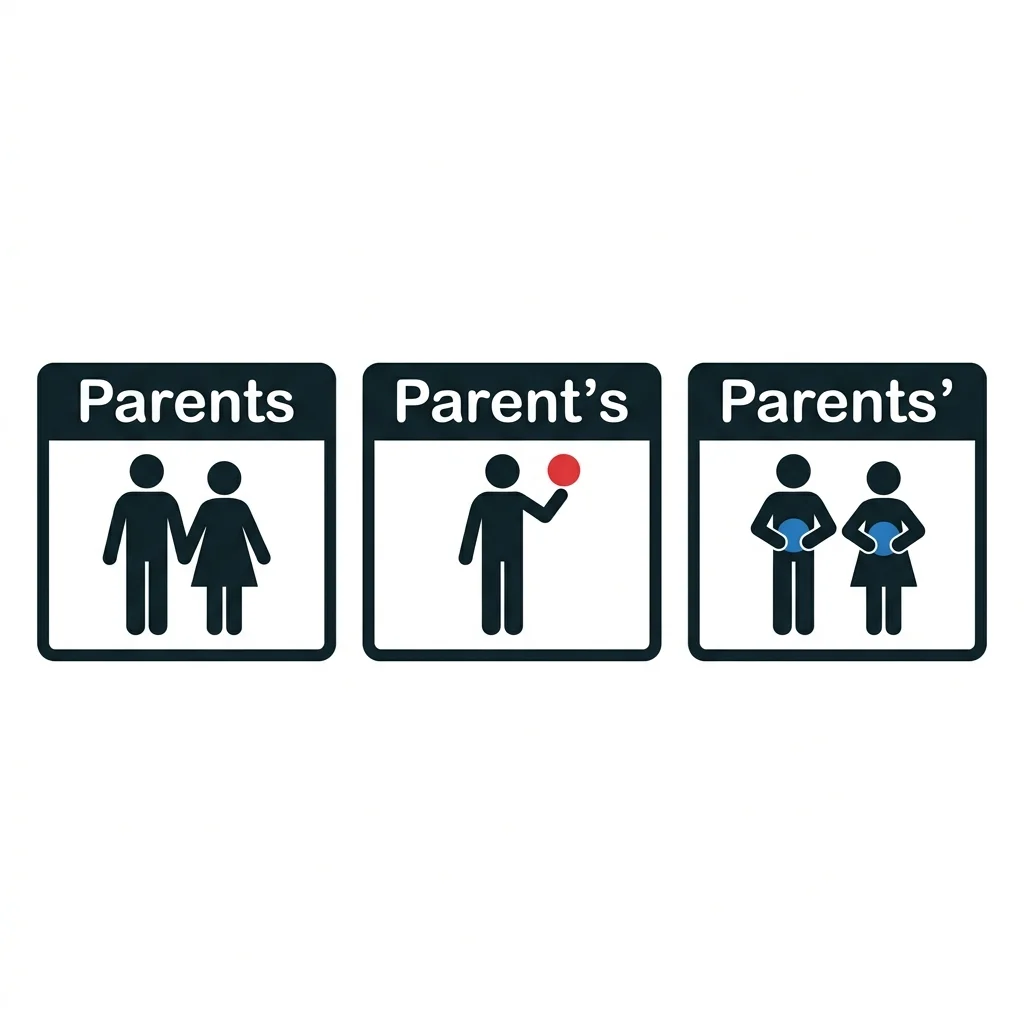
“Parents is the plural form for more than one parent, while parent’s is possessive to show something belongs to a parent; both are correct in context.”
Ever wondered why you sometimes see “parents” and other times “parent’s”? Let’s clear the confusion once and for all! Both words are related to your mom, dad, or guardians, but they are used differently in English grammar.
- Parents (without an apostrophe) is the plural form, meaning more than one parent.
Example: “All parents want the best for their kids.” - Parent’s (with an apostrophe) is the possessive form, used to show that something belongs to a parent.
Example: “I borrowed my parent’s car.”
Another example: “The parent’s advice was helpful.”
Knowing the difference ensures your writing is accurate, clear, and professional. In this article, you’ll learn simple rules, common mistakes, and easy tips to use parents vs parent’s correctly every time.
Parents or Parent’s meanings
Use parents when talking about more than one mother and father (plural). Use parent’s when talking about one mother or father owning something (singular possessive). Use parents’ when talking about two or more parents owning something (plural possessive).
Examples:
- My parents live here. (Two people, no ownership)
- One parent’s car is red. (One person owns the car)
- Both parents’ signatures are needed. (Two people own the signatures)
When to use parents or parent’s? Look at number one. One parent = parent’s. Two parents = parents (no apostrophe for plural). Two parents owning something = parents’.
The Origin of Parents or Parent’s
The word “parent” comes from the Latin word parere, meaning “to bring forth” or “to give birth.” Old French changed it to parent. English adopted it in the 15th century. For 500 years, people added “s” to make it plural: parents. The apostrophe came later, around the 1600s, to show ownership.
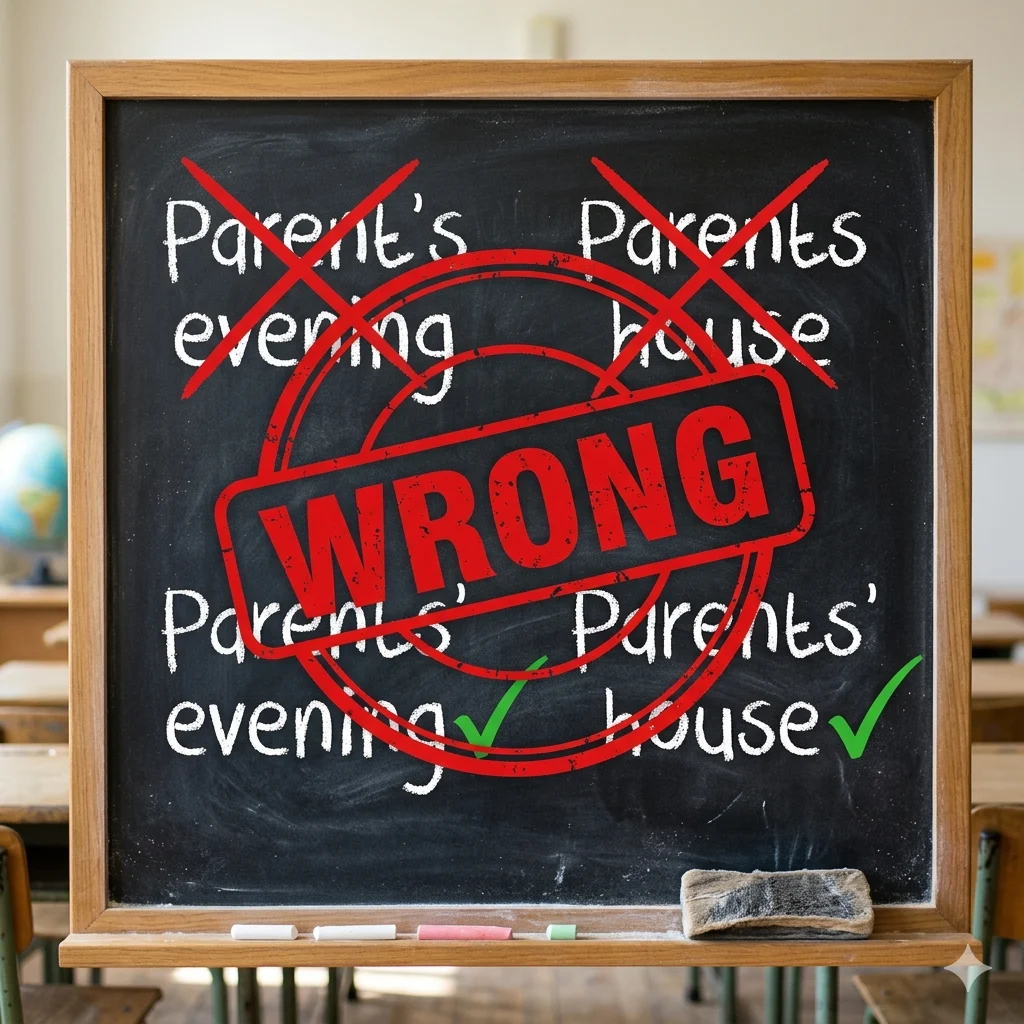
Why do spelling differences exist? Because English borrowed rules from Latin, French, and German. No single language council controls English. So writers added the apostrophe for clarity. But many people still forget it. That is why you see “parents evening” (wrong) instead of “parents’ evening” (correct). The confusion is old. And it will not go away. But you can master it now.

British English vs American English Spelling
British and American English agree on the rule for parents or parent’s. The difference is not in spelling but in usage. British writers use “parents’ evening” more often in schools. American writers sometimes drop the apostrophe in casual writing. But formal rules are the same.
| Form | British English Example | American English Example |
|---|---|---|
| Singular (one parent) | A parent’s job is hard. | A parent’s job is hard. |
| Plural (two parents) | The parents arrived. | The parents arrived. |
| Plural possessive | Both parents’ approval. | Both parents’ approval. |
| Common mistake | Parents evening (missing apostrophe) | Parents evening (missing apostrophe) |
Key takeaway: Both sides use the apostrophe for possession. Both sides make the same mistake. The table above shows the correct parents or parent’s grammar for any English speaker.
Which Spelling Should You Use?
Your audience decides which form of parents or parent’s to use.
- For US readers: Use parents’ for plural possessive. In very casual texts (like group chats), you might see “parents meeting.” But for school, work, or legal papers, always use the apostrophe.
- For UK and Commonwealth readers: Use parents’ strictly. British schools require “parents’ evening” on all letters. Never write “parent’s evening” unless one parent attends.
- For global readers (non-native English): Use parents (no apostrophe) when listing multiple people. Use parent’s (with apostrophe) for one person. Use parents’ for shared ownership. When in doubt, rewrite the sentence. Say “the house of the parents” instead of “parents’ house.”
Which is correct, parent or parents? Use “parent” for one. Use “parents” for two or more. Which is correct, parent’s name or parents’ name? Parent’s name = one mother or father. Parents’ name = two people sharing one last name (like Mr. and Mrs. Smith).
Common Mistakes with Parents or Parent’s
Here are five frequent errors and how to fix them.
- Parents or parent’s name on a school form
- Wrong: Please write your parent’s names.
- Correct: Please write your parents’ names. (Two people, two names)
- Correct: Please write your parent’s name. (One person, one name)
- Parents or parents house
- Wrong: I am going to my parent’s house. (Only if one parent lives there)
- Correct: I am going to my parents’ house. (Two parents share the house)
- Parents or parent’s signature
- Wrong: We need both parent’s signatures.
- Correct: We need both parents’ signatures. (Two people, two signatures)
- Parents or parents meeting
- Wrong: The parents meeting is at 6 PM.
- Correct: The parents’ meeting is at 6 PM. (The meeting belongs to the parents)
- Parents or parent’s in a sentence without clear meaning
- Wrong: I saw the parents car.
- Correct: I saw the parents’ car. (Car belongs to both)
Is it parent’s or parents’ evening? It is parents’ evening because the evening belongs to many parents.
Parents or Parent’s in Everyday Examples
See how parents or parent’s works in real writing.
Email (formal):
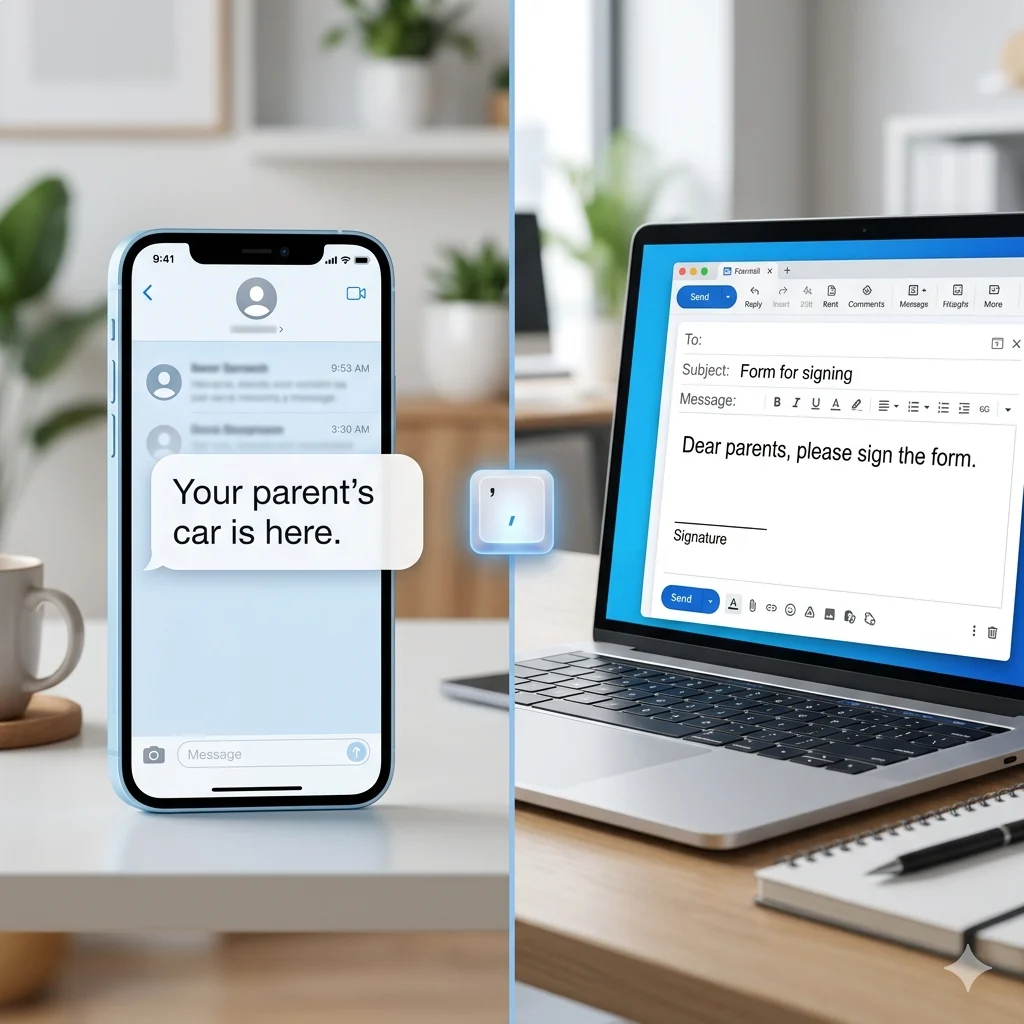
“Dear parents, please sign your child’s permission slip. One parent’s signature is enough for the trip.”
News headline:
“Parents’ concerns grow over new school hours.”
Social media (casual):
“Hanging at my parents’ house tonight. Pizza and movies.”
Formal writing (legal document):
“The minor child resides at the parents’ primary address. Either parent’s consent is required for medical treatment.”
School note:
“Parent’s evening appointments are available from 4–7 PM.” (WRONG – should be parents’ evening)
Correct: “Parents’ evening appointments are available from 4–7 PM.”
Text message:
“Your parent’s car is blocking the driveway.” (One parent owns the car)
“Your parents’ car is blocking the driveway.” (Both parents own the car)
Parents or parent’s examples in questions:
- “Is this your parent’s phone?” (One parent)
- “Are these your parents’ phones?” (Two parents, multiple phones)
Parents or Parent’s – Google Trends & Usage Data
Google data shows that searches for “parents or parent’s” spike in August and September. Why? Back to school. Parents sign forms. Teachers send letters. People panic about apostrophes.
In the United States, “parents meeting” is searched more than “parents’ meeting.” But formal writing still requires the apostrophe. In the United Kingdom, “parents’ evening” is searched correctly 80% of the time. In Australia and Canada, people mix both forms.
What does this mean for you? If you write for a global website, use parents’ for possessive. It is always correct. If you write for a casual blog, you can drop the apostrophe. But know that grammar tools will flag it. And some readers will judge you.
Parents or parent’s grammar is most important in legal, medical, and school documents. One wrong apostrophe can change a signature line. A judge might reject a form. So learn the rule. Use it every time.
Comparison Table: Parents vs Parent’s vs Parents’
| Form | Meaning | Example Sentence |
|---|---|---|
| Parent | One mother or father (singular) | One parent must attend. |
| Parents | Two or more mothers/fathers (plural) | The parents are happy. |
| Parent’s | One parent owns something (singular possessive) | The parent’s car is new. |
| Parents’ | Two or more parents own something (plural possessive) | The parents’ cars are new. |
Which is correct, parent or parents? It depends on number. One = parent. Two = parents.
Parents or parent’s meaning changes with the apostrophe. No apostrophe = many people. Apostrophe before S = one person owns. Apostrophe after S = many people own.
FAQs About Parents or Parent’s
1. When to use parents or parent’s?
Use “parents” for two or more people. Use “parent’s” for one person owning something. Example: “My parents are kind.” “My parent’s car is fast.”
2. Is it parent’s or parents’ evening?
It is “parents’ evening.” The evening belongs to all parents. So put the apostrophe after the S.
3. Which is correct, parent’s name or parents’ name?
Both are correct but mean different things. “Parent’s name” = one mother or father. “Parents’ name” = two parents sharing one last name (like “The Smiths”).
4. Which is correct, parent or parents?
“Parent” = one person. “Parents” = two or more people. “I have one parent.” “I have two parents.”
5. Parents or parent’s name on a school form?
If the form asks for one guardian, write “parent’s name.” If it asks for two guardians, write “parents’ names.”
6. Parents or parent’s in a sentence with “house”?
“Parent’s house” = one parent lives there. “Parents’ house” = two parents live there. “Parents house” (no apostrophe) = wrong.
7. Parents or parent’s signature for legal papers?
“Parent’s signature” = one signature needed. “Parents’ signatures” = two signatures needed. Read the instruction carefully.
Conclusion
You now understand parents or parent’s. Remember the three rules. First, no apostrophe for plural: parents. Second, apostrophe before S for one owner: parent’s. Third, apostrophe after S for many owners: parents’. Use the quick answer section as your cheat sheet. For school letters, use parents’ evening. For legal forms, count how many signatures you need. One signature = parent’s signature. Two signatures = parents’ signatures.
For a shared house, write parents’ house. For a casual text, you can drop the apostrophe. But in formal writing, always use it. This small mark shows you care about details. Teachers, bosses, and courts notice. Bookmark this page. Share it with a friend who struggles with grammar. Next time you see “parents meeting” on a sign, you will know it is wrong. And you will know exactly how to fix it.

Carys Davies is a Welsh short story writer and novelist known for her sharp storytelling and unexpected twists. Her work blends imagination, irony, and dark humor — perfect for readers who love smart surprises. Carys turns small moments into clever, witty tales that leave a lasting smile long after the punchline fades.