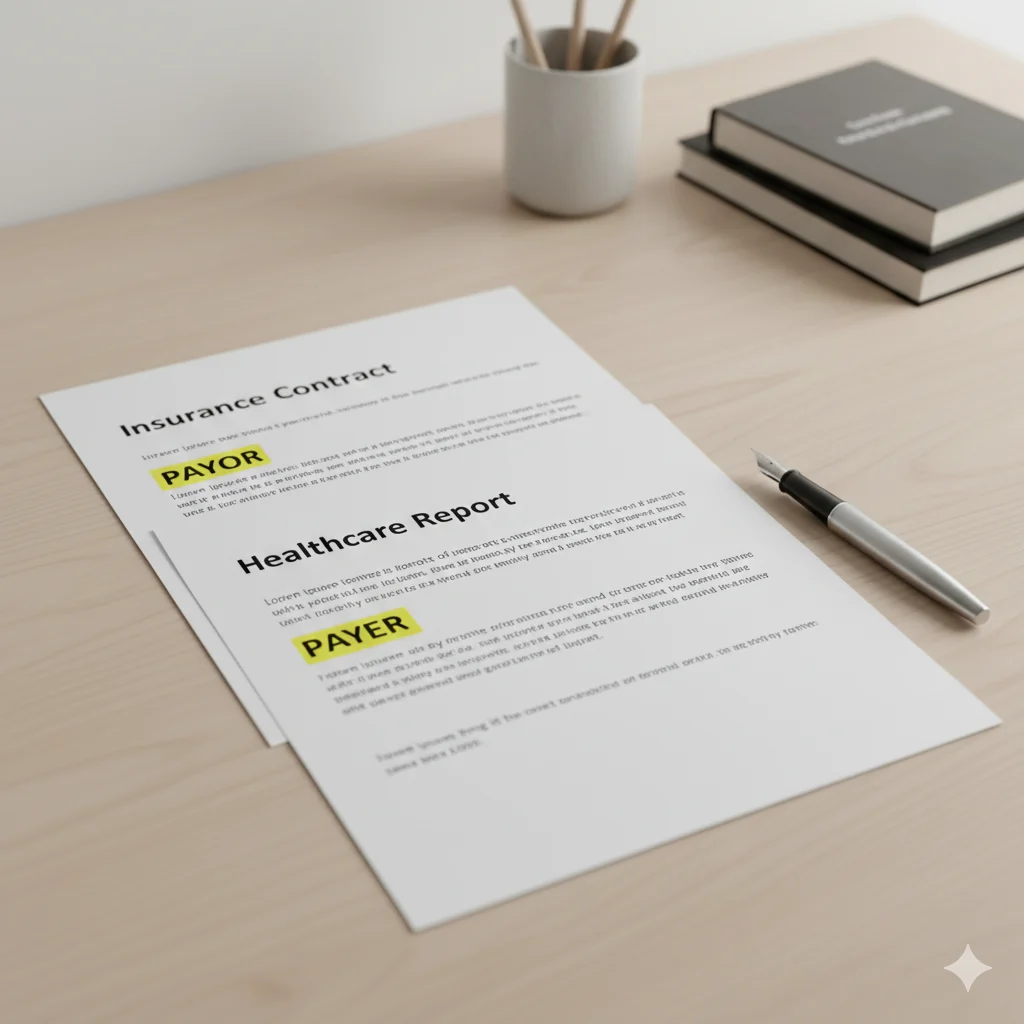
Have you ever typed “payer” in a document, only to see “payor” pop up in a legal contract and wonder if you made a mistake? You’re not alone. The confusion between payers / payors is a common spelling dilemma that stops writers, professionals, and students in their tracks.
Is one version correct, or are both acceptable? This search reflects a deeper need for clarity in professional communication, especially in fields like finance, law, and healthcare where precise terminology is non-negotiable. People aren’t just looking for a definition;
they’re seeking confidence. They need to know which term to use in a business email, a legal document, or an insurance form to appear competent and avoid misunderstandings. This article cuts through the confusion.
We’ll explore the origin of these spellings, dissect the regional preferences, and provide clear, actionable advice. By the end, you’ll have a definitive answer tailored to your audience and purpose, turning a point of uncertainty into a mark of your professional precision.
Payers or Payors
In short, both “payers” and “payors” are correct, but their usage depends heavily on context and regional convention. “Payer” (plural: payers) is the standard, widely accepted spelling used in general English, business, and everyday writing across the globe. “Payor” (plural: payors) is a specialized variant used almost exclusively in the American legal and insurance industries to denote the party responsible for making a payment, especially in formal contracts and policies.
For example, in a standard business context, you would write: “The payers must submit their invoices by the 30th.” However, within a U.S. insurance policy, you might read: “The payor benefits are outlined in Section 4.B.”
The key is audience awareness. For general communication, “payer” is always safe. Reserve “payor” for specific American legal, financial, or insurance documents where that spelling is the established norm.
The Origin of Payers or Payors
The confusion stems from the English language’s evolution and its adoption of Latin and French influences. The root verb is “to pay,” which entered English from the Old French “paier” in the 12th century. The “-er” suffix is the standard English agent noun ending, meaning “one who does something” (e.g., teacher, runner, writer). Thus, “payer” logically means “one who pays.”
So, where did “payor” come from? It’s a product of the legal profession’s fondness for Latin-based terminology. In Latin, the agent noun suffix is often “-or” (as in “donor,” “vendor,” “lessor”). American legal scribes in the 19th and early 20th centuries, seeking to add a layer of formality and precision to financial contracts, began adopting “payor” alongside other legal terms like “obligor” and “grantor.” This spelling was meant to signal a specific, binding legal role rather than just the general act of paying. Over time, this usage became entrenched in the jargon of American insurance and contract law, creating the dual spelling we see today.

British English vs. American English Spelling
This split is a classic example of a broader divergence between British and American English conventions. While both dialects use “-er” for most agent nouns, American English, particularly in professional jargon, is more likely to adopt and retain Latinate “-or” endings in specific contexts.
British English (and most Commonwealth countries): Strictly uses “payer.” The “-or” variant is considered a non-standard Americanism and is almost never seen in legal or financial documents in the UK, Australia, or Canada.

American English: Uses “payer” as the default in everyday language, journalism, and general business. However, “payor” holds a strong, specialized niche in:
- Legal Contracts (e.g., “The Payor hereby agrees…”)
- Insurance Policies (e.g., “Payor Disability Benefit”)
- Formal Financial Instruments
Here is a simple comparison table:
| Feature | Payer | Payor |
|---|---|---|
| Standard Spelling | Yes, globally. | No, specialized variant. |
| Common Usage | General English, business, healthcare, government. | U.S. legal, insurance, and formal finance documents. |
| Regional Preference | Preferred and often exclusive in UK, EU, Canada, Australia. | Used only in specific U.S. professional contexts. |
| Plural Form | Payers | Payors |
| Example Context | “Tax payers,” “Healthcare payers.” | “The payor of the annuity,” “Insured vs. Payor.” |
Which Spelling Should You Use?
Choosing the right spelling is less about right/wrong and more about knowing your audience and purpose.
For a US Audience (especially in legal/insurance contexts):
Check the existing documentation or style guide. If you’re writing an insurance clause or amending a contract that already uses “payor,” maintain consistency. In the payer vs payor in healthcare debate within the U.S., “payer” is more common for entities like insurance companies (e.g., private payers, government payers in healthcare), but “payor” may appear in policy documents. When in doubt for a general U.S. business audience, “payer” is the safer, more widely understood choice.
For a UK/Commonwealth/Global Audience:
Always use “payer.” Using “payor” may be seen as an error or an unnecessary Americanism. This applies to all contexts, from payer and provider relationships in the NHS to discussing payers in international finance.
For Global/Online Content
Opt for “payer.” It is the most common search term and will be understood by all English speakers. If your content specifically targets American legal professionals, you might include “payor” parenthetically or in a keyword section, but use “payer” in the main text for readability.
Common Mistakes with Payers or Payors
- Using “Payor” in General Writing: The most frequent error is using the legalistic “payor” in everyday emails, reports, or articles. Correction: Use “payer.”
- Inconsistent Spelling in a Single Document: Switching between “payer” and “payor” within the same contract or paper looks unprofessional. Correction: Choose one spelling and stick to it throughout.
- Assuming “Payor” is the Formally Correct Version: Some believe “-or” is always more formal. This is not true for general English. Correction: Understand that “payor” is jargon-specific, not universally formal.
- Incorrect Pluralization: Creating hybrids like “payors” (for payer) or “payers” (for payor). Correction: The plural follows the root: one payer, many payers; one payor, many payors.
Payers or Payors in Everyday Examples
- Email (Business): “Please remind all payers that the deadline is Friday.” (Uses standard “payer”).
- News Headline: “New Regulation Impacts Medicare Payers.” (Uses standard “payer” for a healthcare context).
- Social Media (Tweet): “Confused about your insurance? Know your rights as a payer.” (Uses common, accessible spelling).
- Formal Legal Document: “The Payor, as defined in Exhibit A, shall remit payment to the Payee.” (Uses industry-standard “payor” for precision).
- Healthcare Policy Brief: “The model analyzes cost-sharing between payers (like insurers) and providers.” (Uses “payer” as the standard term in healthcare economics).
Payers or Payors – Google Trends & Usage Data
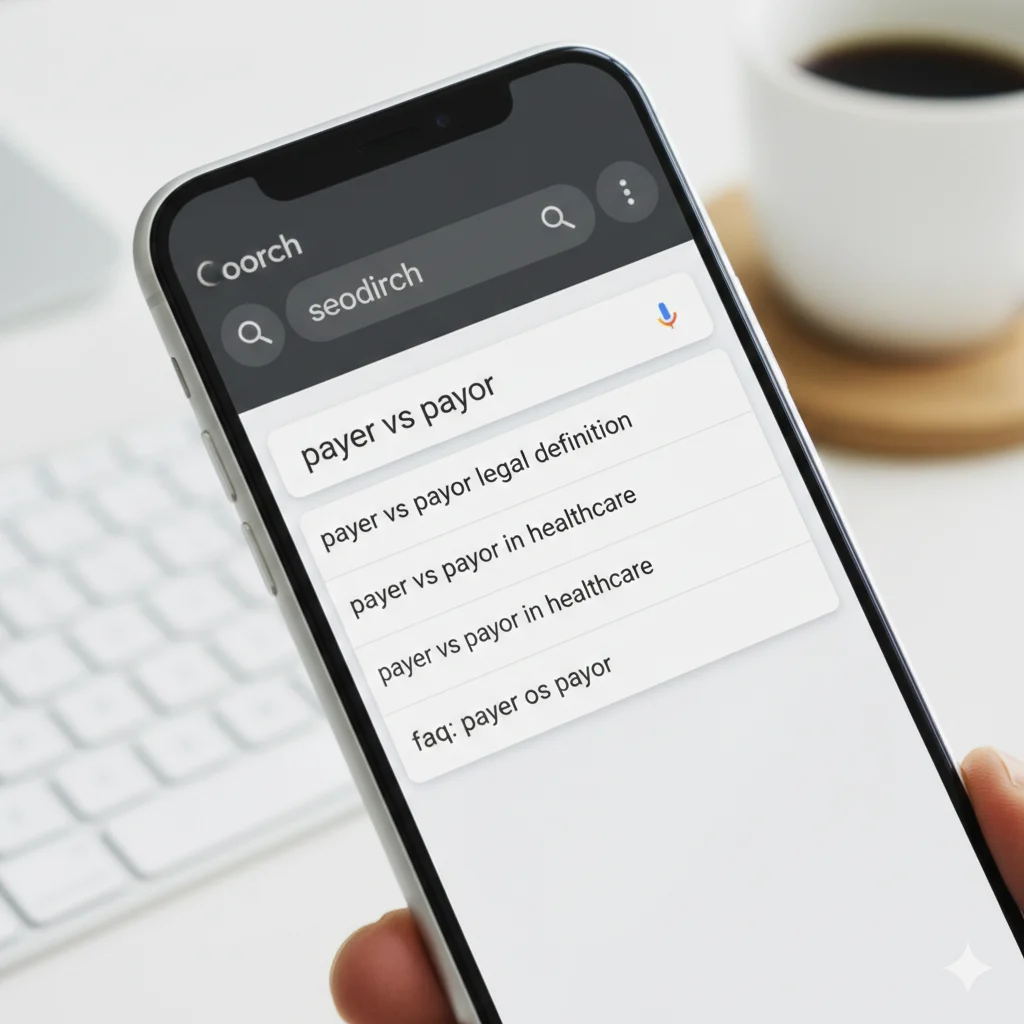
Google Trends data clearly shows that “payer” is the dominant global search term, with near-universal usage. Searches for “payor” are negligible by comparison and are almost entirely concentrated in the United States. This data reinforces the guidance: “payer” is the term the vast majority of the world is using and searching for. The use of “payor” spikes in very specific, professional contexts within the U.S. that are not broadly reflected in public search behavior. For writers and creators, this means optimizing content for the keyword “payer” will capture the widest possible audience, while “payor” remains a narrow, niche term.
FAQs
1. Is payor the same as payer?
Yes, in meaning. Both refer to an individual or entity that makes a payment. The difference is purely in spelling and usage context. “Payor” is a specialized American legal/financial variant of the standard word “payer.”
2. What are the two types of payers?
In broad terms, payers can be classified as private payers (e.g., commercial insurance companies, individuals) and public or government payers (e.g., Medicare, Medicaid, VA).
3. Who are the payers?
Who are payers in healthcare? They are the entities that pay for medical services. This primarily includes insurance companies (the payer source), government programs (Medicare/Medicaid), and sometimes the patients themselves.
4. What is meant by payer?
A payer is any party that disburses funds to another (the payee) in exchange for goods, services, or to satisfy an obligation. It’s a broad term for “the one who pays.”
5. Payer vs payor in healthcare?
In U.S. healthcare discourse, “payer” is the standard term for entities like insurance companies or government programs that pay for patient care. “Payor” might appear in the actual insurance policy contracts but is less common in general industry discussion.
6. Payor vs payee?
This is a key distinction. The payor (or payer) is the party sending the money. The payee is the party receiving the money. In a check, you are the payor, and the person you write the check to is the payee.
7. What is a payor in insurance?
What is a payor in insurance? It is the party obligated to pay the insurance premium. This is often the policyholder. Some policies have “payor benefit” riders, which waive premiums if the payor (e.g., a parent paying for a child’s policy) becomes disabled or dies.
Conclusion
Navigating the payers / payors dilemma ultimately boils down to purpose and precision. While both spellings point to the same entity—the one who pays—their correct application signals your understanding of linguistic nuance and professional convention. For the overwhelming majority of situations, from international business and healthcare policy to everyday writing, “payer” is the correct, clear, and confident choice.
It is the globally recognized standard. Reserve the “payor” spelling for those specific instances when you are drafting or working within the framework of American legal, insurance, or formal financial documents where that tradition holds sway. By aligning your spelling with your audience’s expectations, you eliminate confusion and communicate with authority. Remember: when in doubt, “payer” is almost never wrong.

Max Laughwell is the kind of guy who can find comedy in traffic jams and awkward small talk. He believes that if you’re not laughing at life, you’re doing it wrong. His style is smooth, bold, and unexpectedly relatable — like a good joke told at just the right moment. When Max isn’t cracking up his readers, he’s probably out there turning real-life chaos into future punchlines.