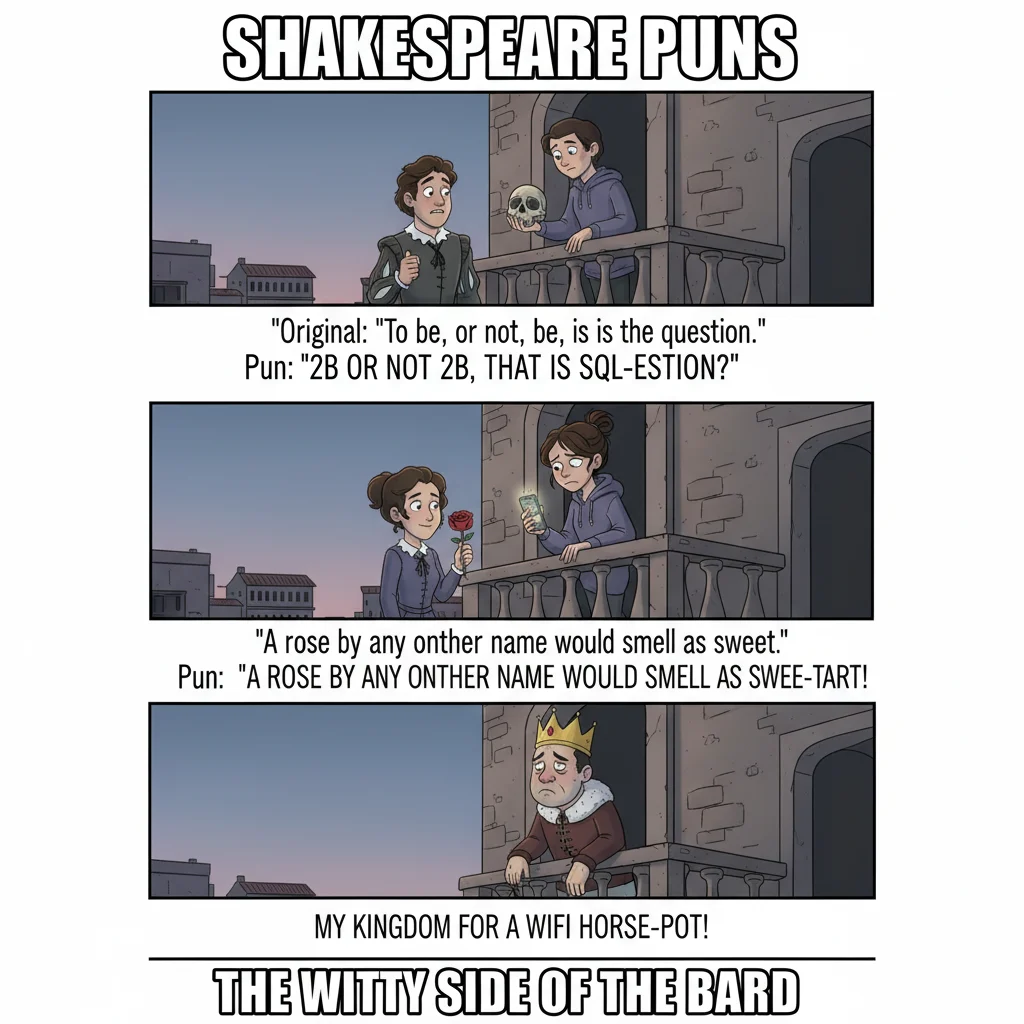
Ever wondered if Shakespeare—the guy behind Romeo and Juliet, Macbeth, and enough tragedies to fill a therapy group—also had a funny bone? Spoiler alert: he absolutely did. In fact, puns were used by Shakespeare so often that some scholars call him the “OG King of Wordplay.” His jokes were sharp, clever, and sometimes downright cheeky.
Whether you’re a literature fan, a meme enthusiast, or someone who just wants fun wordplay for captions or roasts, Shakespeare has something for everyone. Today, we’re taking a hilarious, easy-to-digest look at how he used puns, why they still work today, and how you can steal his humor to up your own comedy game.
Why Puns Were Used by Shakespeare (And Why They Still Work)
Shakespeare didn’t drop puns just for clout—he used them because they added layers of meaning, sparked laughter, and made scenes more memorable. Here’s why his wordplay mattered:
- Double meanings = double entertainment.
- They lightened tragic moments (because everyone needs a laugh before someone dies dramatically).
- They made characters more human, relatable, and clever.
- They stuck in audiences’ minds, just like good memes do today.
Modern readers might miss a few jokes because language evolved, but once you understand them, they hit like top-tier internet humor.
Famous Shakespeare Wordplay Examples
Below are some Shakespeare wordplay examples that prove the man knew how to sling a joke as well as a sword.
1. Mercutio’s Death Joke – Romeo and Juliet
“I’ll be a grave man tomorrow.”
(Pun: “grave” meaning serious… and also, um, dead.)
2. Hamlet’s Sass – Hamlet
“A little more than kin, and less than kind.”
(Pun: throwing shade at his uncle with a word twist.)

3. Macbeth’s Porter Scene – Macbeth
The Porter imitates a hell-keeper and jokes about political “equivocators.”
(Pun: early political satire!)
4. Launce’s Dog Drama – The Two Gentlemen of Verona
He describes his dog’s “faults” in exaggerated terms.
(Pun-heavy storytelling with dog humor still relatable today.)
5. Malvolio’s Yellow Stockings – Twelfth Night
Maria convinces him to act ridiculous.
(Not a pun, but a comedic setup showing Shakespeare’s humor range.)
Top 12 Funny Shakespeare Puns (with Quick Explanations)
Here’s a list you can use for captions, social media posts, classroom jokes, or when you want to sound smart and hilarious.
- “I’m reading Shakespeare… but it’s much ado about nothing.”
Pun on the play title meaning “a lot of fuss over nothing.” - “Don’t be Macbeth—don’t overthink everything to death.”
Playful jab at Macbeth’s overthinking. - “You’re the ‘Romeo’ to my ‘Juliet’… hopefully without the ending.”
Dark humor meets romance. - “This exam is like Hamlet: full of questions.”
Pun on Hamlet’s “To be or not to be.” - “Stop acting like King Lear—you’re not seeing clearly.”
Wordplay on “Lear / clear.” - “I’m Bard to the bone.”
Pun on Shakespeare’s nickname “The Bard.” - “You’re such a drama queen, Shakespeare would hire you.”
Modern twist. - “I’m feeling tempest-uous today.”
Pun on The Tempest. - “That joke? A Midsummer Night’s Meme.”
Perfect caption pun. - “All’s well that ends… with snacks.”
Pun on the play’s title. - “I’ve got 99 problems, but a Bard pun ain’t one.”
Pop culture × Shakespeare crossover. - “Et tu, Brute? More like ‘Et too busy for this.’”
Pun twist for modern sass.
Why Shakespeare’s Puns Make the Best Historical Puns
Shakespeare was the meme-maker before memes existed. His best historical puns continue to trend because:
- They’re versatile — useful for jokes, essays, social captions.
- They feel classy — because nothing says sophistication like a 400-year-old joke.
- They inspire modern comedy — many comedians reference or build on his style.

As comedian Steven Wright once said, “A pun is a short verbal puzzle with a surprise ending.” Shakespeare mastered the art long before TikTok’s pun accounts did.
How You Can Use Shakespeare Puns Today
Want to sound clever without reading a 400-page play? Here’s how you can use Shakespeare-style humor in modern life:
1. Instagram & TikTok Captions
Funny Shakespeare puns instantly make your post look wittier.
2. Classroom Humor
Perfect for teachers trying to keep students awake during Hamlet.
3. Wedding Toasts
Romantic Shakespeare quotes + humor = unforgettable speech.
4. Texting Your Friends
Drop a pun randomly to assert intellectual dominance.
5. Stand-up Comedy or Content Creation
Wordplay always wins with audiences.
Quick Breakdown — What Are the Best Shakespeare Puns? (Featured Snippet Friendly)
The best Shakespeare puns are short, clever lines that rely on double meanings, character references, and playful twists on famous quotes. Examples include “I’ll be a grave man tomorrow,” “A Midsummer Night’s Meme,” and “I’m Bard to the bone.”
A Tiny History Lesson: Why Shakespeare Loved Puns
Wordplay wasn’t just for laughs—it was a whole entertainment style in Elizabethan England. Audiences expected verbal games. Puns were considered a mark of intelligence, wit, and charisma. If Shakespeare were alive today, he’d probably be firing off pun-tweets at 2 A.M.
Conclusion
Shakespeare might be known for epic tragedies, royal betrayals, and poetic romance, but let’s be honest—the guy was also hilarious. His love for puns is one of the biggest reasons his plays feel alive even today. And now that you’ve discovered how puns were used by Shakespeare, you can borrow a little Bard-magic for your own humor.
Whether you want to flex in class, make your followers laugh, or simply enjoy clever wordplay, Shakespeare’s jokes are a gold mine. Ready to explore more? Bookmark this page, share your favorite pun in the comments, and keep the wordplay rolling!
Frequently Asked Questions (FAQ)
1. Why were puns so common in Shakespeare’s plays?
Because audiences loved clever wordplay. Puns helped add humor, symbolism, and layers of meaning to the dialogue.
2. Are Shakespeare’s puns still considered funny today?
Yes—once you understand the context and double meanings, many of his puns are surprisingly modern and meme-worthy.
3. Which Shakespeare character uses the most puns?
Mercutio from Romeo and Juliet is often considered the pun-master, thanks to his witty, rapid-fire wordplay.

Lola Giggles lives up to her name — laughter practically follows her everywhere. She’s all about finding joy in the smallest things and turning them into big laughs. Her writing sparkles with positivity, chaos, and charm, making her readers giggle like it’s a full-time job. Lola believes that one good laugh a day keeps reality away — and she’s here to deliver yours.