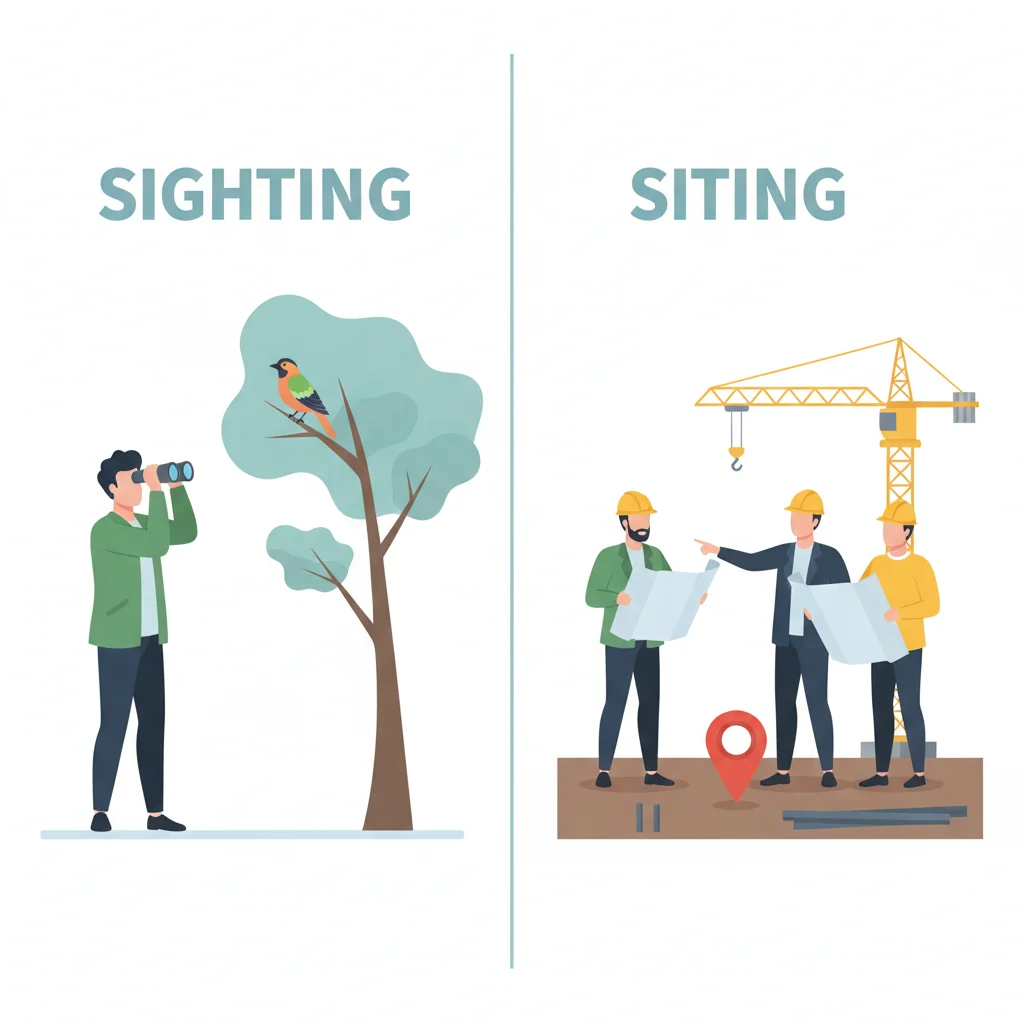
“Sighting” means seeing something (like a UFO sighting), while “siting” means choosing or placing something in a specific location (like siting a building).
Have you ever typed sighting vs siting and wondered which one is correct? You’re not alone. These two words sound identical, but just one letter completely changes their meaning. “Sighting” comes from the verb sight (related to seeing) and refers to the act of spotting or observing something—such as a rare bird sighting or a celebrity sighting.
In contrast, “siting” comes from the verb site, which means to place, position, or choose a location for something—like siting a new hospital or siting a wind farm.
Many people also ask, “Is siting a real word?” Yes, it is — but it’s mostly used in technical, construction, or planning contexts. Because these words are homophones (they sound the same), mixing them up can completely change the meaning of your sentence.
In this guide, you’ll learn the clear difference between sighting vs siting, simple grammar rules, and easy examples to help you choose the correct word confidently every time.
Sighting or Siting meanings
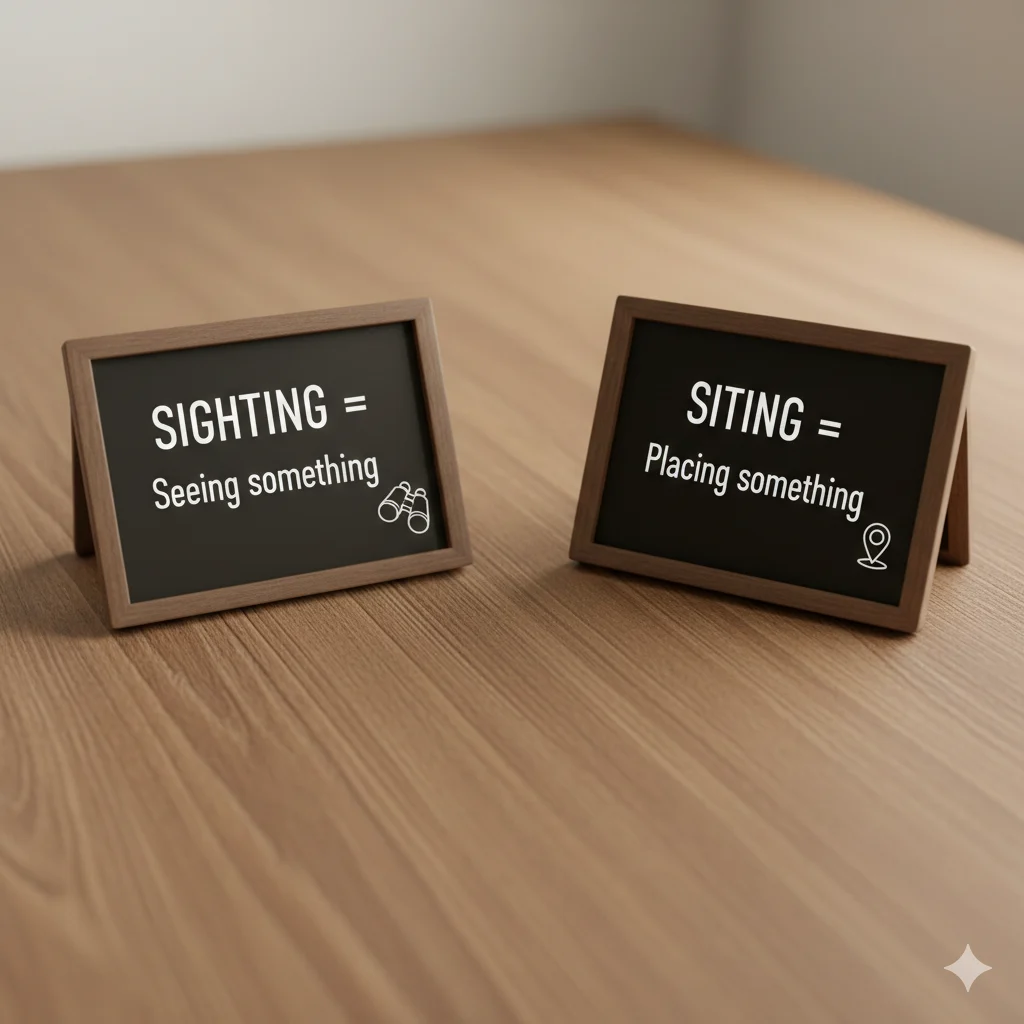
The quick answer is simple: Sighting (with a “gh”) is the act of seeing something. Siting (without the “gh”) is the act of choosing a location for something.
Here are two examples to lock that in:
- Sighting: “The hikers reported a sighting of a rare eagle.” (They saw it).
- Siting: “The siting of the new hospital took three years.” (They picked the spot).
If you are asking yourself is it sighting or citing a document, remember that “citing” is a third word with a “c” that means quoting a source. For now, focus on sighting or siting—seeing versus placing. The sighting or siting meaning becomes clear when you look at the action involved.
The Origin of Sighting and Siting
To understand why these two words are so confusing, we have to look at their roots. What is the meaning of the word siting? It comes from the noun “site,” which means a place or position. When you add “-ing” to make it a verb, you get “siting,” which means the ongoing action of placing something in a spot. People often ask what is the meaning of the word siting when they encounter it in construction documents or city planning reports.
The word “sighting” comes from the noun “sight,” which relates to vision and seeing. This word has old English roots connected to the act of looking. The spelling difference exists because both words evolved separately—one from vision and one from location. Over time, their pronunciations merged, but their spellings stayed different. This is why sighting or siting grammar questions are so common among writers.
British English vs American English Spelling
Here is some good news: when it comes to sighting or siting, both British and American English follow the same rules. There is no difference. In both versions of English:
- Sighting always refers to seeing.
- Siting always refers to placing.
The confusion is not between countries but between meanings. However, the word “citing” (with a “c”) is often pulled into this mess. When someone wonders is it siting or citing, they are usually mixing up three words instead of two. Let’s look at how these words work in a simple table:
| Word | Part of Speech | Meaning | Example Sentence |
|---|---|---|---|
| Sighting | Noun or Verb | An act of seeing something | The UFO sighting made the news. |
| Siting | Noun or Verb | Choosing a location | The siting of the wind farm was controversial. |
| Citing | Verb | Referring to a source | She is citing three experts in her paper. |
This table makes it clear: sighting or siting are two different actions. If you are confused about is it siting or citing, remember that citing involves quotes and credit. For quick sighting or siting examples, think of eyes for sighting and earth for siting.
Which Spelling Should You Use?
Your audience matters when choosing between sighting or siting, but not for spelling reasons. Here is how to decide:
If you are in the US: Both words are understood. Use sighting when talking about UFOs, celebrities, or animals. Use siting for construction, urban planning, or event locations.
If you are in the UK or Commonwealth: The same rule applies. A newspaper in London will write about a “Big Cat sighting” but a “wind farm siting.”
If you are writing for a global audience: Be extra careful. Readers might scan your text quickly. Make sure the context around sighting or siting is strong enough to show your meaning. For example, instead of “The siting was done,” write “The siting of the equipment was done carefully.” If you need a sighting or siting synonym, for sighting you can use “observation” and for siting you can use “placement.”
Common Mistakes with Sighting or Siting
People make frequent errors with these words. Here are the most common mistakes and how to fix them:
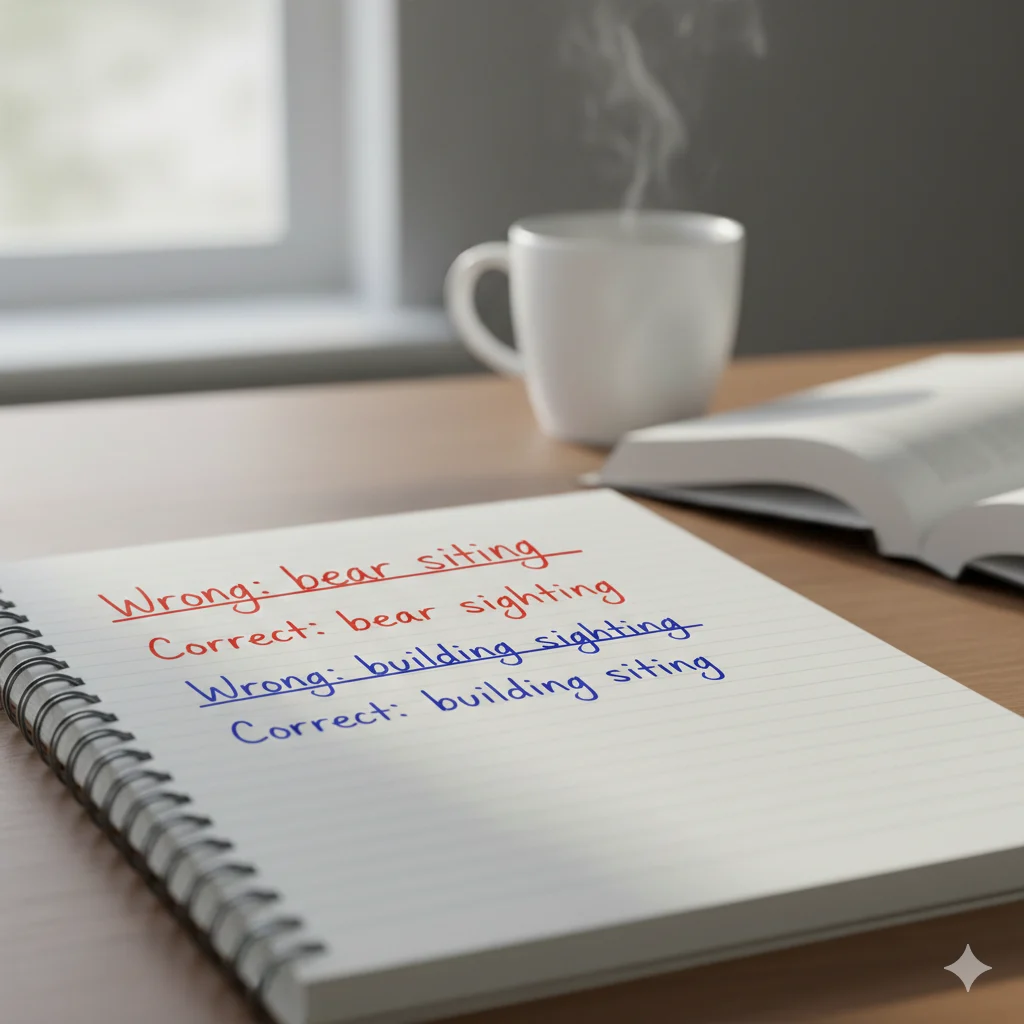
Mistake 1: Using “siting” when you mean “sighting”
- Wrong: “There was a siting of a bear in my backyard.”
- Right: “There was a sighting of a bear in my backyard.” (You saw it.)
Mistake 2: Using “sighting” when you mean “siting”
- Wrong: “The sighting of the new school is perfect.”
- Right: “The siting of the new school is perfect.” (Its location is good.)
Mistake 3: Confusing all three words: sighting, siting, and citing
- Wrong: “I am sighting three sources in my essay.”
- Right: “I am citing three sources in my essay.” (You are quoting them.)
Mistake 4: Spelling errors with the “-ing” form
- Some people write “siteing” which is always wrong. The correct form is siting (dropping the ‘e’).
If you search for sighting or siting grammar online, these are the errors that come up most often. Always double-check which action you are describing. The sighting definition always involves vision, while siting meaning always involves location.
Sighting or Siting in Everyday Examples
Seeing these words in real contexts helps lock in the meaning. Here is how sighting or siting appear in different types of writing:
In Emails:
- Formal: “Regarding the siting of the new office, we need to review the zoning laws.”
- Informal: “Did you hear about John’s sighting of a famous actor at the airport?”
In News Headlines:
- “Rare Bird Sighting Draws Crowds to State Park”
- “Controversy Over Siting of Nuclear Waste Facility”
On Social Media:
- “Just had a celebrity sighting at the coffee shop! #excited”
- “The siting of this new mural is terrible—no one can see it.”
In Formal Writing:
- “The committee approved the siting of the solar panels after reviewing environmental impact.”
- “This is the first sighting of this species in the northern region since 1995.”
For sighting or siting examples, remember that sighting is about eyes and seeing, while siting is about maps and places. If you need a sighting or siting synonym, for sighting you can use “observation” or “viewing.” For siting you can use “positioning” or “placement.” When someone asks how do you use siting in a sentence, show them: “The siting of the monument was carefully planned.”

Sighting or Siting – Google Trends & Usage Data
When we look at how people search for sighting or siting, interesting patterns emerge. The word “sighting” is far more popular in search engines. This makes sense because people love to report UFOs, ghosts, and celebrity encounters.
Sighting is used more in:
- Entertainment news (celebrity sightings)
- Nature and wildlife reports (animal sightings)
- Paranormal communities (UFO sightings)
Siting is used more in:
- Business and construction documents
- Government and city planning reports
- Environmental impact studies
- Event planning discussions
If someone searches for sighting or siting meaning, they are usually trying to decide which word fits their specific situation. The data shows that “sighting” searches spike when there is news about rare animals or famous people. “Siting” searches stay steady because they relate to ongoing work like building projects. The question is it sighting or citing also appears frequently, showing how all three words get tangled in people’s minds.
Frequently Asked Questions
What is the meaning of the word siting?
Siting means the act of choosing or deciding the location for something. For example, “The siting of the playground took community input.” This is the core siting meaning that people need to understand.
Is it sighting or citing a document?
When referring to a document, the correct word is citing. You cite a source. Sighting means seeing something, and siting means placing something. This is the most common question about is it sighting or citing a document.
How do you use siting in a sentence?
You can say: “The architect is responsible for the siting of the building on the property.” This means the architect chose where the building goes. People often search how do you use siting in a sentence when they are writing formally.
Is it siting or citing?
If you are talking about giving credit or quoting, use citing. If you are talking about location, use siting. They sound the same but have different jobs. This is it siting or citing confusion is very common in academic writing.
What is the difference between sighting or siting meaning?
Sighting means an act of seeing something. Siting means an act of placing something. One is about vision, the other about position. The sighting or siting meaning difference is simple once you know it.
What is a good sighting or siting synonym?
For sighting, synonyms include: observation, glimpse, view, spotting. For siting, synonyms include: placement, positioning, location, emplacement. A sighting or siting synonym can help vary your writing.
Can you give me sighting or siting examples?
Sure. Sighting: “The sailor reported a sighting of land.” Siting: “The siting of the tent near the river was a mistake.” These sighting or siting examples show the clear difference.
How do I check my sighting or siting grammar?
Ask yourself: Am I talking about seeing (sighting) or placing (siting)? If it involves eyes, use “gh.” If it involves location, drop the “gh.” This sighting or siting grammar check takes two seconds.
Is there a trick to remember sighting or siting?
Yes. Remember that “sight” has “gh” like “eye” has letters that see. “Site” has no “gh” because land has no eyes. This helps with sighting or siting every time.
What is the sighting definition?
The sighting definition is the act of seeing or observing something, especially something rare or unusual.
Conclusion
Understanding the difference between sighting or siting is simpler than it seems. These two words sound identical but carry completely different meanings. Sighting connects to your vision—it is about observing, spotting, or witnessing something. Whether you are talking about a celebrity sighting in Los Angeles or a rare bird sighting in the forest, this word always relates to the act of seeing. The sighting definition always includes the element of observation.
On the other hand, siting connects to location—it is about placing, positioning, or locating something. Architects discuss the siting of buildings, event planners discuss the siting of stages, and city officials debate the siting of new schools. The siting meaning always relates to geography and placement. The key takeaway is simple: eyes for sighting, earth for siting.
The third word in this family, citing, adds another layer of potential confusion. When you quote a book or give credit to a source, you are citing. By keeping these three words separate in your mind, you will write with greater clarity and professionalism. Next time you ask yourself is it sighting or citing, remember the simple rules.
Next time you type one of these words, pause and ask yourself: Am I describing a view or a venue? Your answer will guide your spelling. With practice, choosing between sighting or siting becomes automatic, and your writing will be stronger for it. Whether you need sighting or siting examples for a school project or professional document, you now have the tools to get it right every time.

Nina Snicker was born to make people laugh — and she takes that mission very seriously. Known for her quick wit and clever takes on everyday life, Nina turns even the dullest moments into hilarious masterpieces. She believes humor is the ultimate life skill — and her jokes prove it. When she’s not writing, you’ll find her laughing at her own punchlines (because someone has to start the applause).