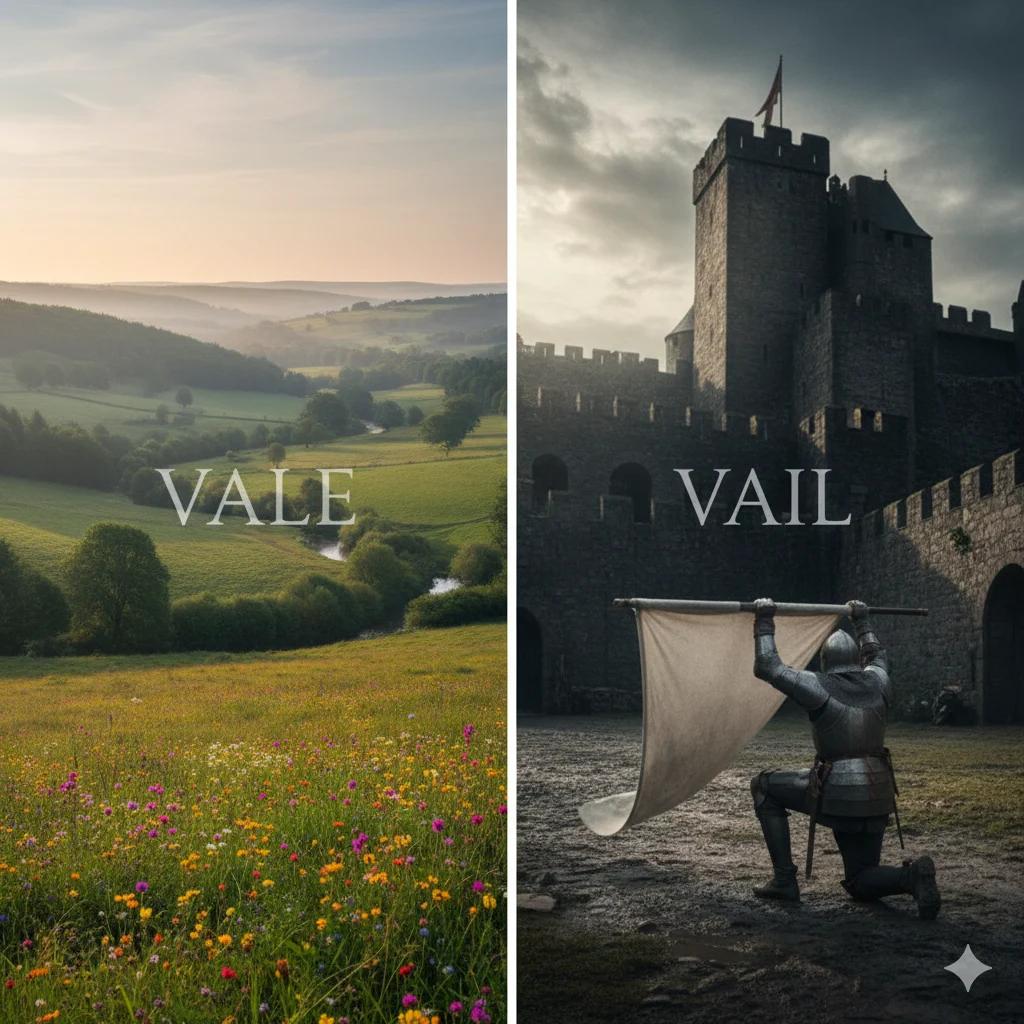
“‘Vale’ refers to a valley or a poetic farewell, while ‘Vail’ means to lower, tip, or remove; knowing the difference ensures accurate and elegant writing.”
Ever wondered why poets say “vale” instead of “valley” or what it means to “vail your hat”? Though these words sound similar, they have distinct meanings, histories, and usage contexts.
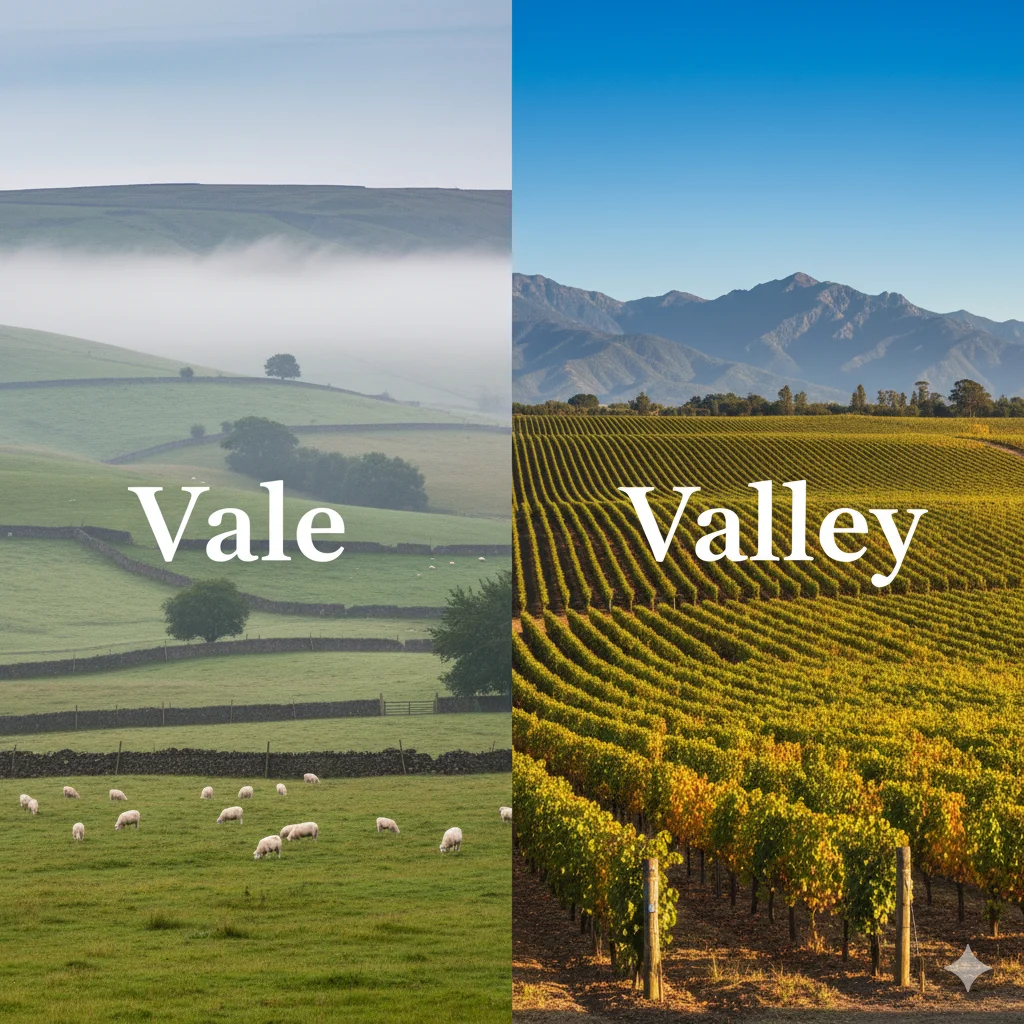
- Vale – Often used in literature or poetry, meaning a valley or a farewell.
Example: “The sun set behind the quiet vale.”
Example: “Vale, my friend, until we meet again.”
Origin: From Latin vallis, meaning valley; used historically in poetry and literature. - Vail – A verb, meaning to lower, tip, or remove, often as a gesture of respect or action.
Example: “He vails his hat to greet the queen.”
Example: “They vailed their banners in solemn respect.”
Modern relevance: Rarely used in everyday writing today, mostly in formal or historical contexts.
Understanding the difference ensures your writing is accurate, elegant, and professional, whether you’re crafting poetry, essays, historical texts, or formal correspondence. This guide provides clear definitions, multiple examples, and usage tips, so you’ll never mix them up again.
Vale or Vail meanings
The quick answer is that it depends entirely on what you want to say.
- Use “Vale” when you are talking about a valley (the geographical feature) or using it as a poetic way to say “farewell.”
- Example: “They walked through the green vale towards the mountains.”
- Example: “Vale,” he whispered as he closed the letter.
- Use “Vail” when you are talking about lowering something (like a flag or a weapon) or showing submission. It is much less common today.
- Example: “The soldiers decided to vail their banners in surrender.”
- Example: “He would not vail his eyes before the king.”
If you are describing a landscape, you almost certainly want vale. If you are writing about a wedding, you want veil (the cloth), not vale or vail.
The Origin of Vale and Vail
Understanding where a word comes from makes it much easier to remember its meaning. The spelling differences exist because these words traveled to English from different languages.
The Origin of “Vale”
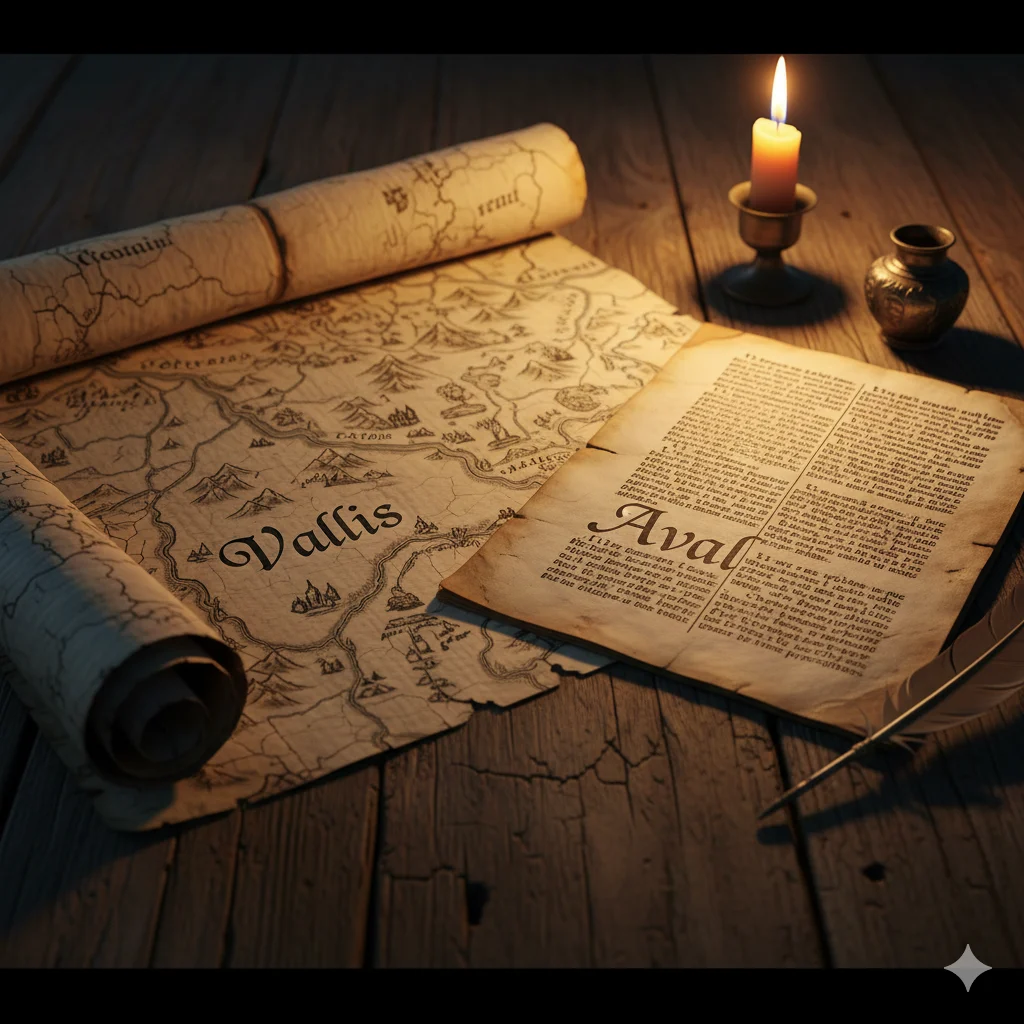
The word “vale” has a very clear path from Latin to English. It comes from the Latin word “vallis,” which means valley. This traveled through Old French as “val” before becoming the English “vale.” This is why you see it in place names and poetry—it retains that romantic, classical feel of a broad valley. The vale Spanish meaning is tied to this Latin root, as the Spanish word for valley is “valle.”
The Origin of “Vail”
The word “vail” comes from an entirely different source. It is a shortening of the Middle English word “avalen,” which means to lower or descend. This word itself came from the Old French phrase “a val,” meaning “downward” or “to the valley.” So, interestingly, both words touch on the concept of a valley, but “vail” focused on the action of going down. Over time, “vail” fell out of common usage, surviving mostly in historical or literary texts.
British English vs American English Spelling
This is one case where the spelling difference isn’t about national preference, but about meaning. Both American and British English follow the same rule: geography = vale, lowering = vail.
However, you are far more likely to see “vale” used in British English because the UK has a long history of using poetic and descriptive language for its landscapes. In the US, the word “valley” is overwhelmingly preferred over “vale” in everyday speech.
Here is a comparison to clarify:
| Feature | Vale | Vail |
|---|---|---|
| Primary Meaning | A valley (geographic depression) | To lower or doff (an object or sign of respect) |
| Common Usage | Poetry, place names, formal writing | Historical texts, archaic language |
| Example (UK) | “The Vale of York is a flat area of land.” | “The knight refused to vail his lance.” |
| Example (US) | “They bought a vineyard in the Napa Vale.” | “He would not vail his principles.” |
| Frequency | Moderate, but less common than “valley” | Very rare |
Which Spelling Should You Use?
Your audience is the biggest factor in deciding whether to use “vale” or “vail.”
- For a US Audience: Stick to “valley” instead of “vale” unless you are writing something very poetic or referring to a specific place name (like the Shenandoah Valley, which is occasionally called the Shenandoah Vale in old songs). Avoid “vail” entirely; it will confuse your readers.
- For a UK or Commonwealth Audience: “Vale” is more readily understood and accepted as a synonym for a broad, flat valley. It fits well in travel writing or descriptive prose. “Vail” remains just as rare.
- For Global Audiences: Clarity is key. If you are describing land, use “valley.” If you are using it as a farewell (a secondary meaning of “vale,” from the Latin valē, meaning “be well”), it is understood but considered very formal or old-fashioned.
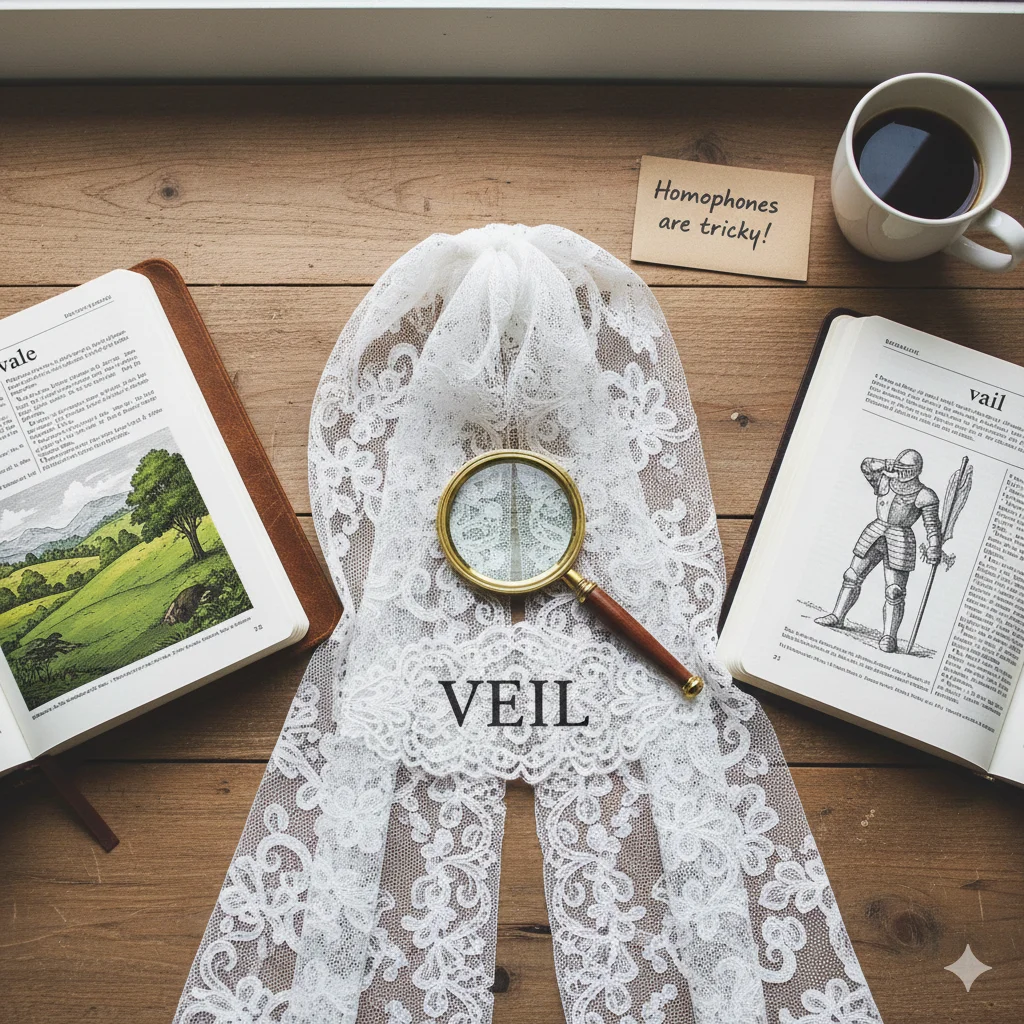
- For Wedding Contexts: This is the biggest trap. The correct word for the cloth a bride wears is VEIL. “Vale or vail wedding” is a common misspelling of “wedding veil.”
Common Mistakes with Vale and Vail
Because these are homophones (words that sound the same), mistakes are frequent in writing. Here are the top errors to watch out for:
- The Wedding Blunder: Writing “wedding vale” instead of “wedding veil.” A vale is a place; a veil is a piece of cloth. This is the most common error associated with these words.
- The Landscape Confusion: Using “vail” to describe a valley. For example, writing “They camped in a grassy vail” is incorrect. It should be “vale.”
- The “Valley or Vale” Crossword Clue Trap: Crossword puzzles love these two. The clue often points to the shorter word, “vale,” as a synonym. Remembering this can help you solve the puzzle faster.
- Misinterpreting “Vale” as Farewell: People sometimes think it’s a typo. While “vale” can mean farewell, it is rarely used in modern conversation. If you use it, your reader might think you made a mistake.
Vale and Vail in Everyday Examples
Seeing words used in context helps solidify their meaning. Here’s how they appear in different types of writing.
In Emails (Informal):
- Correct: “We hiked through a beautiful vale yesterday, covered in wildflowers.”
- Incorrect: “I’ll see you after work, and don’t forget the vail.” (The correct word here would be “veil” if referring to a costume, or “vale” if saying goodbye in an overly poetic way).
In News Headlines (Formal):
- Example: “Developers Propose New Housing Project in Quiet Vale.” (Describing a location).
- Example: “The rebels refused to vail to the government’s demands.” (Archaic use for dramatic effect).
On Social Media (Informal):
- Example: “Living my best life in this sunny vale! #nature #valleyviews”
- Example: “Is it vale or veil? I can never remember! Help a writer out.”
In Formal Writing:
- Example: “The protagonist sought refuge in a secluded vale, far from the chaos of the kingdom.”
- Example: “In a sign of ultimate respect, the general chose to vail his sword before the fallen hero’s tomb.”
Vale vs. Vail – Google Trends & Usage Data
An analysis of word usage shows a clear winner in the modern world. The word “vale” is searched for and used significantly more often than “vail.”
- Popularity by Country: “Vale” sees higher search traffic in English-speaking countries with strong literary traditions or notable geographic features named “vale,” such as the UK, Australia, and New Zealand. In the US, searches for “vale” usually spike when people are asking “Is vale the same as valley?” or looking up “vale Spanish meaning” for translation purposes.
- Context of Searches: A large percentage of searches for “vale” are related to geography (place names) or classic literature. Meanwhile, searches for “vail” are almost exclusively people trying to figure out if they should use “vale” or “vail,” or looking for the ski resort town of Vail, Colorado, which, confusingly, is a proper noun and spelled like the archaic word. This town name is a major source of confusion.
- The “Veil” Factor: Data also shows that a significant number of people searching for “vale or vail” are actually looking for information on the word “veil,” specifically regarding weddings. This highlights the three-way confusion that exists.
To make it crystal clear, here is a final comparison table of the three words people often mix up.
| Word | Part of Speech | Meaning | Example Sentence |
|---|---|---|---|
| Vale | Noun | A valley (geographic feature) | “They lived in a peaceful vale.” |
| Vale | Interjection | Farewell (from Latin) | “Vale,” said the old philosopher. |
| Vail | Verb | To lower or submit | “He refused to vail his head.” |
| Veil | Noun | A piece of cloth to conceal | “The bride wore a beautiful veil.” |
(FAQs)
1. Is Vale the same as valley?
Yes, in its most common use, “vale” means the same thing as “valley.” However, “vale” often implies a broader, more poetic, or larger valley, while “valley” is the standard, everyday term for the geographical depression between hills or mountains. Many valley examples like the Grand Valley can be referred to poetically as a vale.
2. Why are places called Vale?
Places are called “vale” for historical and descriptive reasons. It comes from the Latin word for valley. When naming places, especially in Britain, settlers and conquerors used the word “vale” to describe the physical characteristic of the land, such as the Vale of York.
3. Is a vale a small valley?
Not necessarily. While a vale can be small, the term is often used to describe a wide, flat, and large valley. For comparison, you might ask “Vale vs Dale” — a “dale” is typically a broader term for a valley in the North of England, while a “vale” often implies a more open and wide valley.
4. What’s the difference between a veil and a valley?
This is a common mix-up. A veil is a piece of fabric used to cover something, most famously a bride’s face. A valley (or vale) is a low area of land between hills. They are homophones (sound alike) but have completely different meanings. If you are wondering about “vale or vail or veil,” remember: land = vale, action = vail, cloth = veil.
5. What is the Vale Spanish meaning?
In Spanish, the word “vale” is extremely common, but it does not mean valley. It comes from the verb “valer” (to be worth). It is used as an interjection meaning “OK,” “alright,” or “got it.” For example, “Vale, Spanish meaning understood?” It can also be used as a noun meaning a voucher or coupon. The Spanish word for valley is “valle.”
6. Is “vale” a word in Scrabble?
Yes, “vale” is a valid word in Scrabble. It is a four-letter noun meaning a valley and is a great way to use a “V” tile.
7. What is the Vale meaning in English?
In English, “vale” has two primary meanings. First, as a noun, it is a poetic or literary term for a valley. Second, as an interjection, it is a Latin word used to say “farewell.”
8. What is the Vale meaning Latin?
In Latin, “vale” (with a long ‘e’ sound) is the singular imperative form of the verb “valere,” meaning “to be strong/well.” When used alone, it is a command meaning “Be well!” or “Farewell!” This is why it appears in old letters and epitaphs.
Conclusion:
Navigating the tricky waters of “vale or vail” comes down to remembering one simple rule: one is a place, and one is an action. “Vale” is your go-to word for describing a picturesque landscape, a broad valley floor, or when you want to use a slightly old-fashioned way to say goodbye. On the other hand, “vail” is a linguistic relic, an old verb meaning to lower or submit, which you will rarely need in modern writing.
The biggest takeaway is to be mindful of your audience and context. If you are writing for a general audience, using the more common “valley” will almost always be your safest bet to avoid confusion. And remember, when it comes to weddings, the word you are looking for is “veil.” By keeping these distinctions in mind, you can confidently choose the correct word and ensure your writing is both clear and precise, free from the common pitfalls that trip up so many others.