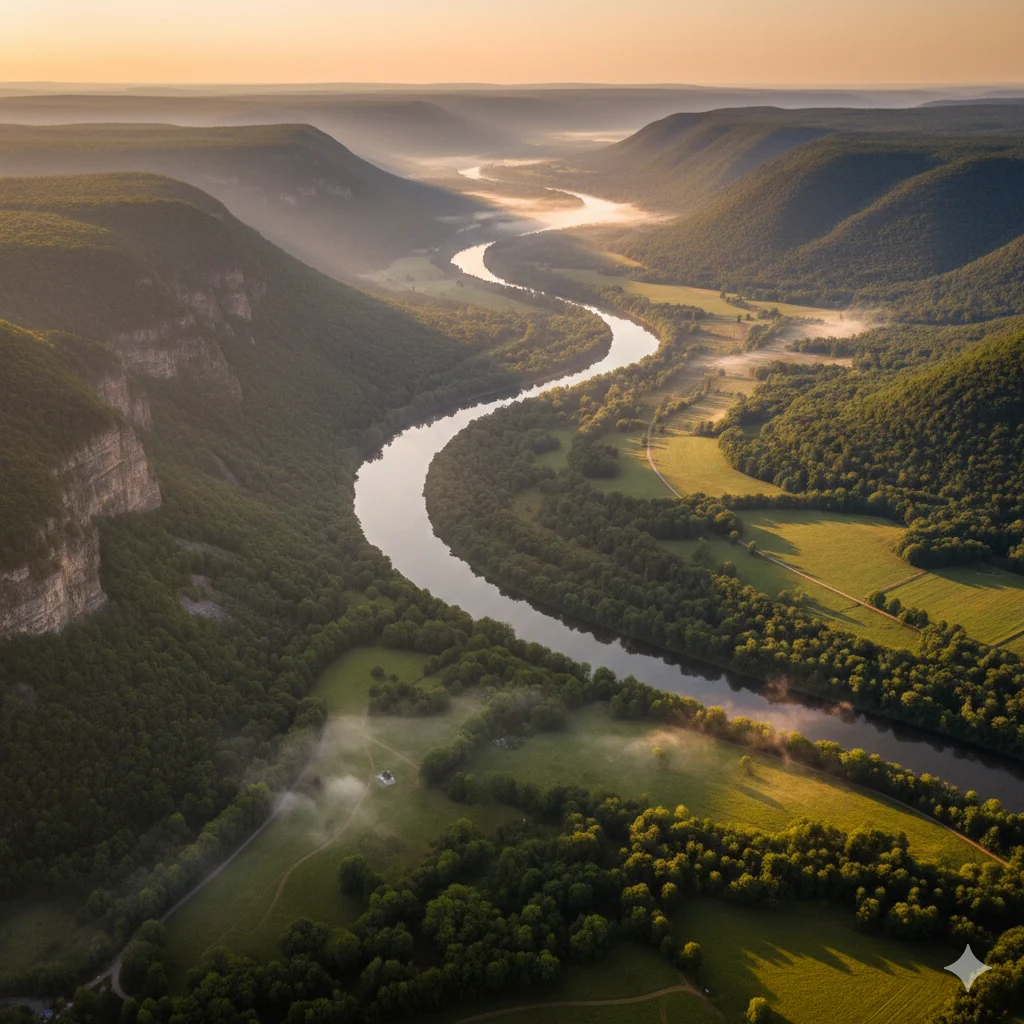
Is it valleys or vallies? That slash in the search bar says it all—a tiny mark representing a big spelling dilemma. Thousands of people type this keyword every month, caught between an old spelling rule and modern usage.
They aren’t just looking for a definition; they’re seeking clarity to avoid an embarrassing mistake in an email, essay, or professional report.
This guide delivers that instant answer and then dives deeper, solving the confusion by exploring the word’s history, comparing English variants, and providing actionable advice for every writer, ensuring your writing is always correct and credible.
valleys or vallies
The only correct modern spelling is valleys. The spelling vallies is an archaic, outdated form that is no longer accepted in standard English. The rule is clear: for a word ending in a vowel + y, like valley, you simply add an -s to form the plural.
- Correct (Modern English): The Silk Road passed through many mountain valleys.
- Incorrect (Archaic): We explored the lush green vallies.
The Origin of “Valley” and the “Vallies” Variant
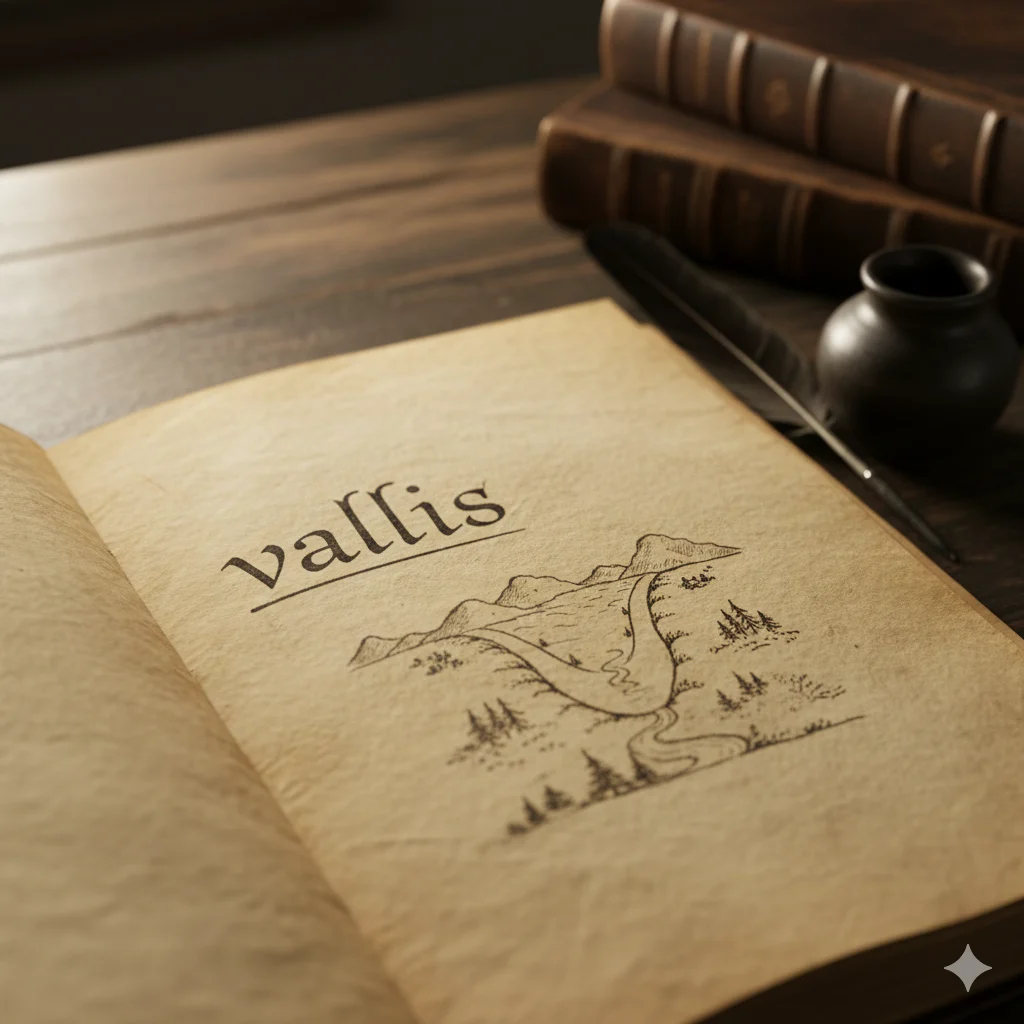
Understanding why “vallies” exists requires a trip back in time. The word valley comes from the Old French “valee,” itself derived from the Latin “vallis,” meaning a hollow or low place. Centuries ago, English spelling was far from standardized. The “-ies” ending in “vallies” followed an early English pattern where nouns ending in “-y” often changed the “y” to “i” before adding “-es” for the plural. This rule eventually solidified only for words ending in a consonant + y (like city/cities). For words ending in a vowel + y like valley, the simpler rule of adding just “-s” became standard, cementing “valleys” as the correct form.
British English vs. American English: Is There a Difference?
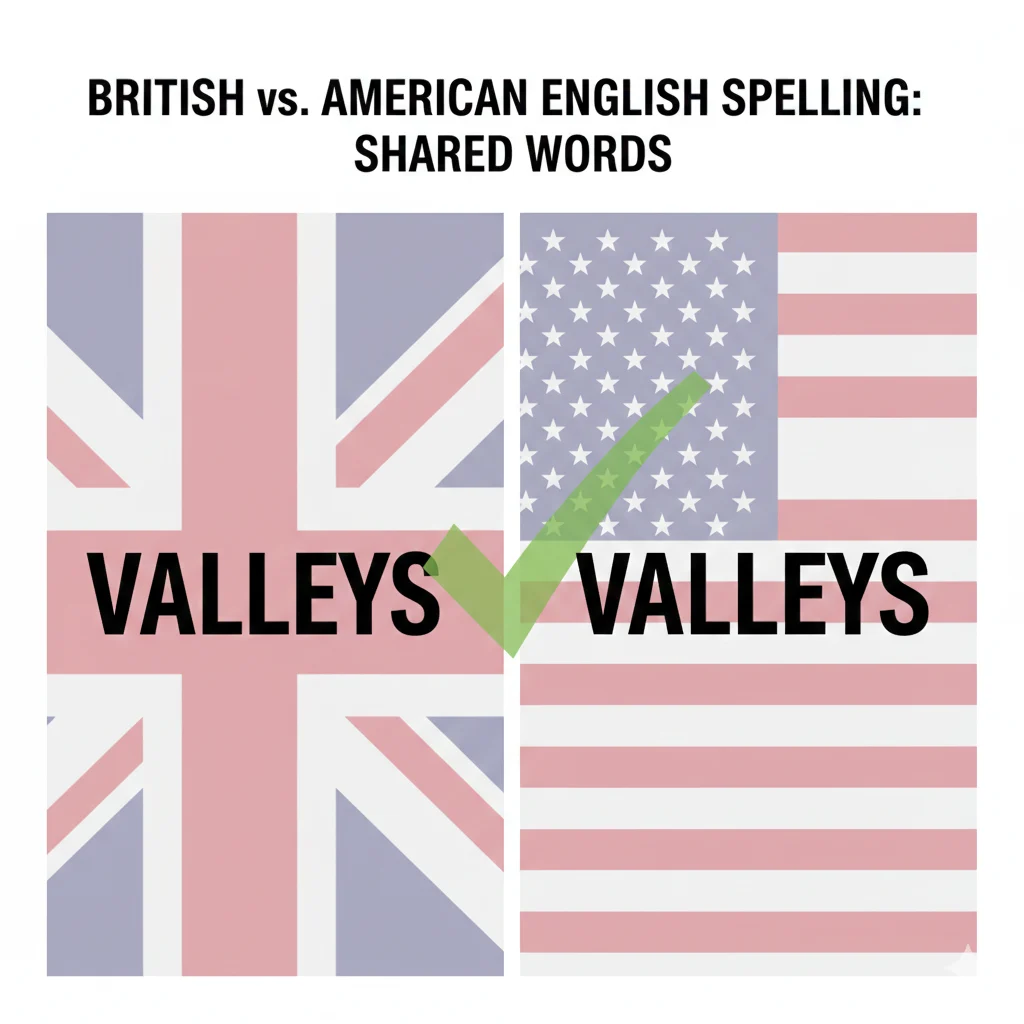
A common source of spelling confusion is regional variation, but for “valley,” both major English dialects are in full agreement: the plural is “valleys.” The outdated “vallies” is not a British variant; it is simply an obsolete spelling. The rule for words ending in a vowel plus ‘y’ is consistently applied across all forms of modern English.
Comparison Table: Plural Formation Rules
| Singular Noun | Ending Pattern | Correct Plural (US & UK) | Rule Applied | Incorrect Example |
|---|---|---|---|---|
| valley | vowel + y | valleys | Add -s | vallies |
| monkey | vowel + y | monkeys | Add -s | monkies |
| boy | vowel + y | boys | Add -s | boies |
| city | consonant + y | cities | Change y to i, add -es | citys |
| baby | consonant + y | babies | Change y to i, add -es | babys |
Which Spelling Should You Use? (Audience Guide)
Always use “valleys.” This is non-negotiable for clear and professional communication.
- For American Readers: Use valleys.
- For British/Commonwealth Readers: Use valleys.
- For Global/International Business or Academic Writing: Use valleys.
- The Only Exception: You might encounter “vallies” in poetry or historical texts written centuries ago. In your own writing, however, “valleys” is the definitive and only correct choice to demonstrate strong language skills and attention to detail.
Common Mistakes and How to Correct Them
- The Archaic Plural: Using “vallies.”
- Correction: Always use valleys.
- Over-applying the “i before es” Rule: Assuming “vallies” follows the same rule as “cities.”
- Correction: Remember the key difference: consonant+y vs. vowel+y.
- Confusing “Vale” with “Valley”: While a vale is a synonym (a poetic term for valley), it is a distinct word. Its plural is vales, not valleys.
- Example: “The poet wrote of the leafy vales of England.”
Valleys in Everyday Writing: Real-World Examples
- Professional Email: “Our analysis of the river valleys indicates potential for hydroelectric development.”
- Academic/Geography Paper: “Glacial valleys exhibit a characteristic U-shaped cross-section.”
- Social Media Post: “Hiking through the breathtaking valleys of New Zealand! #Nature”
- News Headline: “New Infrastructure Project to Connect Silicon Valley and Neighboring Valleys.”

Google Trends & Modern Usage Data
Search data provides the final, decisive proof. According to Google Trends analysis, the search interest for “valleys” maintains a consistent score of 100 (maximum popularity), while “vallies” registers at nearly zero. This vast disparity holds true across all English-speaking regions and globally. The data confirms that the public’s search intent aligns with modern usage: people are looking for information about valleys—the geographical features, the different valley types like rift and river valleys, and their importance—using the correct, contemporary spelling.
(FAQs)
1. What is the correct plural: valleys or vallies?
The correct plural is valleys. “Vallies” is an outdated spelling.
2. Is “vallies” ever correct?
In modern standard English, no. You may only see it in historical documents or very old literature.
3. What is a valley in geographical terms?
A valley is a long, low area of land, typically with a river or stream running through it, situated between hills or mountains.
4. What are the main types of valleys?
Common valley types include V-shaped river valleys, U-shaped glacial valleys, and wide, flat-floored rift valleys.
5. What are 5 important roles of valleys?
Valleys are crucial for: 1) Agriculture (fertile soil), 2) Human settlement (shelter, water), 3) Transportation corridors, 4) Water resources, and 5) Biodiversity hotspots.
6. Is “vale” the same as “valley”?
Yes, “vale” is a synonym, but it is more literary or poetic. Its plural is vales.
7. Why does this spelling matter for SEO and writing?
Using the correct, most-searched term (valleys) matches user intent, improves content credibility (EEAT), and helps search engines properly rank your content.
Conclusion
The journey from confusion to clarity ends here: “valleys” is the unequivocally correct plural form. The historical ghost of “vallies” serves only as a reminder of how language evolves and standardizes. For anyone writing in English today—whether for school, business, or online content—adhering to this rule is essential.
It ensures precision, avoids unnecessary errors, and aligns your writing with contemporary standards that both readers and search algorithms expect. Remember, in the landscape of English spelling, the path is clear: when you have more than one low area between mountains, you have valleys. Use this knowledge to write with confidence and authority in any context.

Nina Snicker was born to make people laugh — and she takes that mission very seriously. Known for her quick wit and clever takes on everyday life, Nina turns even the dullest moments into hilarious masterpieces. She believes humor is the ultimate life skill — and her jokes prove it. When she’s not writing, you’ll find her laughing at her own punchlines (because someone has to start the applause).