The words dealt and delt are often confused, but only dealt is correct in standard English. Dealt is the past tense and past participle of the verb deal, meaning to handle, manage, or distribute something.
Many learners mistakenly write delt, thinking it is an acceptable alternative, but delt is incorrect and does not appear in dictionaries. Using delt can make writing appear careless, unprofessional, or confusing, especially in exams, essays, official documents, or professional emails.
A common weakness of typical explanations is that they don’t give enough examples, context, or memory tricks, leaving learners unsure about correct usage. Another issue is that many introductions fail to highlight the severity of the mistake, which can affect grades or credibility in formal writing.
In this article, you will learn the correct use of dealt, why delt is wrong, practical examples for clarity, and tips to remember the correct spelling, so your writing is always accurate, confident, and polished.
Adaptors or Adapters meanungs
Here is the fast, direct answer. Both “adapter” and “adaptor” are correct. They mean the same thing: a device that allows connection between incompatible parts. The difference is mainly regional.
- Adapter (with an “e”): This is the preferred and more common spelling in American English. Example: “I need a power adapter for my US laptop.”
- Adaptor (with an “o”): This is the preferred spelling in British English. Example: “Remember to pack a travel adaptor for the UK.”
In everyday use, especially for the electrical device that lets you plug into different sockets worldwide, both spellings are interchangeable and understood everywhere. The core function is to adapt one standard to another.
The Origin of Adaptors or Adapters
The word comes from the Latin verb “adaptare,” meaning “to fit or adjust.” It entered English in the 18th century as “adapt,” with the agent suffix “-er” or “-or” added to mean “a thing or person that adapts.” This is where the split begins. English has always borrowed from Latin and French, leading to variations. The “-or” ending is often seen in words of Latin origin (like “doctor,” “actor”), while “-er” is a native English suffix for agent nouns (like “writer,” “baker”). Historically, British English has shown a slight preference for the Latin “-or” in certain words, while American English, influenced by Noah Webster’s spelling reforms, standardized many towards “-er.” For “adapter/adaptor,” both suffixes were used naturally, leading to the accepted variations we see today. The spelling difference is a fascinating glimpse into the evolving, adaptable nature of language itself.
British English vs American English Spelling
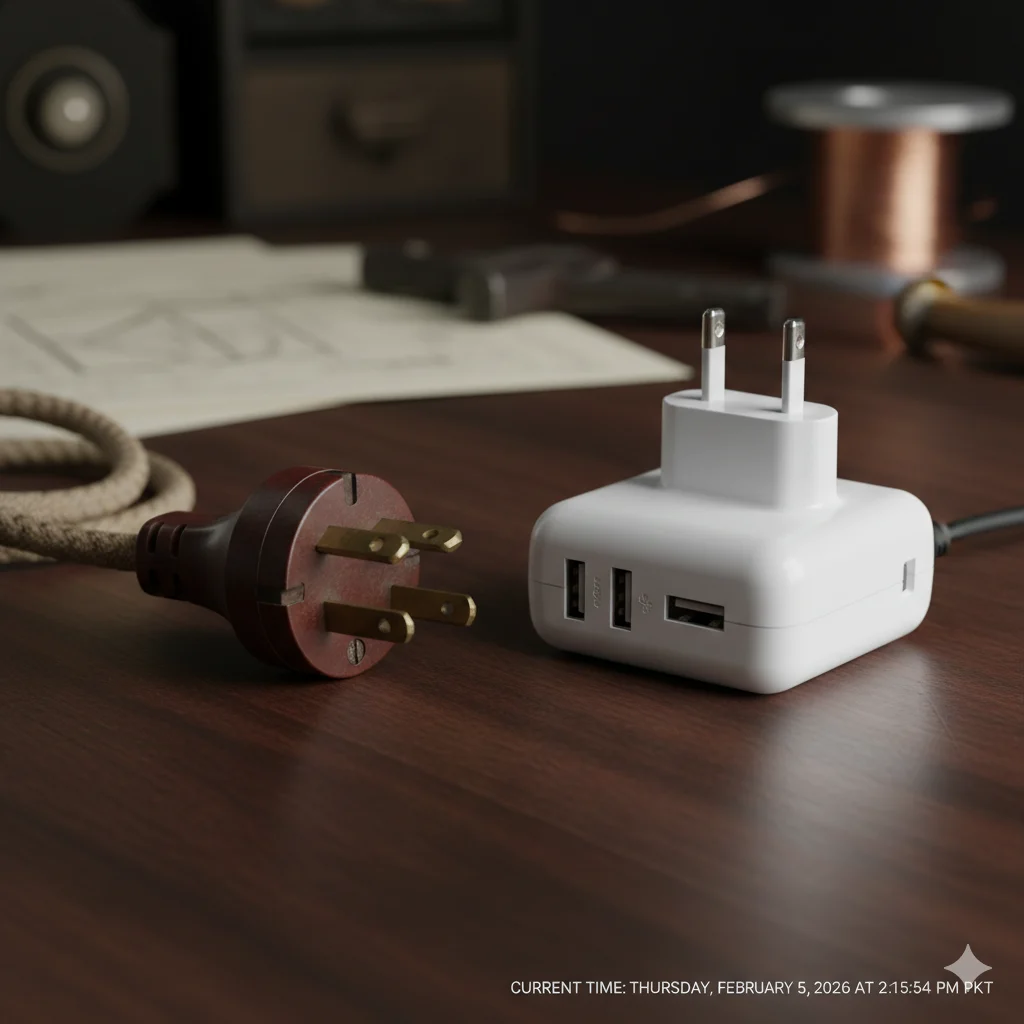
The spelling difference is a classic example of the broader variations between British and American English. American English spelling tends to simplify and phoneticize. British English often retains more of the original French or Latin spelling patterns.
- American English Rule: Strongly favors “-er” for agent nouns. Thus, adapter is standard.
- British English Rule: Often uses “-or” for words with a Latin root, though it’s not a strict rule. Thus, adaptor is common, especially in official UK publications and for technical devices like electrical adaptors. However, “adapter” is also seen in the UK, particularly when referring to a person who adapts (e.g., a book adapter).
Comparison Table: Adaptor vs Adapter
| Feature | Adaptor (with ‘o’) | Adapter (with ‘e’) |
|---|---|---|
| Primary Usage | Preferred in British English and Commonwealth countries (Australia, India). | Preferred in American English. |
| Example Sentence | “You’ll need a UK plug adaptor for your trip to London.” | “Buy a universal adapter for your European vacation.” |
| Context | Very common for electrical devices. | Common for all contexts: electrical, software, people. |
| Dictionary Status | Listed as main variant in UK dictionaries. | Listed as main variant in US dictionaries. |
Which Spelling Should You Use?
Your choice should be guided by your audience and location.
- For a US Audience: Always use “adapter.” It looks correct and familiar to American readers.
- For a UK, Australian, or Indian Audience: Use “adaptor.” This aligns with local spelling conventions and builds trust.
- For Global or Technical Writing (Manuals, E-commerce): Consistency is key. Choose one spelling and stick with it throughout your document. Using “adapter” is increasingly common globally due to the influence of American English and tech companies. If you are listing products, you might naturally include both spellings in your keywords to capture all search traffic.
- For General or Informal Use: Don’t worry too much. Both are correct, and your meaning will be clear.
Common Mistakes with Adaptors or Adapters
The most frequent errors stem from mixing up similar-sounding words or misapplying the spelling rule.
- Mistake: Using “adaptor” in a formal document for an American company.
- Correction: Use “adapter.”
- Mistake: Confusing adapter with adaptor (a different word). An adaptor is someone who adjusts well to new conditions—a personality type.
- Correction: “He’s a great adaptor to change.” vs. “I need a plug adapter.”
- Mistake: Thinking one spelling is “wrong.”
- Correction: Accept that both are standard in their respective dialects. The device’s function is what matters most.
Adaptors or Adapters in Everyday Examples
Let’s see how they fit into real-world writing.
- Email (Work): “Hi team, please ensure you have the correct power adapters for the conference in New York.” (US Spelling)
- News Article (UK): “New regulations for electrical adaptors aim to improve safety standards.”
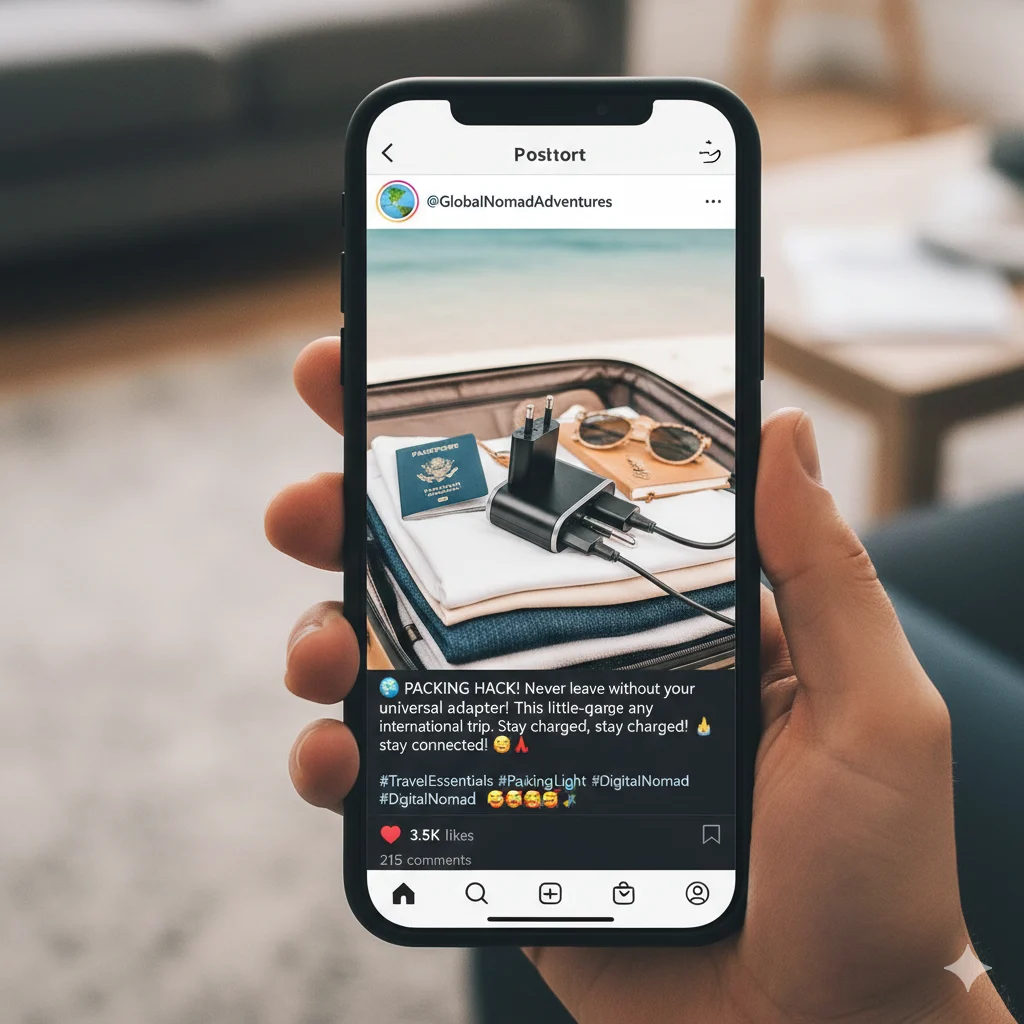
- Social Media Post: “Travel hack: Never forget your universal adapter! #TravelTips” (Global/Common spelling)
- Formal Technical Manual: *”Connect the protocol adapter (Model PA-10) to the main interface port.”* (Consistent use of “-er”)
Adaptors or Adapters – Google Trends & Usage Data
Analyzing search data reveals clear patterns. According to Google Trends, the global search interest for “adapter” (with an ‘e’) is consistently and significantly higher than for “adaptor.” This reflects the dominant volume of searches from the United States. However, in countries like the United Kingdom, Australia, and Pakistan, the search for “adaptor” shows relative strength, often spiking around holiday travel seasons. Searches like “adaptors adapters price in pakistan” or “Universal Travel Adapter Pakistan” show strong local intent. This data tells us that while “adapter” is the more common global term, the regional spelling is vital for connecting with specific audiences, especially for commerce and local SEO. For businesses, incorporating both keyword variations naturally is a smart strategy.
Finding the Right Adapter for Pakistan: A Practical Guide
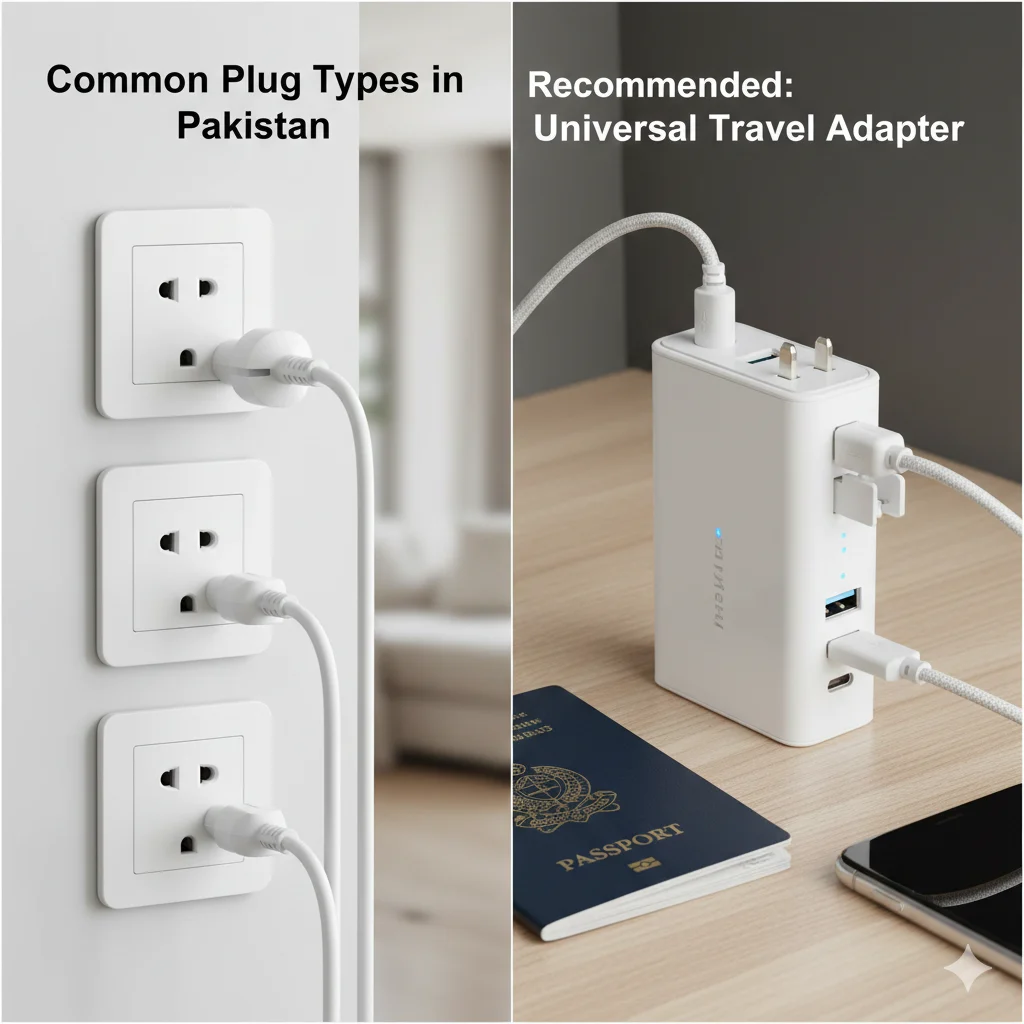
If your search for “adaptors adapters” is driven by a trip to Pakistan, here’s what you need to know. Pakistan uses Type C (European 2-pin), Type D (Old British 3-pin), and sometimes Type M (South African 3-pin) sockets. The standard voltage is 230V/50Hz.
- What adapter is used in Pakistan? A universal travel adapter that includes Type C, D, and M plugs is essential. Do not rely on a single-type adapter.
- Top Picks for Pakistan Travel:
- Camelion Universal Adapter: A reliable and affordable brand often available in Karachi and Lahore markets. It typically covers multiple regions.
- Clopal Travel Adapter: Known for sturdy builds, often including surge protection—useful for areas with unstable power.
- Adaptors adapters price in Pakistan: Prices vary. A basic universal adapter can cost between PKR 800 to PKR 2,500. Branded models with USB ports or surge protection may range from PKR 3,000 to PKR 6,000. Always check current listings on local e-commerce sites for the latest adaptors adapters price.
- Crucial Tip: An adapter only changes the plug shape. It does not change voltage. If your device (like a US 110V hair dryer) is not dual-voltage (110-240V), you will also need a separate, heavy voltage converter to avoid damage.
FAQs
1. Is it adapters or adaptors?
Both are correct. Use “adapter” for American English and “adaptor” for British English. For global content, “adapter” is more common.
2. What is an adapter personality type?
This is a different word: an adaptor (with an ‘o’). In psychology, an adaptor is a person who is flexible, pragmatic, and works to improve existing systems rather than revolutionary change. It’s a term from Dr. Michael Kirton’s Adaption-Innovation theory.
3. What are adapters?
Adapters are devices that allow connection between incompatible interfaces. Common types include electrical plug adapters, USB-C to HDMI adapters for laptops, and software protocol adapters.
4. What adapter is used in Pakistan?
You need a universal travel adapter that supports Type C (2-pin), Type D (3-pin), and Type M (3-pin) plugs. Always check your device’s voltage compatibility.
5. Are cheap travel adapters safe?
Not always. Safety varies. Look for certifications (like CE, UKCA, or PS Mark in Pakistan), sturdy construction, and proper prong materials. Avoid overly cheap, unbranded adaptors from unknown sources, as they can be fire hazards.
6. Can I use my 110V device in Pakistan with just an adapter?
No. Pakistan uses 230V. Using only a plug adapter with a 110V device will damage it. You need a voltage converter unless your device is dual-voltage (labeled ‘Input: 110-240V’).
7. Where can I buy adapters in Karachi?
You can find them in electronic markets like Rainbow Centre, Regal Plaza, or at major appliance stores. Online marketplaces like also offer a wide range, from Camelion to Clopal brands.
Conclusion
In the end, the journey through “adaptors vs adapters” reveals a simple truth: language, like the devices themselves, adapts to its environment. The spelling difference is a minor historical footprint, not a major error. For your writing, let your audience guide you—“adapter” for the US, “adaptor” for the UK and Commonwealth.
For your travels, especially to a country like Pakistan with multiple socket types, your focus should be on a high-quality universal travel adapter that supports Type C, D, and M plugs. Remember to check voltage requirements to protect your gadgets. By understanding both the linguistic and practical sides of adaptors/adapters, you can communicate clearly and connect your devices safely anywhere in the world. The key is to be adaptable—in both spelling and preparation.

Chuck Winkman is a master of wordplay and timing — the kind of writer who can make even grammar funny. His humor dances between clever and ridiculous, and his jokes always hit with a mix of intellect and silliness. Chuck’s goal? To make the world laugh one pun at a time. If sarcasm had a superhero, it would definitely wear a cape named Chuck Winkman.