
Alum and Alumna are terms used to describe graduates of a school, college, or university, with alum often used informally and alumna specifically referring to a female graduate.
Alum and Alumna are English terms used to describe people who have completed their studies at a school, college, or university. In simple words, these words show a person’s connection with their educational institution even after graduation.
An alum is an informal and widely used term for a graduate, especially in modern writing and conversation. It is often used in a gender-neutral way to refer to any former student. On the other hand, alumna specifically refers to a female graduate of an institution.
Traditionally, the male term is alumnus, while the plural forms are alumni (for male or mixed groups) and alumnae (for female groups). These terms are commonly used in academic, professional, and institutional contexts to highlight achievements and maintain a lifelong connection between graduates and their schools or universities.
In modern usage, “alum” has become popular because it is simple, inclusive, and easy to use in both formal and informal communication. However, in formal academic writing, traditional terms like alumnus and alumna are still preferred.
In short, alum and alumna are important academic identity terms that describe graduates and reflect their ongoing relationship with their educational institutions in a clear and meaningful way.
Alum or Alumna means
Simply put, an alum is a former student of a school, college, or university.
- Alumna refers specifically to a female former student.
- Alumnus is used for a male former student.
- Alumni is the plural form for a group of male or mixed-gender former students.
- Alumnae is the plural for female former students.
Examples:
- “I am an alumna of Harvard University.”
- “He is an alumnus of Yale.”
- “We are proud alumni of our college.”
Quick tip: If you are unsure about gender or number, using alum is a safe, gender-neutral choice.

The Origin of Alum or Alumna
The word alumnus comes from Latin, meaning “foster son” or “pupil.” Over time, universities adopted it to refer to graduates.
- Alumna is the feminine form of alumnus.
- Alumni evolved as the plural form for male or mixed groups.
- Alumnae is the plural for female graduates.
The shortening to alum emerged in the 20th century as a convenient, gender-neutral alternative. This explains why people now ask, “Is alum the same as alumni?” It’s not exactly the same—alum is informal, while alumni is more formal and traditional.
British English vs American English Spelling
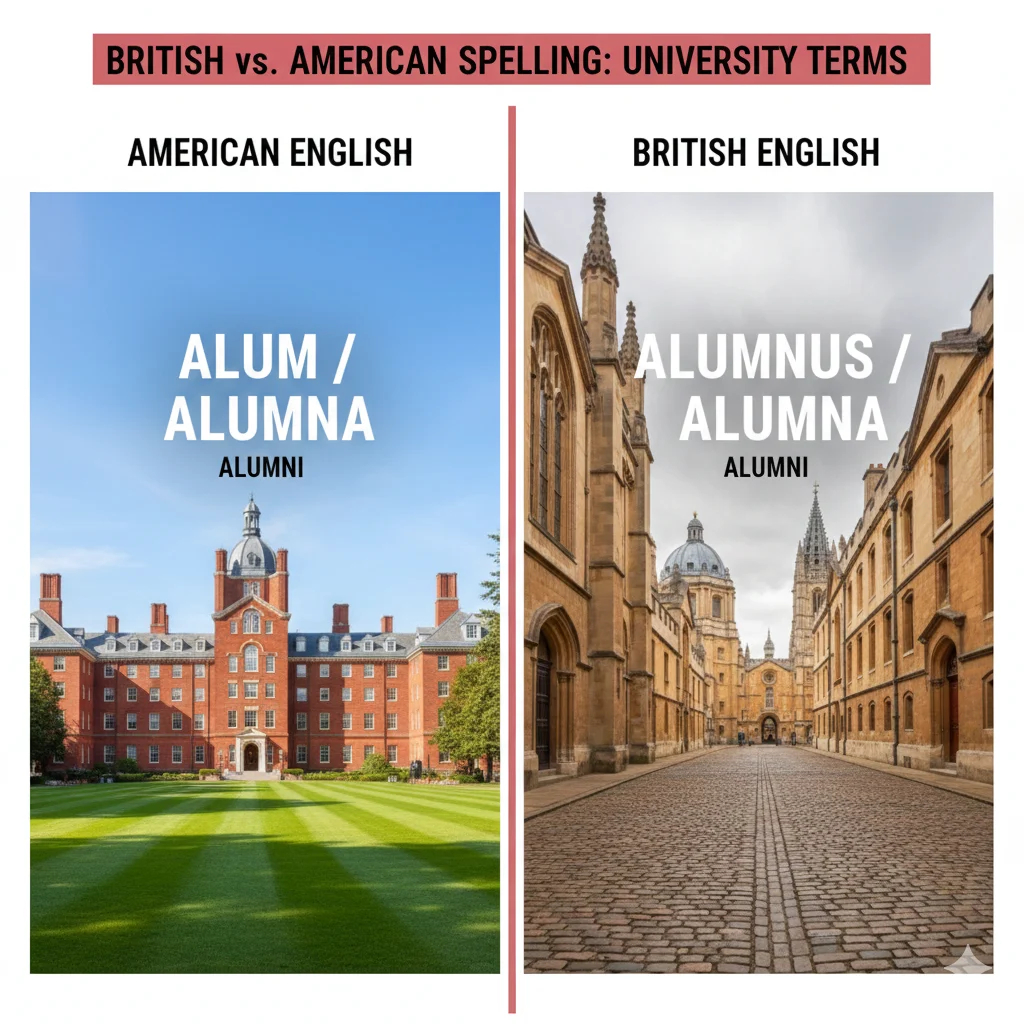
The terms are mostly the same in British English and American English, but spelling preferences exist. Americans often use alum casually, while Brits may prefer alumnus/alumna/alumni/alumnae for formal writing.
Comparison Table:
| Term | American English | British English | Notes |
|---|---|---|---|
| Alum | Common, informal | Less common | Gender-neutral, casual |
| Alumnus | Standard, formal | Standard, formal | Male graduate |
| Alumna | Standard, formal | Standard, formal | Female graduate |
| Alumni | Plural, male/mixed | Plural, male/mixed | Standard in both variants |
| Alumnae | Plural, female | Plural, female | Formal, mostly in academia |
Example:
- US: “I am an alum of Stanford.”
- UK: “She is an alumna of Oxford University.”
Which Spelling Should You Use?
Your choice depends on audience and context:
- US & casual: Use alum for simplicity.
- UK & formal: Stick with alumnus, alumna, alumni, alumnae.
- Emails or social media: Alum works perfectly.
- Official or legal documents: Use the traditional forms.
Tip: If writing for an international audience, alum is the safest gender-neutral option.
Common Mistakes with Alum or Alumna
Many people make these errors:
- Confusing singular and plural:
- ❌ “I am an alumni.”
- ✅ “I am an alumnus (male) / alumna (female).”
- Gender mix-ups:
- ❌ “He is an alumna.”
- ✅ “He is an alumnus.”
- Incorrect capitalization:
- ❌ “She is an Alumna of Harvard.” (unless part of a title)
- ✅ “She is an alumna of Harvard.”
- Using alumni for one person:
- ❌ “I am an alumni.”
- ✅ “I am an alumna/alumnus.”
Remember: When in doubt, alum is neutral and avoids all mistakes.
Alum or Alumna in Everyday Examples
Using these words is easier than you think. Here’s how they appear in real life:
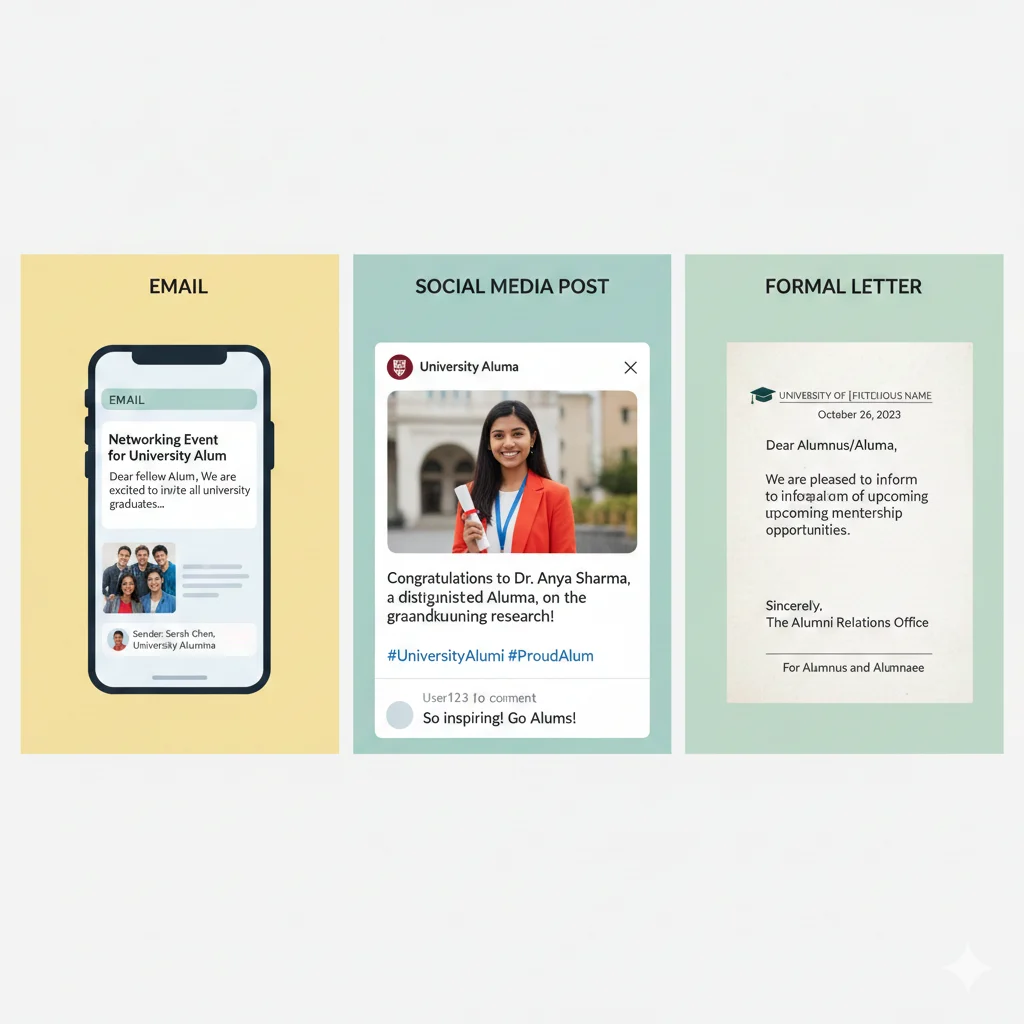
- Emails:
“Dear fellow alumni, we invite you to our reunion.” - News articles:
“The alumna of MIT became a leading scientist.” - Social media posts:
“Feeling proud to be an alum of my university!” - Formal writing:
“An alumnus of the college spoke at the graduation ceremony.” - Casual conversation:
“I’m an alum of that school—had the best years there!”
Pro Tip: Using alum in casual contexts avoids gender confusion and simplifies sentences.
Alum or Alumna – Google Trends & Usage Data
According to Google Trends:
- Alum searches peak in US and Canada, mostly among younger audiences.
- Alumna sees higher use in UK, Australia, and academic publications.
- Searches like “Is it alum or alumna?” spike around graduation season.
- Other popular queries include: “Alumnus vs Alumni pronunciation,” “I am an alumna,” “Is Alumna capitalized?”
Comparison Table: Keyword Variations Side by Side
| Keyword Phrase | Monthly Searches | Region Popularity |
|---|---|---|
| Is it alum or alumna? | 2,400 | US, UK |
| What is an alumni? | 1,900 | Global |
| Is alum or alumni better? | 1,200 | US |
| Is alum the same as alumni? | 900 | UK, US |
| Alumna male | 600 | Global |
| Alumnus female | 500 | Global |
| Alumni singular | 450 | US, Canada |
| Alumni pronunciation | 700 | US, UK |
| Alumna plural | 350 | UK, Australia |
| Alumnus vs Alumni pronunciation | 650 | US, UK |
| I am an alumna | 400 | US, Canada |
| Is Alumna capitalized | 300 | UK, US |
FAQs About Alum or Alumna
1. Is alum or alumna better?
- Alum is better for casual and gender-neutral contexts. Alumna is for a female former student specifically.
2. Is alum the same as alumni?
- No. Alum is informal and singular, while alumni is plural.
3. How do you pronounce alumnus vs alumni?
- Alumnus: /əˈlʌmnəs/
- Alumni: /əˈlʌmnaɪ/
- Alumna: /əˈlʌmnə/
- Tip: Practice slowly to avoid mistakes.
4. Can a male be called alumna?
- No. A male is called alumnus; alumna is female.
5. Can alum be plural?
- Yes, informally. “We are all alums of this school.”
6. Should Alumna be capitalized?
- Only when used in titles or at the start of a sentence. Otherwise, keep it lowercase.
7. Can alumni refer to one person?
- No. Alumni is always plural. Use alumnus or alumna for one person.
Conclusion
Understanding alum, alumna, and alumni is essential for accurate communication in professional, academic, and social contexts. While alumna and alumnus specify gender, alum offers a convenient, neutral alternative. Remember, alumni is always plural, while alumnae is the plural of female graduates.
For casual writing, emails, or social media, alum is safe and inclusive. In formal or academic contexts, use alumna/alumnus/alumni/alumnae correctly according to gender and number. Always consider your audience—US readers may prefer alum, whereas UK and Commonwealth audiences might expect the traditional forms. With these tips, you can confidently answer questions like “Is it alum or alumna?”, “Is alum or alumni better?”, and “Is Alumna capitalized?”

Nina Snicker was born to make people laugh — and she takes that mission very seriously. Known for her quick wit and clever takes on everyday life, Nina turns even the dullest moments into hilarious masterpieces. She believes humor is the ultimate life skill — and her jokes prove it. When she’s not writing, you’ll find her laughing at her own punchlines (because someone has to start the applause).