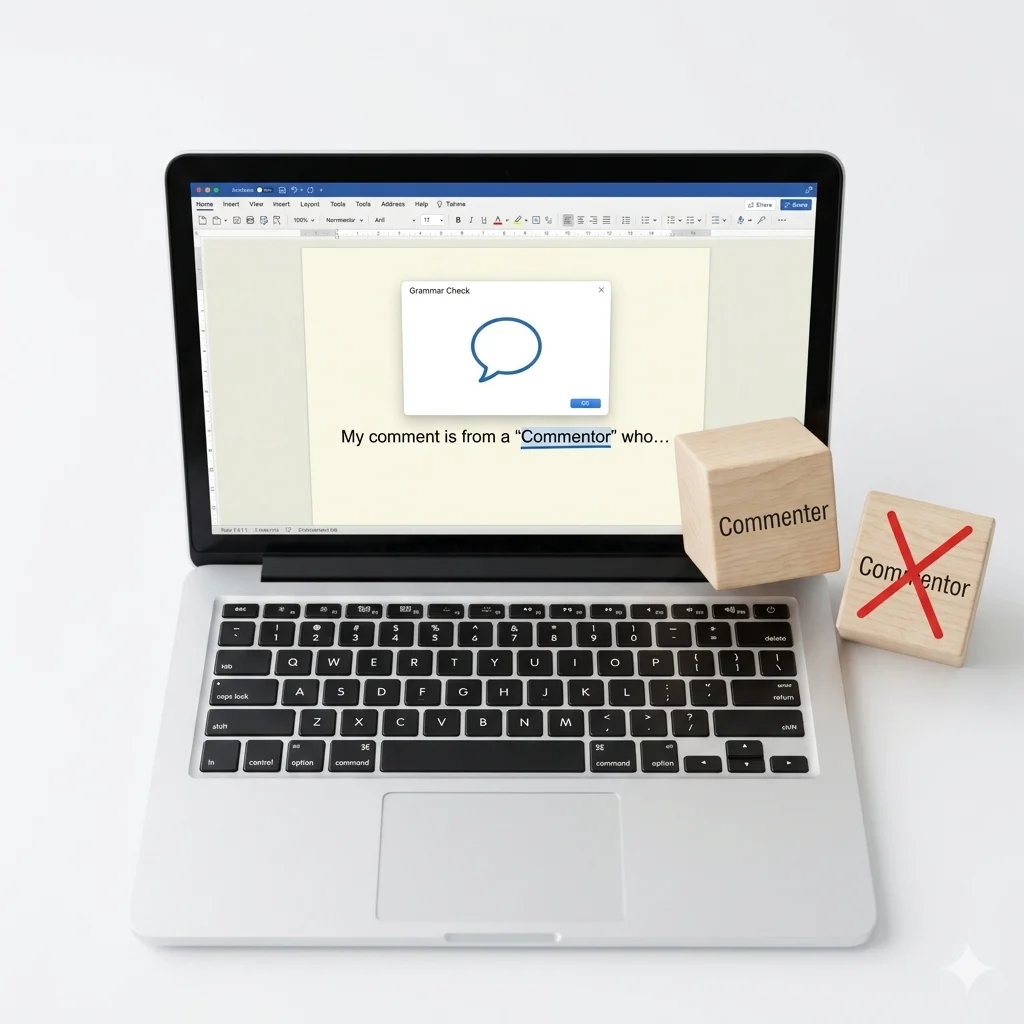
“Commenter is correct; commentor is a common misspelling. Always use commenter in your writing.”
Commenter or commentor — avoid mistakes that make your writing look amateur! If you’ve ever wondered which spelling to use, here’s the clear answer:
Commenter is the correct and widely accepted form for someone who leaves a comment, while commentor is a common misspelling that should be avoided.
Using the right word ensures your writing is professional, accurate, and credible. For example: “She is an active commenter on the blog”, “He became a top commenter on the YouTube channel”, or “Always be a constructive commenter in online discussions”.
In this article, you’ll learn the correct spelling, how to use it properly, and the common mistakes to avoid — perfect for bloggers, students, and professionals alike.
Whether you’re writing online, in school, or at work, understanding commenter vs commentor will help you write confidently and avoid embarrassing errors.
Commenter meanings
The quick answer is that commenter is the correct and standard spelling.
A commenter is simply a person who leaves a comment. It follows the standard English rule of adding an “-er” to a verb to create a noun that means “a person who does that thing.”
- Examples:
- The commenter on the recipe blog suggested adding more salt.
- As a frequent commenter on news sites, she always uses a pseudonym.
- The YouTube video had over a thousand commenters in the first hour.
The spelling “commentor” is generally considered a misspelling and is rarely used in professional or formal contexts.
The Origin of Commenter
To understand why we use “commenter,” we have to look at the root word: “comment.” The word “comment” entered the English language in the late 14th century, derived from the Latin word commentum, meaning “invention, fabrication, or interpretation.” It evolved to mean a spoken or written remark.
In English, the most common way to turn an action (verb) into a person who does that action (agent noun) is to add “-er.” For example:
- Write becomes writer.
- Speak becomes speaker.
- Play becomes player.
Following this simple, logical pattern, “comment” naturally becomes commenter. The spelling “commentor” likely appears because of the influence of the word commentator. A commentator is a specific type of person, often a professional who provides analysis or narration on live events (like sports or politics). Because “commentator” ends in “-or,” people mistakenly assume the shorter version does too, leading to the incorrect “commentor.”

British English vs American English Spelling
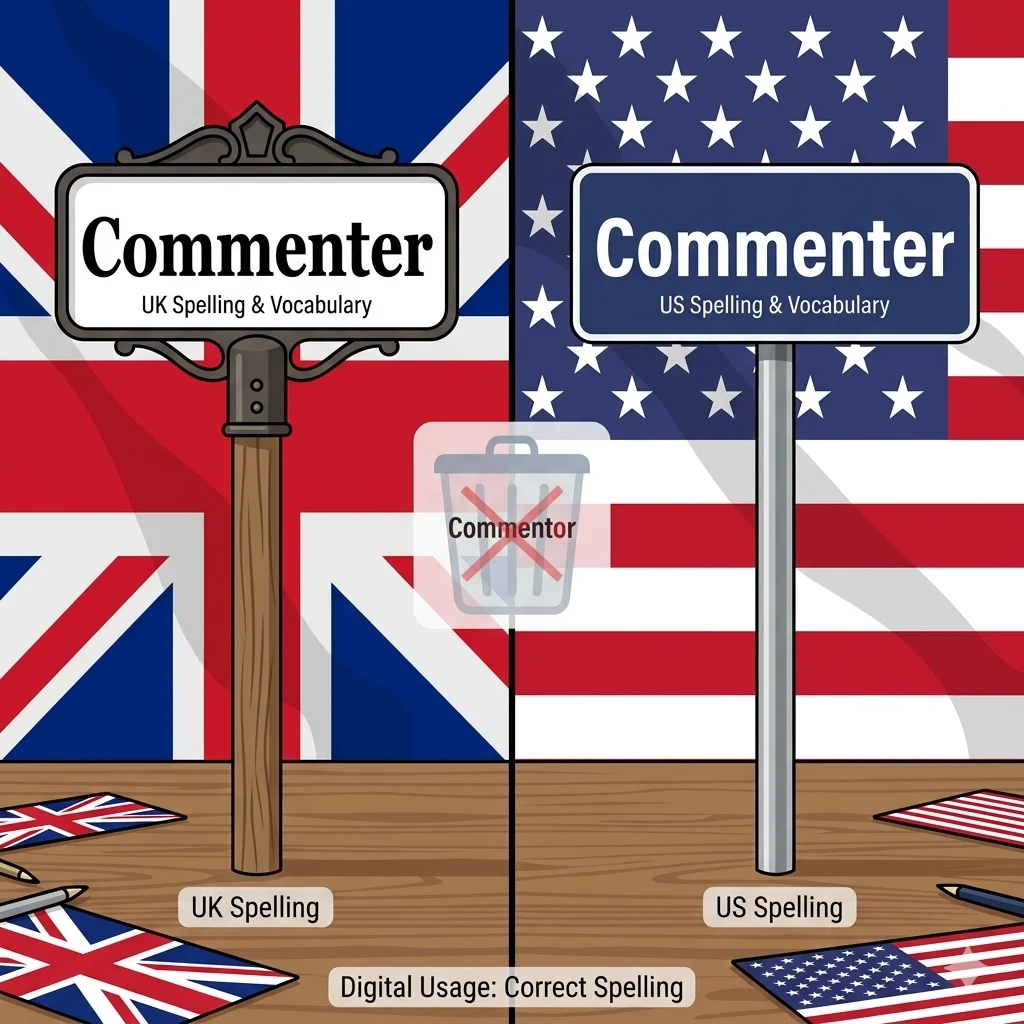
One might assume this is a case of British versus American English, like “color” and “colour.” However, for the word commenter, there is no significant divide.
- American English: Almost exclusively uses commenter.
- British English: Almost exclusively uses commenter.
The confusion arises entirely from the word “commentator,” which is spelled with an “-or” in both dialects. To make the difference crystal clear, here is a comparison table focusing on the agent nouns derived from similar words.
| Base Verb | Standard Spelling (Person who does it) | Common Misspelling | Notes |
|---|---|---|---|
| Comment | Commenter | Commentor | The standard “-er” suffix. |
| Commentate | Commentator | Commentater | The “-or” suffix is standard here. |
| Visit | Visitor | Visiter | “-or” is standard here. |
| Edit | Editor | Editer | “-or” is standard here. |
| Act | Actor | Actor | “-or” is standard here. |
| Run | Runner | Runnor | The standard “-er” suffix. |
As the table shows, while English uses both “-er” and “-or” suffixes, the correct formation from “comment” is commenter.
Which Spelling Should You Use?
Choosing the correct spelling is straightforward and depends entirely on your audience’s expectations of standard English, not on regional dialect.
- If your audience is in the United States: Use commenter. This is the only recognized spelling in American English for someone who leaves a comment.
- If your audience is in the UK, Australia, or other Commonwealth countries: Use commenter. The spelling rules for this specific word are the same as in the US.
- If you are writing for a global audience: Use commenter. It is the universally accepted, standard spelling.
- If you are referring to someone on a sports broadcast: Use commentator. Remember, a commenter leaves a written note; a commentator provides spoken analysis.
Common Mistakes with Commenter
Even though the rule is simple, people make mistakes because of the similar-sounding words. Here are the most frequent errors and how to correct them.
- The “Commentor” Mistake:
- Incorrect: “The first commentor made a very good point.”
- Correct: “The first commenter made a very good point.”
- Why it’s wrong: As explained, “-or” is not the standard suffix for this verb.
- Confusing Commenter with Commentator:
- Incorrect: “The news commenter on TV was discussing the election.”
- Correct: “The news commentator on TV was discussing the election.”
- Why it’s wrong: A commentator is a professional role, often in broadcasting. A commenter is anyone who writes a comment online or in a document.
- Incorrect Pluralization:
- Incorrect: “There were many commenters on the post.” (This is actually correct! A common mistake is thinking it looks wrong).
- Correct: “There were many commenters on the post.”
- Why people hesitate: The plural “commenters” looks a bit busy with two ‘e’s, but it is grammatically perfect. The plural of commenter is simply commenters.
Commenter in Everyday Examples
Seeing a word used in context is the best way to internalize its correct spelling and meaning. Here are examples of how commenter is used across different platforms and types of writing.
- In an Email (Professional):“Hi Team, please review the updated proposal in Google Drive. If you are a commenter on the document, please add your feedback by Friday.”
- On Social Media (Informal):“I can’t believe that commenter said the movie was boring! The action scenes were incredible.”
- In a News Article (Formal):“The online forum was shut down after a commenter posted threatening messages, violating the platform’s community guidelines.”
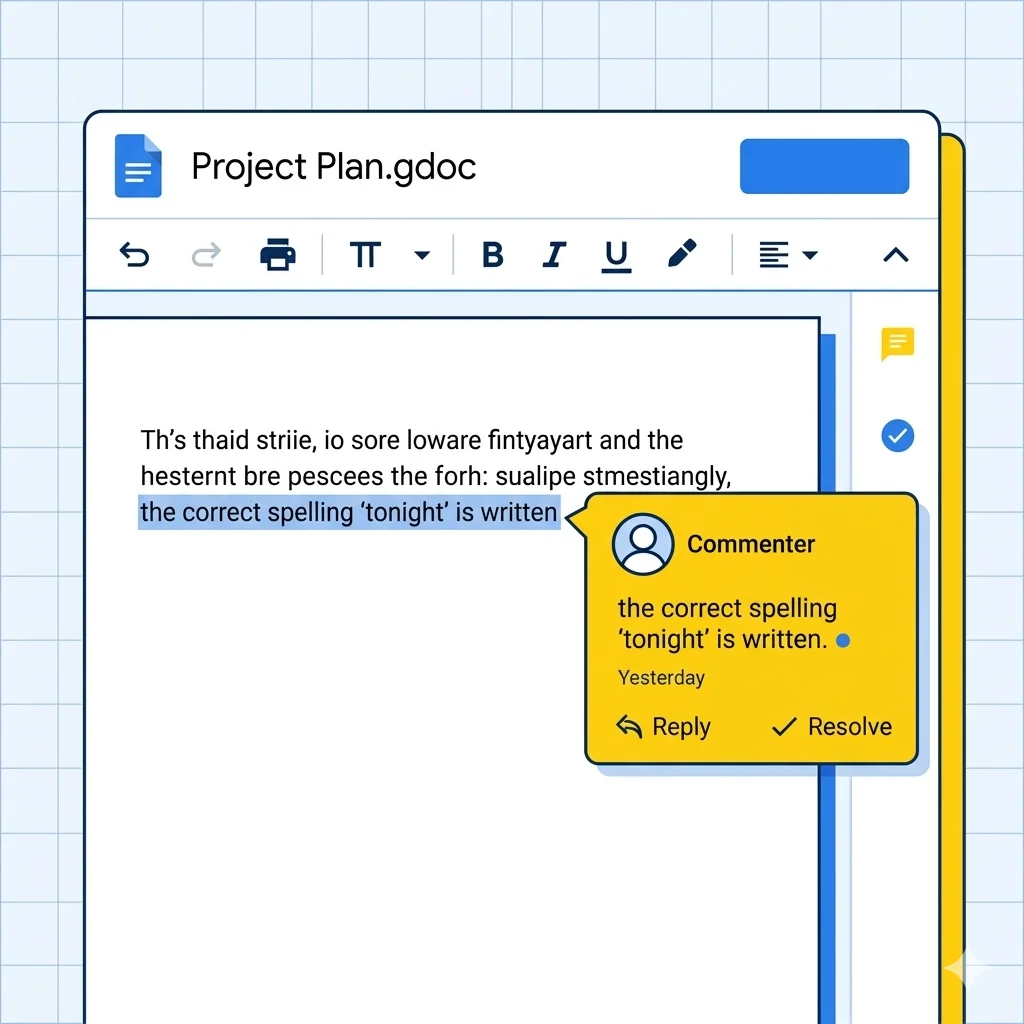
- In Google Docs (Specific Feature):“If you are shared as a commenter on a Google Doc, you can suggest edits and leave notes, but you cannot directly change the text.”
- In a Blog Post (Instructional):“We love hearing from our readers! The best commenter on this post will win a free copy of our new ebook.”
Commenter – Google Trends & Usage Data
An analysis of real-world usage data confirms that “commenter” is the dominant spelling. While we cannot provide live data here, historical Google Trends data consistently shows that the search volume for “commenter” dwarfs that for “commentor.” People are actively searching for the correct spelling, indicating the widespread confusion this article aims to solve.
- By Country: The term “commenter” is searched for most frequently in English-speaking countries like the United States, the United Kingdom, Canada, and Australia. This reinforces that the need for the word is universal across the English-speaking world.
- By Context: The searches for “commenter” are heavily tied to technology. Phrases like “commenter meaning in google drive” and “commenter on Google Docs” are extremely common. This shows that as collaborative software becomes more prevalent, people need the precise vocabulary to describe their roles and permissions.
- Synonym Usage: While people search for the word itself, in practice, synonyms are used to avoid repetition. Common commenter synonyms include:
- Poster: (Someone who posts a comment)
- Reviewer: (Often used on product or service sites)
- Contributor: (A more formal term for someone who adds content)
- Respondent: (Someone who replies)
- Interlocutor: (A participant in a conversation; very formal)
(FAQs)
Here are answers to the most common questions people have about the word commenter.
1. Is “commenter” a real word?
Yes, commenter is a standard English word. It is the correct agent noun for a person who makes a comment.
2. What does “commentor” mean?
“Commentor” is generally considered a misspelling of commenter. It does not have a separate, accepted definition in standard English dictionaries. You should avoid using it.
3. Who is a commentator person?
A commentator is a person who provides real-time analysis and narration of events, usually on television or radio. This is different from a commenter, who usually leaves a written remark.
4. What is the plural of commenter?
The plural is commenters. For example: “The article attracted several new commenters.”
5. What is a commenter on Google Docs?
In Google Drive and Google Docs, a commenter is a specific sharing permission level. A user shared as a “commenter” can view the file and add comments/suggestions, but they cannot edit the original content directly.
6. How do you pronounce commenter?
It is pronounced kom-men-ter. The emphasis is on the first syllable.
7. What is a good synonym for commenter?
Depending on the context, good synonyms include poster, reviewer, contributor, or respondent.
8. Is it “commenter” or “commentor” in British English?
Commenter. Both American and British English use the “-er” spelling for this word.
Conclusion
Navigating the nuances of English spelling can be tricky, especially when words sound similar. The key takeaway is simple: when referring to someone who leaves a comment, the correct and universally accepted spelling is commenter. The variant “commentor” is a common error, likely influenced by the related but distinct term “commentator.
” Remember that a commenter is an everyday user leaving feedback online, while a commentator is often a professional providing live analysis. By using “commenter,” you align with standard English rules, search engine data, and the expectations of a global audience. So, the next time you see a lively discussion online, you can confidently describe the participants as engaged commenters.

Tessa Hadley is a British novelist celebrated for her sharp wit and deep understanding of everyday lives. Her fiction often explores the humor and heartbreak tucked inside ordinary moments. Though known for literary fiction, Tessa’s dry, clever tone makes her a quiet master of subtle comedy — the kind that sneaks up on you and makes you laugh mid-sigh.