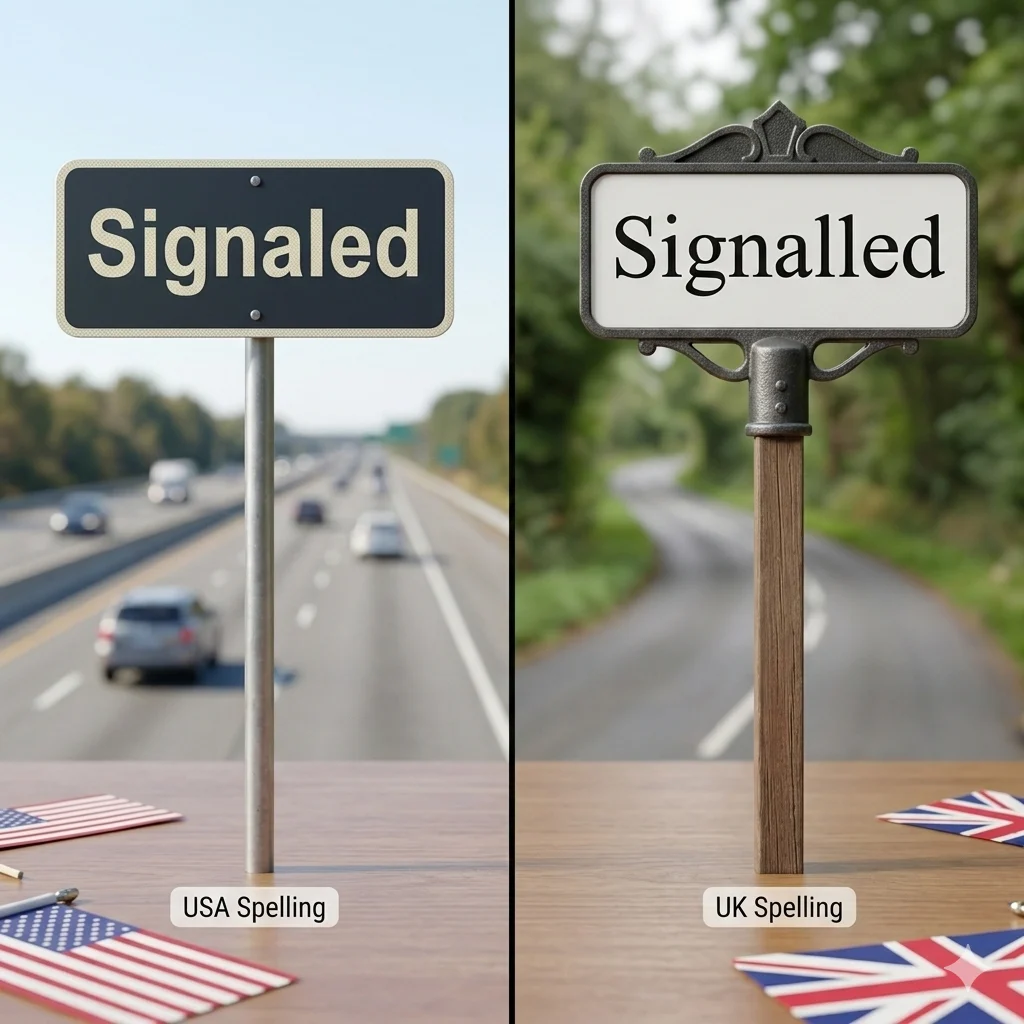
“Signalled vs signaled are both past tense forms of ‘signal’; the difference lies in British vs American English usage.”
Not sure whether to write ‘signalled’ or ‘signaled’? Master the difference in seconds and write like a pro! Both are past tense forms of the verb signal, meaning to send a message, indicate, or alert. The difference is primarily regional: ‘signalled’ with double “l” is preferred in British English, while ‘signaled’ with a single “l” is standard in American English.
Here are some clear examples for easy understanding:
- British English: “She signalled her approval with a nod.”
- American English: “He signaled the driver to stop.”
- Extra examples for clarity: “They signalled their intentions early.” / “I signaled the change in schedule.”
Using the correct form ensures your writing looks natural and professional, whether you’re writing for a UK or US audience. In this article, you’ll find a full guide with examples, usage tips, and common mistakes to help you confidently choose between signalled vs signaled.
Signalled or Signaled meanings
The quick answer is that both signalled and signaled are correct spellings. They are the past tense and past participle of the verb “to signal.”
- Signaled is the standard spelling in American English.
- Signalled is the standard spelling in British English and most other varieties of English (Canadian, Australian, etc.).
Examples:
- American: The police officer signaled for us to stop.
- British: The referee signalled the end of the match.
The choice depends entirely on which form of English you are using. If you are writing for a US audience, choose “signaled.” If you are writing for a UK or international audience, “signalled” is the safer bet.
The Origin of Signalled or Signaled
To understand How do you use signalled in a sentence? correctly, it helps to look at the origin of the word. The base word, “signal,” comes from the Old French seignal, which means a sign or a token. It entered the English language in the late 14th century.
The spelling variation arises from a key difference in how American and British English handle verb conjugation. In British English, there is a common rule: when adding a suffix (like -ed or -ing) to a verb that ends in a single vowel followed by a single consonant, you double the final consonant. This is done to preserve the pronunciation of the vowel sound. So, signal (ending in a single ‘l’ preceded by a vowel) becomes signalled.
American English, however, underwent a spelling reform in the 19th and 20th centuries, largely driven by lexicographer Noah Webster. He aimed to make English spelling more phonetic and less complicated. One of his changes was to drop the double ‘l’ in these cases unless the stress was on the second syllable. Since the stress in “signal” is on the first syllable, the past tense became “signaled” with a single ‘l’. This is why we have two distinct spellings today.

British English vs American English Spelling
This is the heart of the matter. The difference between signalled or signaled us and signalled or signaled uk is a classic example of the spelling divide between the two major forms of English. The same rule applies to other verbs like “travel,” “cancel,” and “label.”
- British English (and Commonwealth): Doubles the final ‘l’.
- Travel -> Travelled
- Cancel -> Cancelled
- Label -> Labelled
- Signal -> Signalled
- American English: Keeps the single ‘l’.
- Travel -> Traveled
- Cancel -> Canceled
- Label -> Labeled
- Signal -> Signaled
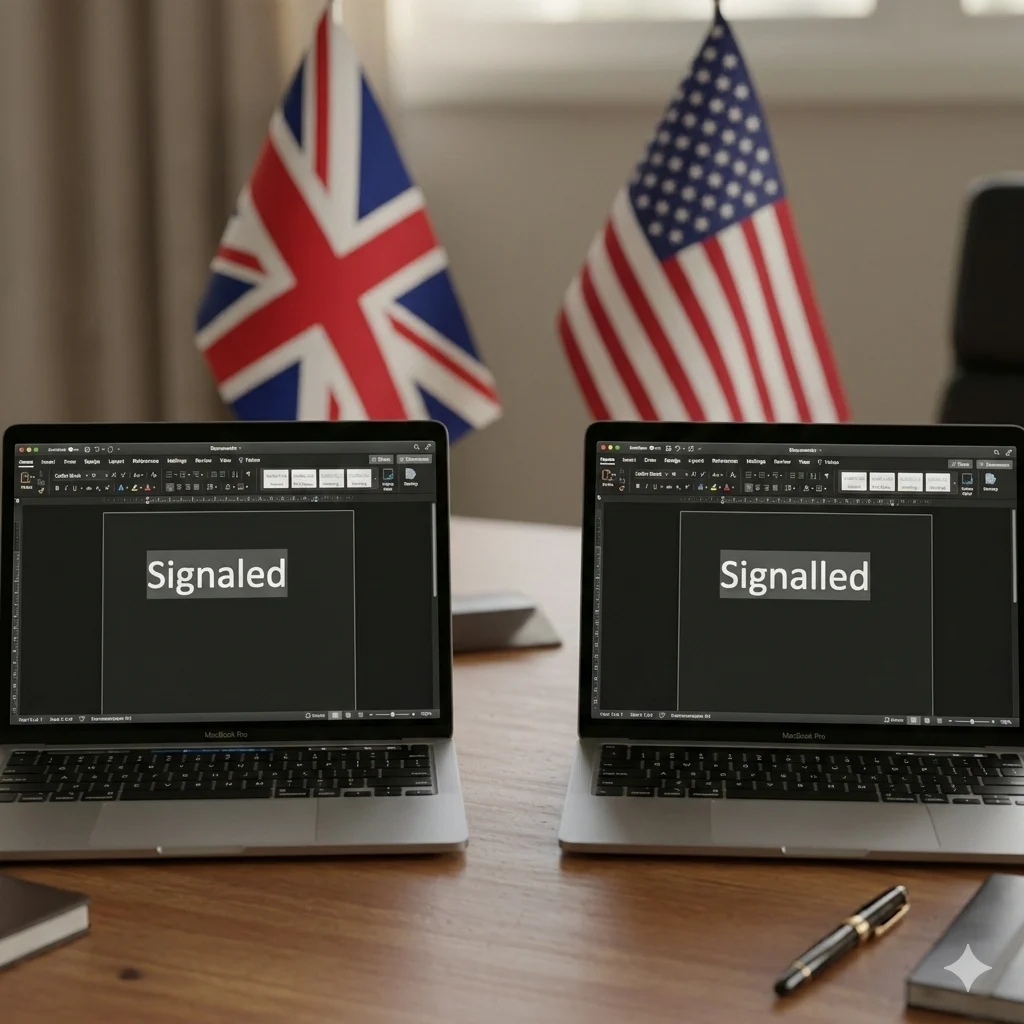
This rule also applies to the present participle form. If you are asking, Which is correct, signaling or signalling? the answer follows the same pattern. In the US, it’s “signaling,” and in the UK, it’s “signalling.” If you are wondering, How do you spell signaling in the UK? it is with two ‘l’s: signalling.
Here is a quick comparison table to make it crystal clear:
| Spelling Variation | American English | British English | Example Sentence |
|---|---|---|---|
| Past Tense | Signaled | Signalled | The car signaled/signalled to turn left. |
| Present Participle | Signaling | Signalling | He was signaling/signalling frantically. |
| Noun (Person) | Signaler | Signaller | The train signaler/signaller raised the flag. |
Which Spelling Should You Use?
Choosing between signalled or signaled is not about right or wrong; it is about what is appropriate for your audience. Following signalled or signaled grammar rules means being consistent.
- For a US Audience (American English): Use signaled. This includes writing for American companies, schools, or websites targeting US readers. Using “signalled” here might look like a typo or a British affectation.
- For a UK, Australian, or New Zealand Audience: Use signalled. This is the standard form taught in schools. Using “signaled” might be seen as an Americanism and could be marked as incorrect in an academic or professional setting.
- For a Canadian Audience: This is a bit of a gray area. Canada generally follows British spelling conventions, but due to its proximity to the US, American spellings are also common and understood. Signalled is more traditional and often preferred in formal Canadian writing, but signaled is not considered a major error.
- For a Global Audience: It’s best to pick one style and stick to it throughout your entire document. If your publication or company style guide uses British English, choose signalled. If it uses American English, choose signaled. Consistency is key to professionalism. You can also use the signalled or signaled synonym “indicated” to avoid the issue entirely.
Common Mistakes with Signalled or Signaled
Even when you know the rules, it’s easy to slip up. Here are some frequent errors people make with these words:
- Mixing Styles in One Document: This is the most common mistake. For example: “He signaled for help, but the other driver kept signalling for him to pull over.” This is inconsistent and looks unprofessional. Choose one spelling and stick with it.
- Forgetting the ‘l’ in British English: When writing in British English, a common error is to forget to double the ‘l’. Writing “He signalled” is incorrect in the UK. The correct form is signalled. To check this, you can consult the signalled or signaled oxford dictionary, which lists the British spelling with a double ‘l’.
- Incorrect Application to Other Words: Sometimes people over-apply the rule. For example, the word “appeal” becomes “appealed” in both US and UK English because the stress is on the second syllable. The rule about doubling the ‘l’ applies specifically to verbs ending in a single vowel and a single consonant where the stress is on the first syllable.
- Confusion with Pronunciation: Some learners confuse the spelling with the sound. However, signalled pronunciation and signaled pronunciation are identical. They sound exactly the same: /ˈsɪɡnəld/. The spelling difference does not affect how you say the word.
Signalled or Signaled in Everyday Examples
Seeing the words in context is the best way to understand their usage. Here is how you might encounter signalled or signaled examples in different types of writing.
Emails:
- American: “The system signaled an error when I tried to upload the file.”
- British: “My manager signalled that the project deadline had been moved forward.”
News Headlines:
- American (e.g., CNN, NY Times): “Fed Signaled Rate Hike in Latest Meeting Minutes.”
- British (e.g., BBC, The Guardian): “Prime Minister Signalled Major Shift in Housing Policy.”
Social Media:
- American: “Just saw a car signaling to change lanes and then just… didn’t. 😅”
- British: “The dog signalled he wanted a treat by sitting perfectly still and staring at the cupboard.”
Formal Writing (Reports, Academic Papers):
- American: “The data signaled a significant shift in consumer behavior during the quarter.”
- British: “The results signalled a clear need for further research into the compound’s effects.”
Understanding the signalled or signaled meaning is simple: they both mean to convey information or make a gesture. The context and the audience determine the spelling, not the meaning. If you are looking for a signalled or signaled synonym, you could use words like: indicated, gestured, motioned, communicated, announced, or flagged.

Signalled or Signaled – Google Trends & Usage Data
If you look at global search data and usage patterns, you can see a clear geographical divide for the keywords signalled or signaled us versus signalled or signaled uk and signalled or signaled canada.
- In the United States: The spelling “signaled” is overwhelmingly dominant. It is used in virtually all forms of written communication, from government documents to casual texting. A search for the word in American corpora will show “signaled” used 99% of the time.
- In the United Kingdom: The spelling “signalled” is the standard. British publications and educational systems enforce the double-‘l’ rule consistently.
- In Canada and Australia: These countries tend to follow the British standard, so “signalled” is more common in formal writing. However, due to cultural proximity and exposure to US media, Canadians and Australians are very familiar with the American spelling “signaled” and will understand it without issue.
- Global Context: On a global scale, the British spelling “signalled” is still slightly more common when looking at all English-speaking countries combined, simply due to the number of Commonwealth nations. However, the influence of American English in business and technology means “signaled” is gaining ground.
(FAQs)
Here are answers to some of the most common questions people have about this topic.
1. Is it signalled or signaled in the US?
In the United States, the correct spelling is signaled (with one ‘l’). This applies to all its forms, such as signaling and signaler.
2. Is it signalled or signaled in the UK?
In the United Kingdom, the correct spelling is signalled (with a double ‘l’). So you would also use signalling and signaller.
3. What is the meaning of signalled/signaled?
Both words mean the same thing: the past tense of the verb “to signal.” It means to convey information or an instruction by means of a gesture, action, or sound. For example, “The teacher signaled for quiet.”
4. How do you spell ‘signaling’ in Australia?
Australia follows British English conventions, so the correct spelling is signalling (with two ‘l’s). For example, “The referee was signalling for a penalty.”
5. What does the Oxford Dictionary say about signalled or signaled?
The signalled or signaled oxford dictionary lists both, noting that “signalled” is the standard spelling in British English, while “signaled” is the standard in US English. It confirms they are spelling variants of the same word.
6. Can you use “signaled” in a sentence?
Yes. Signaled is commonly used in American English. For example: “The driver signaled before making a turn.”
7. What are some synonyms of signaled?
There are many synonyms of signaled, including: indicated, gestured, motioned, waved, flagged, beckoned, and communicated.
8. Is it “cancelled” or “canceled” like “signalled” or “signaled”?
Yes! The rule is exactly the same. “Canceled” is American English, and “cancelled” is British English. The pattern holds for many other verbs as well.
9. If I’m writing for an international company, which should I use?
The best practice is to choose a style guide (either American or British) and stick to it consistently throughout the document. If your company has an official style, follow that. If not, pick one—like signalled for a more international feel—and be consistent.
Conclusion
The debate between signalled or signaled is a perfect illustration of the rich diversity within the English language. We have learned that there is no single “correct” answer, as both spellings are valid depending on your geographical and stylistic context. To recap, if your audience is American, the clear choice is signaled. If you are writing for a British, Australian, or Commonwealth audience, signalled is the appropriate form.
The key takeaway is consistency. By choosing one standard and applying it throughout your writing, you present a polished and professional image. Now you have the knowledge to confidently navigate this spelling nuance, ensuring your writing is perfectly tailored to your readers, whether they are in New York, London, or anywhere else in the world. Remember, it’s not about right or wrong; it’s about context.

Lola Giggles lives up to her name — laughter practically follows her everywhere. She’s all about finding joy in the smallest things and turning them into big laughs. Her writing sparkles with positivity, chaos, and charm, making her readers giggle like it’s a full-time job. Lola believes that one good laugh a day keeps reality away — and she’s here to deliver yours.