“‘Bears’ means the animal or to carry something, while ‘bares’ means to uncover or reveal; knowing the difference helps you write accurately.”
Ever wondered if it’s ‘bears’ or ‘bares’? Here’s how to never mix them up! Bears and bares sound the same but have very different meanings. Bears can refer to the animal (“The bear hibernates in winter”) or the act of carrying/supporting (“She bears the responsibility”).
Bares, on the other hand, means to uncover, reveal, or expose (“He bares his soul in the letter”). Using the correct word ensures your writing is precise and professional.
To make it even easier, here are more examples:
- “She bares it all on social media”
- “He bears the weight of the project”
In this article, you’ll find clear definitions, sentence examples, and common mistakes so you can confidently use bears and bares correctly every time. Whether for writing, texting, or academic work, this guide will help you avoid confusion and write like a pro.
Bears or Bares meanings
Here is the simple rule to remember:
- Bears is a verb (action word) that most commonly means to carry or to endure. It can also refer to the large, furry animal (a noun).
- Example (endure): He bears the pain of his injury like a champion.
Example (carry): The donkey bears a heavy load.
Example (animal): The bears in the forest are waking from hibernation.
- Example (endure): He bears the pain of his injury like a champion.
- Bares is a verb that means to uncover or to reveal.
- Example: The dog bares its teeth when it feels threatened.
Example: She bares her soul in her diary.
- Example: The dog bares its teeth when it feels threatened.
The easiest way to decide is to think about the context. If you are talking about carrying a burden, enduring something, or the animal, use bear. If you are talking about revealing or uncovering something, use bare.
The Origin of Bears or Bares
Why do we have these two confusing words? The answer lies in their history. English is a language made up of many different influences, and “bear” and “bare” come from completely different roots.
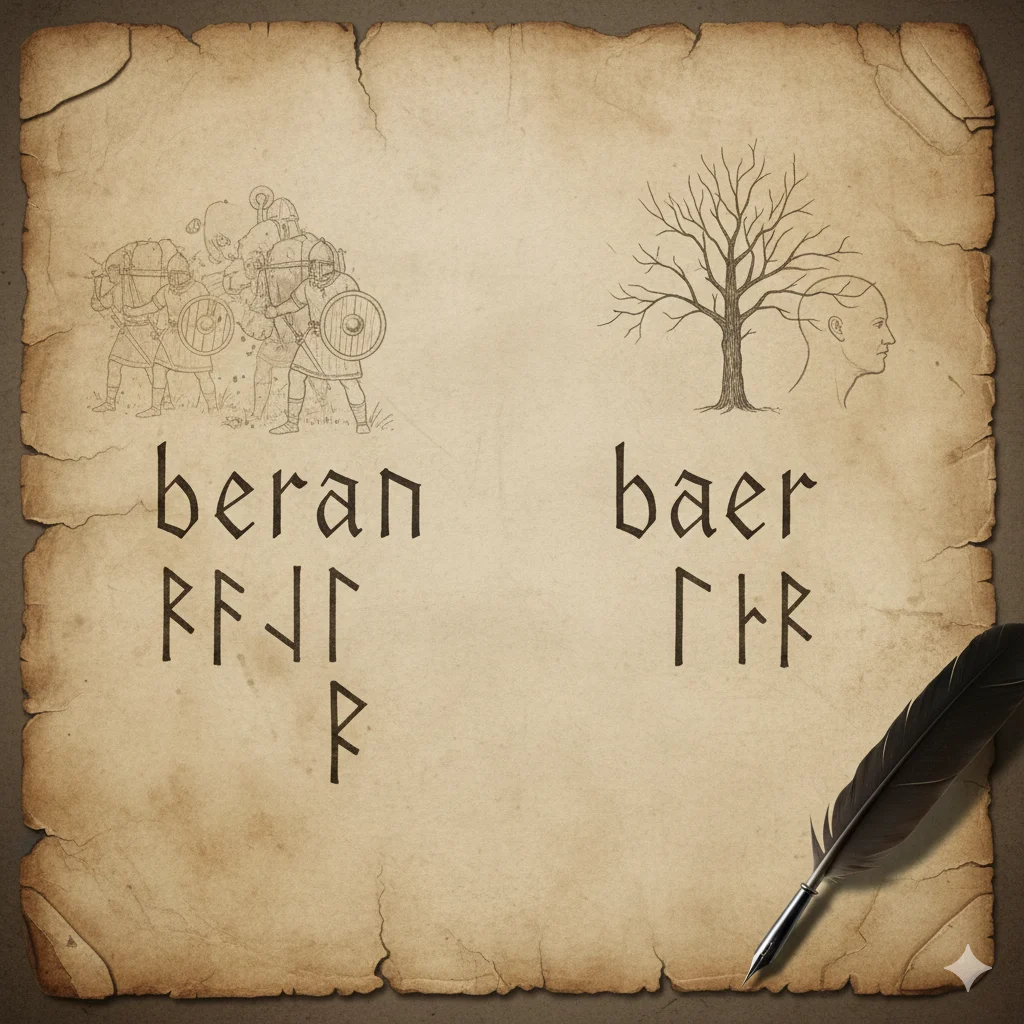
The verb bear comes from the Old English word beran, which meant “to carry, bring, or endure.” This word has deep roots in many Germanic languages. Think of the word “burden”—something you carry—which shares this ancient origin. The meaning has stayed remarkably consistent for over a thousand years. This is why we use it for carrying weight (physical or emotional), giving birth (bearing a child), or turning to withstand something (bearing up).
On the other hand, bare comes from the Old English word bær, which meant “naked, uncovered, or void.” This word is related to the concept of being “bald” or having nothing extra. Its meaning has also remained stable: to make something naked or exposed. The spelling difference has persisted because the words have always been distinct in their meaning and origin, even though their pronunciations eventually merged over centuries.
British English vs American English Spelling
Here’s a piece of good news: when it comes to “bears” and “bares,” there is no difference between British and American English. The rules are the same in both dialects. The confusion is purely between two different words, not between two regional spellings of the same word.
However, the confusion is universal. Whether you are in London, New York, or Sydney, you will encounter the same “bear vs. bare” problem.
| Word | Part of Speech | Meaning | American English Example | British English Example |
|---|---|---|---|---|
| Bears | Verb | To carry / endure | He bears the responsibility well. | She bears a grudge for years. |
| Bears | Noun | The animal | We saw bears in the national park. | Bears are not native to the UK. |
| Bares | Verb | To uncover / reveal | The law bares corrupt practices. | The truth bares all in the end. |
Which Spelling Should You Use?
Choosing the right word is simple once you identify your audience and your intent.
- If your audience is global or North American: The advice is the same. Focus on the meaning you want to convey.
- Are you talking about enduring something? Use bears.
- Are you talking about carrying something? Use bears.
- Are you talking about revealing something? Use bares.
- If your audience is in the UK, Australia, or other Commonwealth countries: The same rule applies. The usage is identical. A writer in London must make the same distinction as a writer in Chicago.
The key is not about where you are writing, but what you are writing. Always default to the meaning. Think: Is there an animal involved? Is something heavy (physically or mentally) being held up? If yes, it’s bears. Is something being stripped away or exposed? If yes, it’s bares.
Common Mistakes with Bears or Bares
Even professional writers can trip up on these homophones. Here are the most common errors and how to correct them.
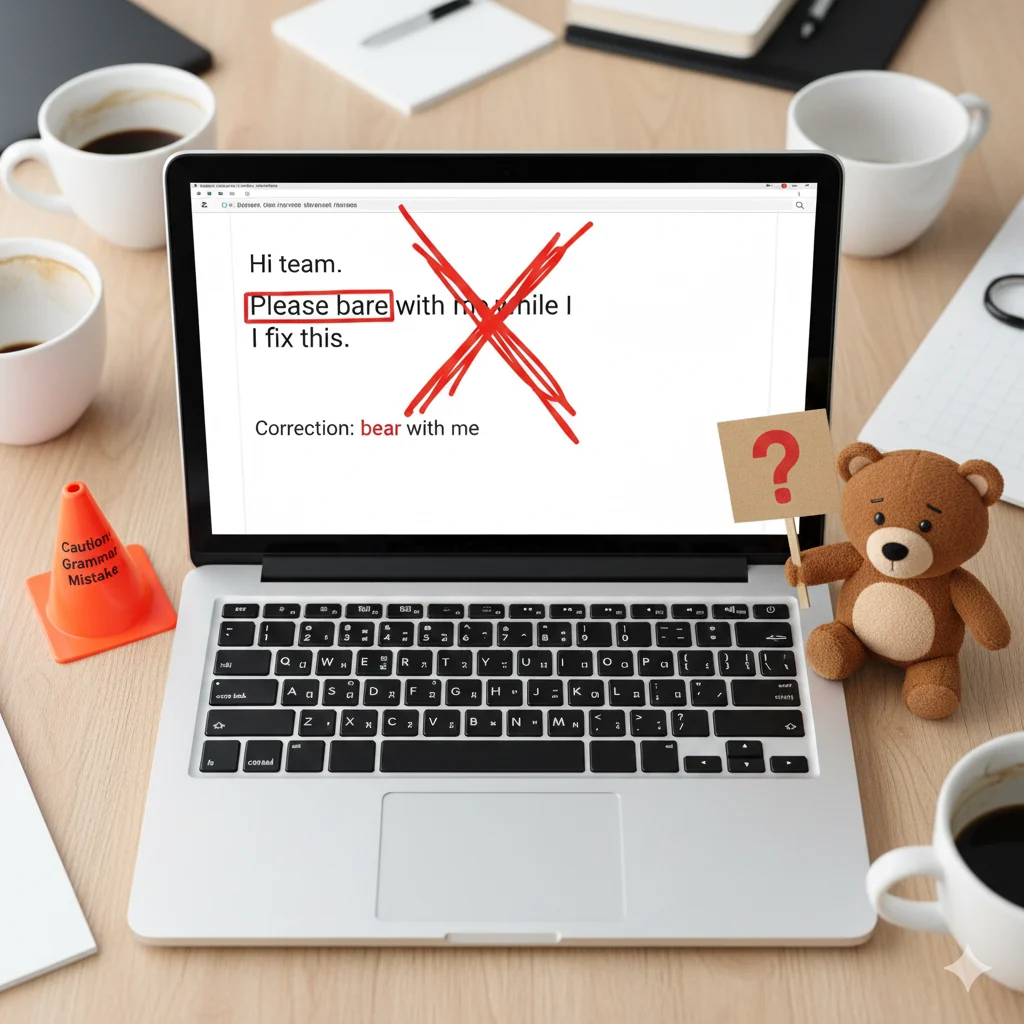
- “Bare with me” vs. “Bear with me”
- Mistake: “Please bare with me while I sort out this issue.”
- Why it’s wrong: This is asking someone to get naked with you.
- Correction: “Please bear with me while I sort out this issue.” (Asking someone to endure or wait patiently with you).
- “Bear pain” vs. “Bare pain”
- Mistake: “I can’t bare this headache anymore.”
- Why it’s wrong: It suggests you cannot uncover the pain, which doesn’t make sense.
- Correction: “I can’t bear this headache anymore.” (You cannot endure it).
- “Bears responsibility” vs. “Bares responsibility”
- Mistake: “The CEO bares the responsibility for the failure.”
- Why it’s wrong: This suggests the CEO is uncovering responsibility, like showing it off.
- Correction: “The CEO bears the responsibility for the failure.” (He carries the weight of it).
- “Bears a resemblance” vs. “Bares a resemblance”
- Mistake: “The painting bares a resemblance to her mother.”
- Why it’s wrong: This means the painting is uncovering a resemblance.
- Correction: “The painting bears a resemblance to her mother.” (It carries or holds that likeness).
- “Bears repeating” vs. “Bares repeating”
- Mistake: “This point bares repeating.”
- Why it’s wrong: The point cannot uncover itself.
- Correction: “This point bears repeating.” (It can endure or withstand being said again).
- “Bears a burden” vs. “Bares a burden”
- Mistake: “He bares the burden alone.”
- Why it’s wrong: He is uncovering a burden, which is illogical.
- Correction: “He bears the burden alone.” (He carries the heavy load).
Bears or Bares in Everyday Examples
Seeing the words in context is the best way to lock in the correct usage. Here’s how they appear in different types of writing.
In Formal Writing (Reports & News):
- Correct: The company bears the cost of all employee training. (Not “bares the cost”)
- Correct: The investigation bares the truth about the corruption scandal.
In Social Media Posts:
- Correct: Ugh, I can’t bear this Monday morning feeling! #MondayBlues
- Correct: The new Netflix documentary bares all the juicy details about the pop star’s life.
In Professional Emails:
- Correct: Thank you for your patience. Please bear with me as I finalize the details.
- Correct: This report bears no resemblance to the project we initially discussed.
In Everyday Conversation (Written):
- Correct: The tree bears fruit every summer.
- Correct: My dog always bares its teeth at the mail carrier.

Bears or Bares – Google Trends & Usage Data
Looking at search data confirms just how common this confusion is. Globally, the search query “bears or bares” is consistently popular, spiking at times when people are writing more, such as during the back-to-school season or the start of the work year.
- By Country: English-speaking countries unsurprisingly lead the search volume, including the United States, the United Kingdom, Canada, and Australia.
- Top Related Queries: The most searched-for phrases tell us exactly where people struggle. The number one query by a huge margin is “bear with me or bare with me.” Other top searches include “bear the pain or bare the pain,” “bears responsibility or bares responsibility,” and “bears a resemblance or bares a resemblance.”
This data proves that people aren’t just looking up the dictionary definition; they are looking for practical, contextual advice to solve a specific writing problem. They want to know which word fits in the phrase they are currently typing.
Frequently Asked Questions
Here are the answers to the most common questions people have about “bears or bares.”
1. Is it bear pain or bare pain?
It is bear pain. This means to endure or tolerate the pain. “Bare pain” would mean to uncover pain, which is not the correct phrase.
2. Do you bear responsibility or bare responsibility?
You bear responsibility. This means you carry the weight or burden of the responsibility. “Bare responsibility” is incorrect.
3. Is it “bear with me” or “bare with me”?
It is “bear with me.” This is an idiom asking someone to be patient or to endure a short wait. “Bare with me” is a common and embarrassing mistake asking someone to get naked.
4. Are bear and bare the same?
No, they are not the same. They are homophones (sound the same) but have different spellings and completely different meanings. Bear means to carry or endure. Bare means to uncover or reveal.
5. What does “bears repeating” mean?
“Bears repeating” means that something is important enough to be said again. It can endure or withstand being repeated. The correct spelling is “bears.”
6. What does it mean when someone “bares their soul”?
When someone “bares their soul,” they are revealing their innermost, private thoughts and feelings. It uses “bares” because they are uncovering their emotions.
7. Is it “bears a burden” or “bares a burden”?
It is “bears a burden.” This means to carry a heavy load, either physically or emotionally.
8. How do I remember the difference between bears and bares?
A simple trick: think of the animal. A bear is big, strong, and can carry heavy things. So, if the meaning is about carrying or enduring, use bear. For “bare,” think of “barefoot,” which means your feet are uncovered. So, if the meaning is about uncovering, use bare.
Conclusion
Mastering the difference between “bears” and “bares” is a simple but powerful way to improve your writing clarity and avoid common pitfalls. We’ve learned that bears is your go-to word for endurance, carrying weight (responsibility, a burden, a cost), and for the shaggy mammal itself. You use it when you need to bear the pain or ask someone to bear with you. On the other hand, bares is all about revelation and uncovering, whether it’s a dog that bares its teeth or a writer who bares their soul.
The next time you’re writing an email, a social media post, or a report, just pause and ask yourself: Am I talking about carrying a load or enduring something? Or am I talking about revealing something? The answer to that simple question will guide you to the correct spelling every time. Keep this guide handy, and you’ll never have to search “bears or bares” again.

Nina Snicker was born to make people laugh — and she takes that mission very seriously. Known for her quick wit and clever takes on everyday life, Nina turns even the dullest moments into hilarious masterpieces. She believes humor is the ultimate life skill — and her jokes prove it. When she’s not writing, you’ll find her laughing at her own punchlines (because someone has to start the applause).