In today’s fast-paced digital world, a simple spelling mistake can undermine your professionalism, confuse search engines, and even lead to misunderstandings. One common point of confusion that trips up writers, students, and professionals alike is the pair: tailor vs. tailer. Is it “tailor” or “tailer”? The distinction, while subtle, is crucial.
People search for this keyword not out of idle curiosity, but from a genuine need for clarity—whether they’re writing a job application, a business proposal, an academic paper, or simply trying to find a local clothing alteration service online. This article is designed to be your definitive guide, cutting through the confusion to provide a clear, authoritative answer.
We will explore the correct spelling, its origins, regional variations, and practical usage, ensuring you never second-guess yourself again. By understanding the difference between “tailor” and the common misspelling “tailer,” you can communicate with precision and confidence in any context.
Tailor or Tailer
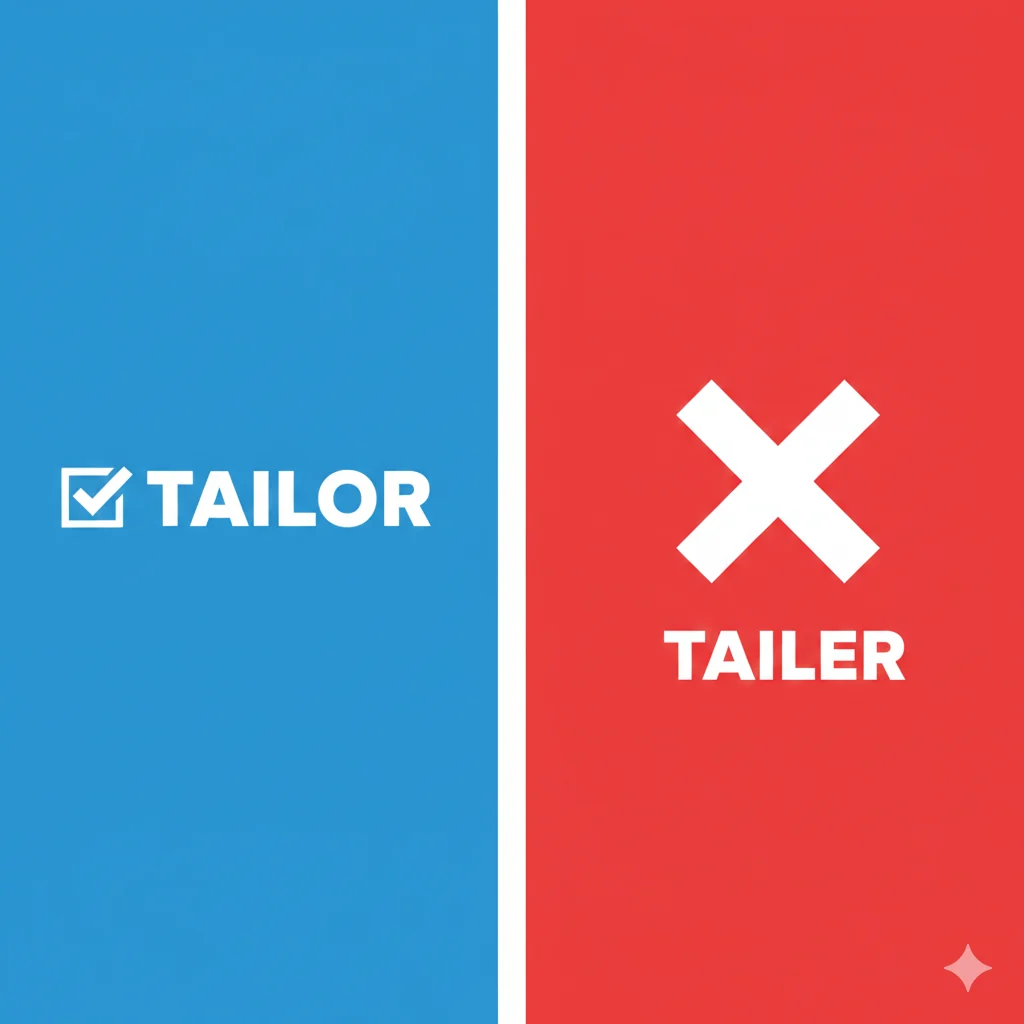
The correct spelling is tailor. “Tailer” is a common misspelling and is not a standard English word. A tailor is a person whose occupation is making, altering, or repairing clothing. The word can also be used as a verb, meaning to make or adapt something for a particular purpose or person.
Examples:
- Noun: “I need to take this suit to the tailor for adjustments.”
- Verb: “We can tailor this software package to your company’s specific needs.”
- Incorrect: “I’m looking for a good tailer near me.” (This is wrong)
If you are trying to find a clothing professional or use the verb form, always use tailor.
The Origin of Tailor
The word tailor has a rich history that explains its spelling. It entered English in the late 13th century from the Anglo-French word tailour, which itself came from the Old French tailleur, meaning “a cutter.” This Old French term is derived from the verb taillier, “to cut.” The Latin root is taliare, also meaning “to cut.”
This etymological journey from “cutter” to “clothing-maker” is logical, as a tailor’s primary function involves cutting fabric. The spelling with “-lor” at the end has been standardized in English for centuries. The common misspelling “tailer” likely arises from a phonetic simplification—people hear the sound and spell it as it sounds, dropping the silent “o” and changing the “lor” to “ler.” However, this spelling has no historical or linguistic basis in standard English.
British English vs American English Spelling
Fortunately, for this particular word, there is no conflict between British and American English. Both dialects use the same spelling: tailor. The confusion with “tailer” is a spelling error, not a regional variation.
However, the verb forms and related words can show some differences in spelling conventions, particularly with suffixes. Understanding these rules can help prevent other common mistakes.
| Feature | American English | British English | Example (US) | Example (UK) |
|---|---|---|---|---|
| Core Word | tailor | tailor | a skilled tailor | a skilled tailor |
| Verb: Past Tense | tailored | tailored | She tailored the dress. | She tailored the dress. |
| -ize / -ise | Prefers -ize | Prefers -ise | customize, specialize | customise, specialise |
| -or / -our | Prefers -or | Prefers -our | color, labor | colour, labour |
Key Takeaway: Whether you are in London or Los Angeles, the word for a clothing maker is always spelled tailor.
Which Spelling Should You Use?
Your choice is simple: always use “tailor.” “Tailer” is incorrect.
Your audience and location do not change this rule. Whether you are writing for:
- A US audience: Use tailor.
- A UK/Commonwealth audience: Use tailor.
- A global or online audience: Use tailor.
Using the correct spelling ensures you are found in search results (people search for “tailor near me,” not “tailer near me”), maintains your credibility, and communicates clearly. For the verb forms, follow the general American/British preferences for suffixes (e.g., tailored is universal, but customized vs. customised may vary).
Common Mistakes with Tailor
The primary mistake is the simple misspelling: tailer. Here are other frequent errors and their corrections:
- Tailer instead of Tailor: This is the most common error. Always remember the -lor ending.
- Incorrect: He is a master tailer.
- Correct: He is a master tailor.
- Taylored instead of Tailored: Adding a “y” is another phonetic error.
- Incorrect: The program was taylored for beginners.
- Correct: The program was tailored for beginners.
- Confusion with “Taylor”: “Taylor” is a common surname (e.g., Taylor Swift). Do not confuse it with the profession.
- Incorrect: I need a taylor to fix my zip.
- Correct: I need a tailor to fix my zip.
- Misusing the Verb: Remember that the verb “to tailor” requires an object. You tailor something.
- Unclear: We can tailor for you.
- Clear: We can tailor the service for you.

Tailor in Everyday Examples
Email (Business):
“Hi Team, after reviewing the client’s feedback, we need to tailor our proposal to better address their sustainability goals.”
News Headline:
“New Education Policy Aims to Tailor Curriculum to Individual Student Needs.”
Social Media:
“Just found an amazing tailor who rescued my favorite jeans! #LifeSaver #TailorNearMe”
Formal Writing (Report):
“The marketing strategy was meticulously tailored to resonate with the target demographic, resulting in a 30% increase in engagement.”
Search Query:
“Best bespoke tailor in downtown” or “How to tailor a resume for a specific job.”

Tailor – Google Trends & Usage Data
Data from Google Trends clearly shows the dominance of the correct spelling. Searches for “tailor” are consistently and overwhelmingly more frequent worldwide than for “tailer.” Interest in the term “tailor” spikes seasonally—often around periods requiring formal wear, such as graduation season in spring and wedding season in summer. The search phrase “tailor near me” is a perennial high-volume query, highlighting the local, practical intent behind most searches.
Regionally, searches are highest in urban centers with strong professional and fashion industries. The data confirms that using the correct spelling “tailor” is essential for any business or service hoping to be found online.
| Keyword Variation | Correct? | Common Usage Context | Search Volume |
|---|---|---|---|
| Tailor | ✅ Correct | Profession, verb meaning to adapt | Very High |
| Tailer | ❌ Incorrect | Common misspelling | Very Low |
| Tailored | ✅ Correct | Past tense/adjective form | High |
| Taylored | ❌ Incorrect | Misspelling | Low |
(FAQs)
Q1: Is it tailor or tailer?
A: It is tailor. “Tailer” is a common misspelling and is not a recognized word in standard English dictionaries.
Q2: What is a tailer?
A: “Tailer” is not a standard English word. It is likely a misspelling of tailor. In specific technical contexts (like fishing or logging), similar-sounding specialized terms exist, but they are unrelated to clothing.
Q3: What is a female tailor called?
A: A female tailor is simply called a tailor. The word is gender-neutral. Historically, the term “seamstress” referred to a woman who sews, but a “tailor” specifically denotes a skilled maker of fitted garments, regardless of gender.
Q4: Is it tailored or taylored?
A: The correct spelling is tailored. “Taylored” is incorrect.
Q5: Is it ‘tailor to your needs’ or ‘taylor to your needs’?
A: The correct phrase is “tailor to your needs.” “Taylor” in this context would be incorrect unless it is part of a proper name (e.g., “Taylor & Sons tailor to your needs”).
Q6: How do you pronounce tailor vs. Taylor?
A: They are pronounced identically: /ˈteɪ.lər/. Context tells you which one is being used.
Q7: What does ‘tailor’ mean in business or education?
A: It means to adapt or customize something for a specific purpose, audience, or individual. In business, you might tailor a marketing campaign. In education, a teacher might tailor lessons for different learning styles.
Conclusion
In the debate of tailor vs. tailer, the correct path is clear and unchanging. “Tailor” is the only correct spelling for the profession of making clothes and the verb meaning to adapt something specifically. The misspelling “tailer” has no place in formal or professional communication and will hinder searchability and credibility. As we’ve seen, this rule holds true across all forms of English—American, British, or global.
Whether you’re searching for a “tailor near me,” writing an email stating you’ll “tailor the report,” or discussing “The Tailor” episodes on Netflix, precision matters. By committing the correct spelling to memory, you equip yourself to communicate with accuracy and authority. Let this guide be the final word: when in doubt, it’s always tailor.

Lola Giggles lives up to her name — laughter practically follows her everywhere. She’s all about finding joy in the smallest things and turning them into big laughs. Her writing sparkles with positivity, chaos, and charm, making her readers giggle like it’s a full-time job. Lola believes that one good laugh a day keeps reality away — and she’s here to deliver yours.