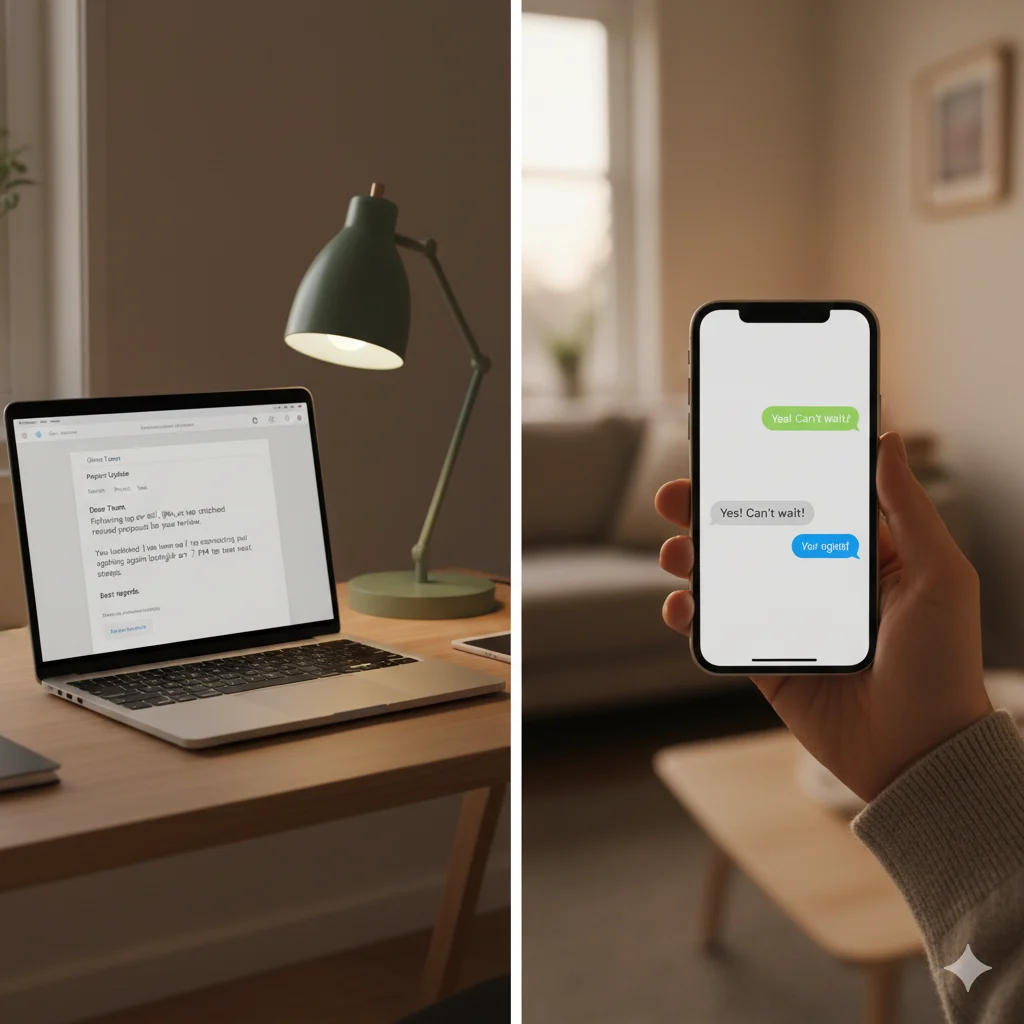
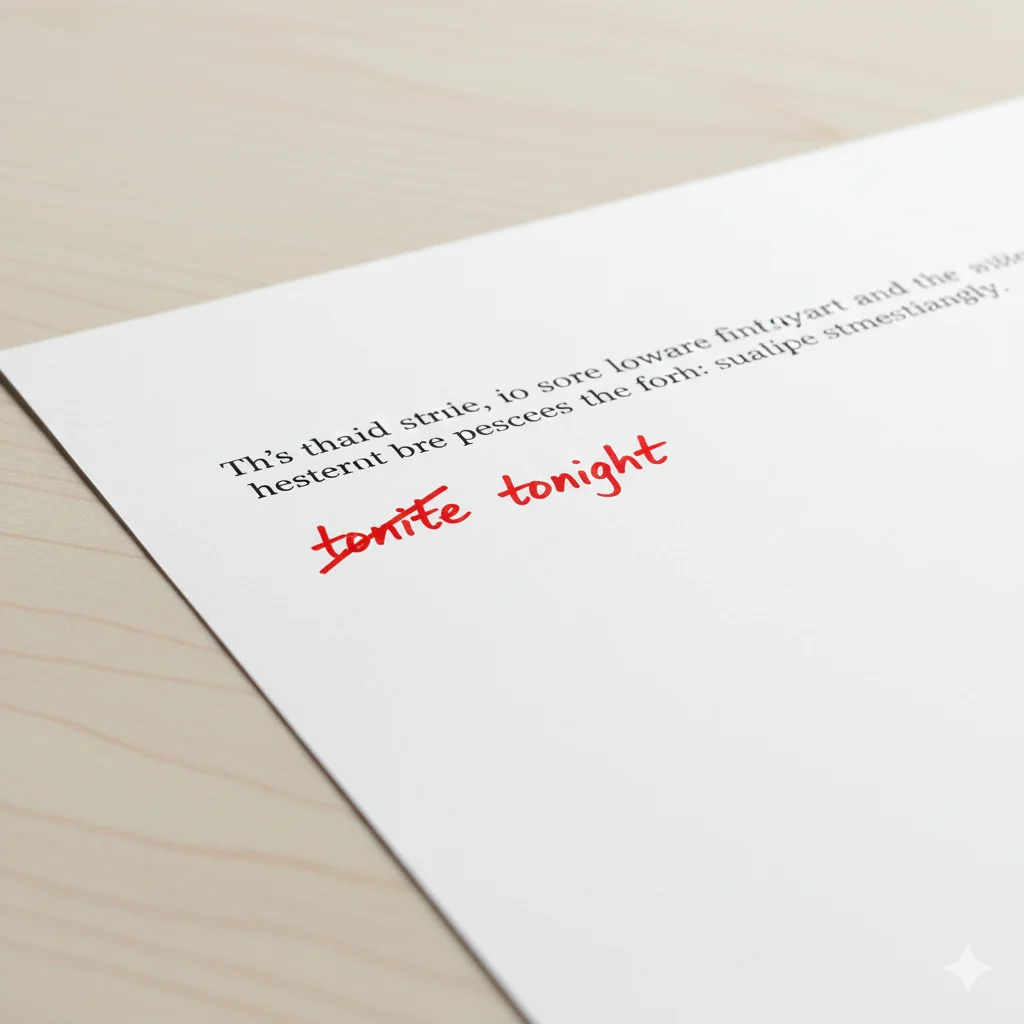
“‘Tonight’ is the standard English spelling, while ‘tonite’ is an informal variant used for casual writing, texting, and social media posts.”
Tonite or tonight? Don’t get caught spelling it wrong! Tonight is the correct standard spelling in English, used in formal writing, books, emails, and professional communication. On the other hand, tonite is an informal, casual version often seen in texts, social media, advertisements, or playful posts.
For example:
- Formal: “The meeting is tonight at 8 PM.”
- Informal / casual: “Don’t miss the concert tonite!”
- Another casual example: “Party tonite! Be there or be square.”
Understanding the difference ensures your writing is accurate, natural, and appropriate for your audience. In this article, you’ll learn exactly when to use ‘tonight’ vs ‘tonite’, see plenty of practical examples, and get tips to avoid common mistakes — whether writing formally, texting friends, or posting on social media.
Tonite or Tonight meanings
The quick answer is simple: Tonight is the only correct and standard spelling in formal English. Tonite is an informal, phonetic slang spelling.
- Tonight (Correct): Use this for all formal writing, professional emails, academic papers, and most everyday communication. It is the universally accepted spelling.
- Example: “Let’s meet for dinner tonight at 7 PM.”
- Tonite (Informal Slang): You might see this used in text messages, social media hashtags, product branding, or song titles. It is meant to be quick or catchy, but it is not grammatically correct.
- Example: “Can’t wait for the party 2nite!” (using numbers for letters is even more informal).
In short, if you are unsure, always choose tonight.
The Origin of Tonite
To understand why we have two spellings, we need to look at the history of the word. Tonight comes from the Old English phrase “tō niht,” which literally meant “on this night.” Over centuries, it evolved into the single compound word we know today: tonight.
So, where did tonite come from? Its origin lies in the human desire for efficiency and phonetic spelling. In the late 19th and early 20th centuries, there was a minor movement in American English to simplify spelling. The idea was to make words match their pronunciation more closely. Since “tonight” is pronounced “tuh-nite,” proponents argued it should be spelled tonite.
While this simplified spelling movement didn’t fully take hold, the shortened version persisted in informal contexts. Its popularity exploded with the rise of text messaging and early internet culture, where brevity was key. Tonite became a quick, easy way to type the word, especially with character limits on platforms like Twitter. The spelling difference exists because of this historical tension between formal, traditional grammar and the natural human impulse to make language faster and more casual.

British English vs American English Spelling
One of the biggest sources of confusion is the assumption that this might be a UK vs. US thing, like color and colour. However, that is not the case here. The rules for tonight are consistent across both major forms of English.
- In American English: Tonight is the standard for all formal writing, journalism, and professional contexts. Tonite is recognized only as an informal variant or slang.
- In British English: Tonight is also the undisputed standard. Tonite is seen as an Americanism or simply a misspelling and is rarely used in formal contexts.
To make it crystal clear, here is a comparison table:
| Spelling | Formality Level | When to Use | Example Sentence |
|---|---|---|---|
| Tonight | Formal / Standard | Every situation: work, school, news, professional emails, formal invitations. | “The report is due by midnight tonight.” |
| Tonite | Informal / Slang | Casual texts, personal social media posts, artistic titles (songs, brands). | “Having a movie night at home tonite! 🍿” |
As you can see, the choice isn’t about geography, but about context. Using tonite in a job application would be a mistake, just as using tonight in a catchy pop song lyric might feel a little stiff.

Which Spelling Should You Use?
Deciding between tonite or tonight depends entirely on your audience and the medium you are writing for. Here’s a simple guide to help you choose:
- For a US Audience (Formal/Professional): Always use tonight. In business, academia, or any professional setting, tonite will be perceived as a spelling error. It suggests a lack of attention to detail.
- For a UK / Commonwealth Audience: Absolutely use tonight. These audiences are even less likely to accept tonite as a valid alternative. It will almost always be flagged as incorrect.
- For a Global / Online Audience: Context is key.
- In a formal blog post or article: Use tonight.
- In a casual Instagram caption or a tweet: Tonite is acceptable and can even make your post feel more relatable and informal. For example, “Feeling the vibe tonite ✨” works perfectly well.
- In text messages with friends: Use whatever you want! Tonite is a common shorthand in personal conversations.
The safest and most professional choice, regardless of where your reader is from, is always tonight.
Common Mistakes with Tonite and Tonight
Even with a simple word, people make predictable errors. Here are the most common ones to watch out for:
- Using “Tonite” in Formal Writing: This is the biggest mistake. Imagine seeing “tonite” in a cover letter or a business proposal. It looks unprofessional and careless.
- Incorrect: “We look forward to meeting with you tonite.”
- Correct: “We look forward to meeting with you tonight.”
- Confusing the Apostrophe in “Tonight’s”: Another common error involves the apostrophe. Remember, an apostrophe is used for contractions (it is) and possession (belonging to).
- Tonite or tonight meaning: This is a search query, not a phrase you’d use in a sentence.
- Tonight’s (Contraction): Short for “tonight is.” Example: “Tonight’s going to be a long night.”
- Tonight’s (Possession): Showing that something belongs to or is associated with tonight. Example: “Tonight’s menu looks delicious.”
- Assuming “Tonite” is a New, Accepted Spelling: While common, tonite is not a new standard. It’s a slang term that has been around for a long time but has never been accepted into formal dictionaries as a primary spelling.
- Inconsistent Use in the Same Document: If you are writing something informal and choose to use tonite, be consistent. Don’t switch between “tonite” and “tonight” in the same text, as it will look messy.
Tonite or Tonight in Everyday Examples
Seeing the words in context helps solidify the difference. Here’s how each spelling appears in various forms of communication.
In a Professional Email:
“Dear Team, just a reminder that the deadline for the project is tonight at 11:59 PM. Please upload your final drafts to the shared drive.”
In a News Headline:
“City Council to Vote on Budget Tonight After Heated Debate”
On Social Media (Instagram Caption):
“Movie marathon tonite with my favorite person. 🎬❤️ #cozynight #tonite”
In a Formal Invitation:
“You are cordially invited to the annual gala tonight at the Grand Hotel.”
In a Text Message:
“Hey, u still on for tonite? Same time?”
In a Song Title or Album:
“Tonight’s the Night” by Rod Stewart
“2nite” by various artists (using numbers is a further step into informality)
Tonite vs Tonight – Google Trends & Usage Data
If you look at search data and usage trends, a clear picture emerges. Tonight is overwhelmingly more popular in formal and semi-formal written English across the globe. It is the standard in books, newspapers, and official documents.
Tonite sees spikes in popularity in specific, informal contexts:
- Music and Entertainment: Bands and artists often use tonite in song titles, album names, or event names to appear edgy or modern.
- Social Media: On platforms like Twitter, TikTok, and Instagram, tonite is commonly used in hashtags and captions because it’s short and matches the casual tone.
- Branding and Advertising: Some brands, particularly those targeting younger demographics, might use tonite in advertisements for events like “Sushi Tonite!” to seem trendy and approachable.
- Text Messaging: In the world of SMS and instant messaging, speed is everything. Tonite is frequently used as a shorthand.
Geographically, the use of tonite is slightly more prevalent in the United States due to its history with simplified spelling movements, but it remains an informal variant everywhere. A search for “tonite meaning slang” is far more common than someone asking for its definition as a formal word, confirming its place in casual language.
(FAQs)
Here are answers to some of the most common questions people have about these two spellings.
Is tonite the same as tonight?
Yes, tonite means the exact same thing as tonight: the evening or night of the current day. The only difference is the level of formality.
What does tonite mean?
Tonite is an informal, phonetic spelling of the word tonight. It refers to the present or coming evening and night.
Is tonite grammatically correct?
No, tonite is not considered grammatically correct in standard English. It is classified as an informal variant or slang. The only grammatically correct spelling is tonight.
Why is it spelled tonite?
It is spelled tonite because it’s a phonetic spelling—it’s written the way it sounds. It emerged from a historical simplified spelling movement and gained popularity in the digital age for its brevity.
What is the tonite meaning in slang?
In slang, tonite carries the same meaning as “tonight” but adds a casual, informal, or trendy tone to the message. It’s often used in social media posts and text messages to create a relaxed vibe.
Is there an app called Tonite?
Yes, there have been various social and dating apps named “Tonite App” over the years. They often choose this name to convey a sense of immediacy and casual, fun connections for that specific evening.
Is tonite or tonight used more often?
Tonight is used far more often in all forms of published writing, professional communication, and formal speech. Tonite is a niche, informal spelling used in specific casual contexts.
How do you use tonight’s correctly?
Tonight’s with an apostrophe is used in two ways: as a contraction for “tonight is” (e.g., “Tonight’s the night”) or to show possession (e.g., “Tonight’s weather forecast”).
Conclusion
So, when you’re faced with the choice of tonite or tonight, the path is clear. Tonight is the reliable, professional, and universally correct spelling you should use for almost everything. It is the standard in business, education, and formal media. On the other hand, tonite is a fun, informal tool for your casual communication toolkit. It’s perfect for texting friends, creating a catchy social media caption, or understanding a song lyric, but it has no place in formal writing.
Understanding this key difference between standard English and informal slang will make you a more effective and confident communicator. By choosing tonight for your important documents and professional interactions, you present yourself as detail-oriented and credible. So, go ahead and use that knowledge—whether you’re making plans for tonight or posting about your adventures tonite online. Just remember which one is right for the moment.

Tessa Hadley is a British novelist celebrated for her sharp wit and deep understanding of everyday lives. Her fiction often explores the humor and heartbreak tucked inside ordinary moments. Though known for literary fiction, Tessa’s dry, clever tone makes her a quiet master of subtle comedy — the kind that sneaks up on you and makes you laugh mid-sigh.