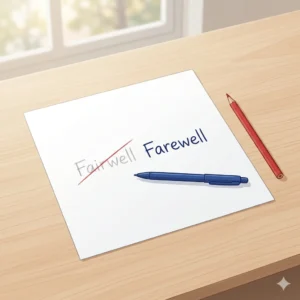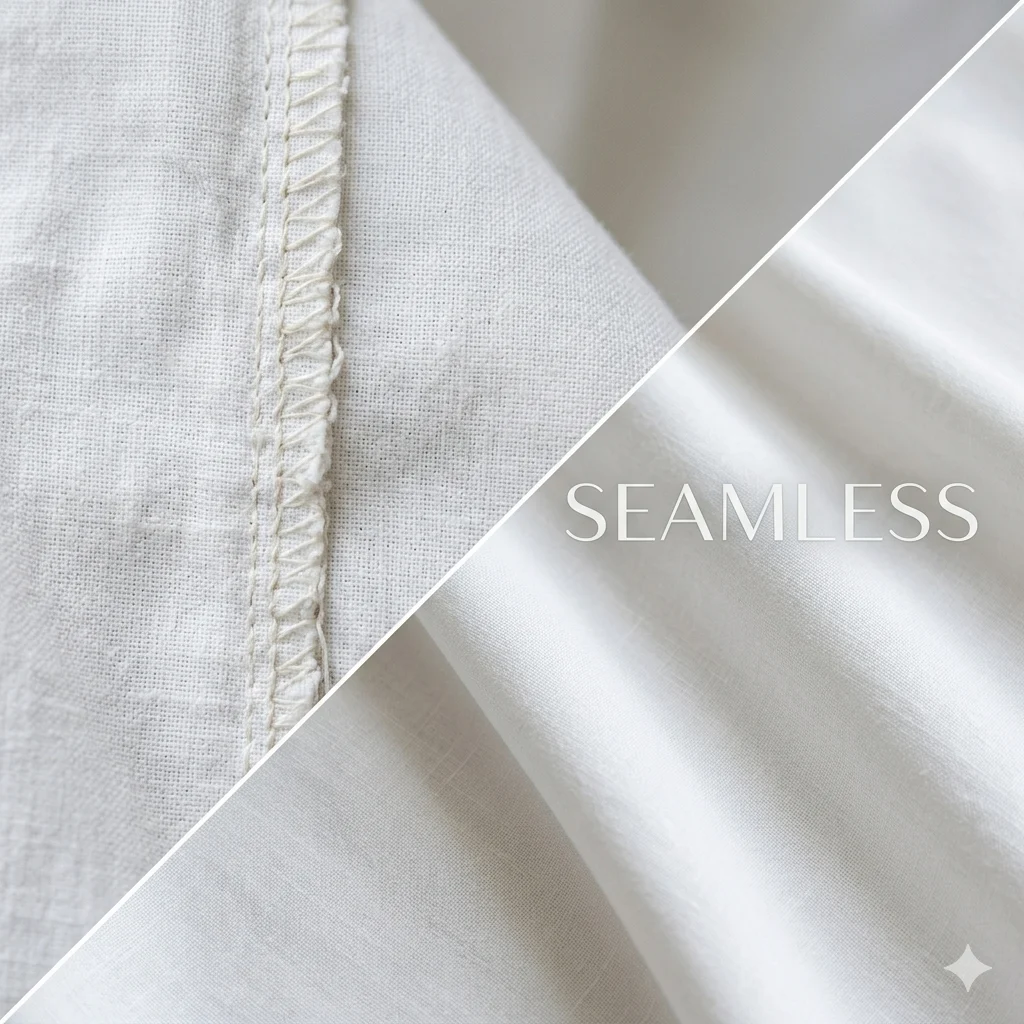
“Seamless (with an ‘a’) means smooth or uninterrupted; ‘seemless’ is incorrect.”
Think it’s “seemless”? Don’t get caught — here’s why “seamless” is the only correct choice! The correct spelling is seamless — with an “a” — and it means smooth, uninterrupted, or perfectly integrated. “Seemless” is a common typo and should be avoided.
Using the right word ensures your writing looks polished and professional, whether it’s for school, work, emails, or online content.
Here are examples to make it crystal clear:
- “The transition between slides was seamless.”
- “She wore a seamless dress that looked flawless.”
- “The app provides a seamless experience for users.”
- “Their collaboration was seamless from start to finish.”
- “He had a seamless workflow all week.”
- “Her storytelling was seamless and engaging.”
Keep reading for tips, common mistakes, and easy ways to remember the correct spelling, so your writing is always mistake-free and professional.
Seamless meanings
Seamless is an adjective that means something is smooth, continuous, and free of interruptions or inconsistencies. It literally means “without a seam.”
If something is seamless, you cannot tell where one part ends and another begins. Think of a perfectly smooth performance, a flawless software update, or a coordinated dance routine.
Examples:
- “The goal was to create a seamless transition between the two scenes in the movie.”
- “Her new phone integrates seamlessly with her laptop.”
- “We pride ourselves on providing a seamless customer experience.”
The word “seemless,” on the other hand, is not a standard English word. It is a common misspelling of “seamless.” If you use “seemless,” you will be making a spelling error.
The Origin of Seamless
To understand why we spell “seamless” the way we do, we have to look at its two parts: seam and less.
The word “seam” dates back to Old English “seam,” which refers to the line where two pieces of fabric are joined together by stitching. If you have a shirt, the lines where the sleeves attach to the body are seams. They are the points of connection, and they can sometimes be rough or visible.
When you add the suffix “-less,” meaning “without,” you get “seamless.” So, the original, literal meaning of the word was “without a seam.” It described a piece of cloth or clothing that was made from a single piece of material with no stitching lines. Over centuries, the word evolved beyond sewing. It began to describe anything that was so well-constructed that it appeared to be a single, unified whole, without any visible joins or breaks. This is why we now use it to describe processes, transitions, and technology. The confusion with “seemless” likely comes from the verb “to seem,” which means “to appear.” People mistakenly think it means “appears to be without end or flaw,” but this is etymologically incorrect.

British English vs American English Spelling
One of the reasons people search for “seemless or seamless” is the suspicion that it might be a British vs. American spelling difference, like “colour/color” or “theatre/theater.” However, this is not the case. The correct spelling is universally seamless in both major dialects of English.
The word “seemless” is considered a misspelling in every English-speaking country. While the pronunciation might have subtle regional accents, the spelling remains constant. This is a matter of correct spelling, not regional preference.
Here is a simple comparison table to clarify:
| Word | Correct Spelling? | Usage | Example Sentence |
|---|---|---|---|
| Seamless | Yes (UK & US) | Describes something smooth, continuous, and without interruption. | “The goal is a seamless workflow.” |
| Seemless | No | A common misspelling. | “We need a seemless (incorrect) integration.” |
| Seemly | Yes | An unrelated word meaning proper or appropriate in appearance. | “His behavior was very seemly.” |
Which Spelling Should You Use?
The advice for choosing the correct spelling is straightforward and depends entirely on your audience’s expectations of professionalism.
- If you are writing for a US audience (American English): Always use seamless. Using “seemless” will be seen as a basic spelling error. In professional business contexts, academic writing, or even casual social media, the correct spelling builds trust and demonstrates attention to detail.
- If you are writing for a UK or Commonwealth audience (British English): Always use seamless. As established, there is no alternative spelling. The same rules of professionalism apply. Whether you are writing a report in London, an email in Sydney, or a blog post in Toronto, “seamless” is the only correct choice.
- If you are writing for a global audience: The choice is clear: use seamless. English is a global language, but its core rules are shared. Using the correct spelling ensures you are understood and respected by readers everywhere, regardless of their native dialect. Consistency in correct spelling is a key component of clear, authoritative communication.
Common Mistakes with Seamless
Even though the rule is simple, the confusion is real. Here are the most frequent errors people make and how to correct them.
- The “Seemless” Misspelling: This is the number one error. Because the word “seem” is so common, writers often drop the ‘a’ and replace it with an ‘e’.
- Incorrect: “The app provides a seemless user experience.”
- Correct: “The app provides a seamless user experience.”
- Confusing “Seamless” with “Seemly”: This is a rarer but notable mistake. “Seemly” is a real word meaning appropriate or proper. It has nothing to do with smoothness or continuity.
- Incorrect: “Her outfit was seemly for the event.” (While this might be true, it means something different.)
- Correct: “Her outfit created a seamless look from head to toe.” (This means the outfit was well put together.)
- Using “Seamless” to Describe Effort: While we often talk about a “seamless process,” it’s a mistake to say “seamless efforts.” Efforts require work; a seamless process is one where the work is hidden.
- Awkward: “Thanks to his seamless efforts, the project was a success.”
- Better: “Thanks to his efforts, the project was a seamless success.”
Seamless in Everyday Examples
Seeing “seamless” in context is the best way to understand its versatility and ensure you are using it correctly.
In Professional Emails:
- “We have updated our systems to ensure a seamless transition for all our clients.”
- “Thank you for your help in making this merger so seamless.”
In News Headlines:
- “Tech Giant Announces Seamless Integration with Popular Messaging App.”
- “The Director Achieves a Seamless Blend of Comedy and Drama.”
On Social Media:
- “The new update is amazing! The syncing between my phone and tablet is totally seamless. #tech”
- “Watching the sunset over the ocean was a seamless moment of peace.” (Here, it means the experience was pure and uninterrupted.)
In Formal Writing:
- “The study aims to create a seamless framework for data analysis across multiple scientific disciplines.”
- “The architect’s design allows for a seamless flow between the interior and exterior living spaces.”

Seamless – Google Trends & Usage Data
Analyzing search data reveals the persistent nature of this spelling confusion. When you look at search trends for “seamless,” it is consistently high, driven by its use in technology, business, and fashion. People are actively looking for its meaning in english, seeking seamless synonyms, and trying to understand phrases like “seamless transition meaning” or “seamless process meaning.”
Interestingly, searches for “seemless” or “seemless or seamless meaning” also maintain a steady volume. This data shows that the confusion is not limited to one region. While English-speaking countries like the US, UK, Canada, and Australia show the highest volume for “seamless,” they also show significant search traffic for the misspelled version. This indicates a universal point of confusion for English learners and native speakers alike. The high volume of questions like “Is seemless a word” confirms that people want a definitive answer, which is exactly what this guide provides. The data proves that what is meant by “seamless” is a top-of-mind question for millions of internet users daily.

(FAQs)
1. What is the meaning of seemless?
“Seemless” is not a recognized word in standard English dictionaries. If you see it used, it is almost always a spelling mistake. The intended word is almost always “seamless.”
2. Is it seemlessly or seamlessly?
The correct adverb is seamlessly. For example, “The two systems work together seamlessly.” “Seemlessly” is not a correct word.
3. What does “seamless” actually mean?
“Seamless” means smooth, continuous, and without any visible joins, breaks, or inconsistencies. It describes something that works or flows perfectly as a single unit. A seamless person meaning doesn’t exist literally, but it could describe someone who adapts perfectly to any situation without appearing awkward. A seamless process meaning refers to a workflow with no interruptions or difficulties.
4. What are some seamless synonyms?
There are many great synonyms depending on the context, including: smooth, uninterrupted, perfect, flawless, consistent, logical, and unified. For physical objects, you might use “one-piece” or “continuous.”
5. Is “seamless” only used for technology?
Not at all. While it is very popular in tech to describe user experience, it is used broadly. You can have a seamless transition in a political leadership change, a seamless effort by a sports team (meaning their play was well-coordinated), or a seamless piece of music.
6. What is a “seamless entry meaning”?
A seamless entry meaning refers to the ability to join or enter a situation, place, or system without any difficulty, friction, or delay. For example, a concert with a seamless entry has no long lines at the gates.
7. How can I remember the correct spelling?
Connect the word back to its origin: a seam in clothing. Think of a sock with no seam—it is seam + less. “Seem” is about appearance, which is a completely different concept.
Conclusion
The journey from “seamless or seemless” to confident, correct usage is simpler than it appears. By understanding the word’s origin—rooted in the literal idea of fabric without a seam—you unlock its modern meaning of smooth, uninterrupted perfection. The key takeaway is undeniable: seamless is the only correct spelling, regardless of whether you are writing in American or British English. The common variant, “seemless,” is a trap that even experienced writers can fall into, but it is a trap you can now avoid.
Remember, using the correct spelling is about more than just following rules. It is about communicating with clarity and precision. When you describe a seamless transition, a seamless process, or a seamless integration, you are choosing a powerful word that conveys sophistication and flawless execution. The next time you write, think of the seam in a piece of clothing, and you will always choose the right path. Keep your writing smooth, continuous, and error-free by sticking with “seamless.”

Lola Giggles lives up to her name — laughter practically follows her everywhere. She’s all about finding joy in the smallest things and turning them into big laughs. Her writing sparkles with positivity, chaos, and charm, making her readers giggle like it’s a full-time job. Lola believes that one good laugh a day keeps reality away — and she’s here to deliver yours.